

Jump to winners | Jump to methodology
Every year, workplaces across Canada are scrutinized for the rigour of their safety programs, the sincerity of their leadership, and, most critically, the degree to which employees genuinely feel protected. Canadian Occupational Safety’s 5-Star Safety Cultures recognition sets the benchmark. It is not a trophy awarded by a panel of judges behind closed doors – it is earned, in no small part, through the voices of the workforce themselves.
The entry process comprised two distinct stages. First, organizations submitted an in-depth application detailing safety initiatives undertaken over the preceding year. Those that cleared this threshold were then sent an employee survey to be circulated internally. Only companies that met a minimum response threshold, determined by company size, and achieved an overall satisfaction rating of at least 80 percent across a range of workplace safety metrics were recognized as 5-Star awardees.
The result is a list of organizations that cannot simply write a good program on paper. They have to live it, day in and day out, in the eyes of the people doing the work.
This report profiles four of those winners: Morguard, Siemens Canada, Top Grade Energy Services, and Sanofi Canada. Each operates in a different sector. Each faces a distinct set of hazards, workforce demographics, and regulatory environments. Yet, a single theme unites them – one that is quietly redefining what the best safety culture in the workplace in Canada looks like.
The most progressive safety leaders in Canada have stopped waiting for accidents to happen. Driven by data, enabled by technology, and increasingly informed by AI, these firms are identifying risks before workers even encounter them. The era of reactive safety is giving way to something more ambitious: predictive, proactive protection built from the ground up.
COMPANY PROFILES
WINNER PROFILE • REAL ESTATE MANAGEMENT
Sector: real estate management & investment
Workforce: approximately 1,200 employees across Canada and the United States
Morguard is not a company that measures its safety ambition by provincial boundaries. With properties spread across seven Canadian provinces and roughly 10 American states, the firm's OHS manager, Cesar Paredes, has had to build a safety culture capable of speaking simultaneously to different municipalities, different regulatory frameworks, and entirely different working environments.
What makes Morguard’s approach distinctive is its refusal to treat compliance as the finish line. “Our leadership has really understood that safety has no borders,” Paredes says. “Just because it says something in British Columbia doesn’t mean we can’t recommend it in Ontario if it’s a really good initiative.” The cross-pollination of best practice across geographies is not only permitted at Morguard; it’s actively encouraged.
This award marks the second consecutive recognition for Morguard, and Paredes is characteristically humble about what that means. The credit, he insists, belongs not to the health and safety department, but to the workers asking the right questions, engaging with the process, and going home safely at the end of every shift.
One of the year’s most significant developments was the strengthening of Morguard’s contractor safety program. Although the company does not carry out construction directly, as a property owner, it retains a legal duty of care over the contractors it brings onto its sites. Paredes attended a seminar hosted by the Workplace Safety & Prevention Services on the law around contractor safety and returned determined to raise the bar.
The result was a partnership with Vendor PM, a third-party platform that vets every contractor before a single shovel goes into the ground. Insurance certificates, WSIB compliance, and all required training materials are validated in advance.
“Before a worker goes on working at heights, everything is checked off,” Paredes says. “It’s a living and breathing program – it goes beyond words on a document.”
Reaching 1,200 employees dispersed across two countries demands creative thinking about communication. Paredes’ answer was the OHS Spotlight, a recurring guest speaker program held via Microsoft Teams and open to every employee, from British Columbia to Texas. Sessions have featured WorkSafe BC inspectors, the National Fire Protection Agency on lithium-ion battery safety, and Mississauga Fire Services on emergency preparedness.
Attendance averages 110 to 115 employees per session. An incentive element – a spin-wheel prize draw for active participants – keeps engagement high. Crucially, the program is not top-down. An end-of-year survey asks employees which topics they want to hear about next.
“Let the audience lead us to the body of water,” Paredes says. “Whatever they’re telling us, we are going to be doing for them.”
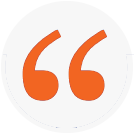
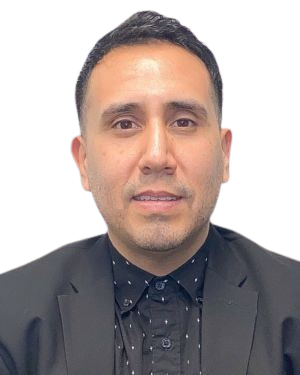
A: The one thing that’s unique is that our safety culture isn’t only directed to one region or province – it speaks to different municipalities, different cities, different countries. Our leadership has really understood that safety has no borders. We’re not just looking to meet the minimum requirement. We’re asking what else we can do to push the envelope and be best in class.
A: Within my department, it means being comfortable saying ‘I don’t know’ and connecting people with someone who does. A lot of us just want to be heard and listened to. As long as we give people a platform to do that, I think we’re on the right track. People remember when you don’t try to cover their eyes – when you say, ‘You got me, but let me get you to someone who can really help.’
A: Absolutely. Every quarter we do a summary of what the metrics are telling us – does a site need additional support on leadership, on training, on how to report incidents? We’re kind of the genie in the bottle, foreshadowing things. There has been a huge shift in the last decade in how OHS professionals predict an event before it has a financial or human impact.
WINNER PROFILE • TECHNOLOGY & MANUFACTURING
Sector: technology, manufacturing & engineering services
Workforce: multi-site Canadian operation spanning office, service, and factory environments
Nada Vuckovic has spent nearly 30 years in health and safety. She has been at Siemens Canada for 20 of them – a tenure that itself says something about the culture she has helped build.
“Nobody stays somewhere unless they feel like they belong,” she observes. Siemens Canada boasts employee longevity that its industry peers would envy, with many workers logging 10, 20, even 30 years at the organization.
But retention is not the result of inertia. It is the product of deliberate, sustained investment in the whole person – their physical safety, their psychological well-being, and their sense of belonging within a community that extends from factory floor to corporate boardroom.
As Head of Environmental, Health and Safety, Vuckovic leads a program that is simultaneously global in its ambitions and intensely personal in its delivery. The headline metric at Siemens Canada: every injury is one too many.
In Siemens’ manufacturing facilities, safety is increasingly engineered before the first piece of equipment is installed. The company uses digital twin technology – a virtual replica of a proposed factory line – to simulate how workers will interact with a new setup before it goes live. Ergonomic risks, movement conflicts, and operational hazards are identified and resolved in a virtual world, so that when the real line is commissioned, modifications are the exception rather than the rule.
“We fit the work to the human, not the human to the work,” Vuckovic explains. Where repetitive tasks are identified as injury risks, collaborative robots – cobots – are introduced to absorb that work and move people into less hazardous roles. Physical demands analyses are conducted across service teams, generating reports that tell the safety team precisely where force is being applied and what interventions could prevent future musculoskeletal injury.
Vuckovic is equally focused on what cannot be seen on a factory floor. Siemens Canada has been working on psychological safety since before the COVID-19 pandemic made the phrase ubiquitous. The company surveys employees twice a year on well-being metrics, uses the results to tailor programs by country and role type, and has substantially enhanced its employee and family assistance benefits over the past five years.
Perhaps most notably, Siemens replaced its annual performance review process with monthly “Growth Talks” – informal, one-on-one conversations between managers and employees that create a regular, low-stakes opportunity to discuss workload, stress, and personal challenges without any punitive implication. “If I’m struggling and I raise my hand, we’re here to help, not to penalize,” Vuckovic says.
Weekly Wellness Wednesday tips, one-minute CEO wellness videos, step-count challenges, and employee-led groups – including a Women in Leadership circle that has also attracted male participants – all contribute to an environment where well-being is visible, normalized, and championed from the very top of the organization.
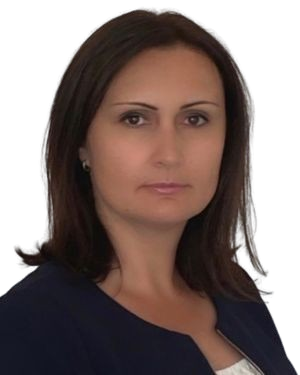
A: It’s all about being proactive and seeing where things could happen in advance. Before we do anything in our factories, we do a digital twin. We mock everything up in a virtual world, iron out the ergonomics, the forklift movements, the cranes, the human interaction points – all of it. We go into real life having already solved the problems. Engineering by design, before the real line exists.
A: Our existing workforce is quite comfortable – they understand the motto: no job has a priority over safety. When we bring in new people, I do the orientation myself for every single hire. I set the tone from the top. Here’s where you report it and we want to report everything – unsafe acts, unsafe conditions, near misses. If you tell us, we can do something about it. If you don’t, we don’t know.
A: That’s exactly what we want. More reporting means more visibility. The culture we’ve been building is: if you action reports consistently, people keep reporting. If you do nothing, the whole thing dies. We have morning huddles with a live screen – every open issue stays on the list until it’s resolved. Nothing gets lost.
WINNER PROFILE • ENERGY SERVICES
Sector: energy services & construction
Workforce: growing field-based workforce; organization founded in 2022
Top Grade Energy Services is one of the younger organizations on this list, having been founded in 2022. But the safety culture Sean Tarnowsky, corporate HSE manager, has helped build is anything but nascent. From day one, he and the company’s president, Ryan Resch, shared a conviction: that data, deployed intelligently and honestly, would be the foundation on which genuine safety performance could be constructed. That conviction was not retrofitted onto an existing operation – it was baked in from the first job.
Tarnowsky has 15 years of industry experience. He watched the sector operate reactively for most of that time – incident happens, investigation follows, corrective action is taken. It struck him as an inversion of what safety should be.
“The guesswork was only going to get you so far,” he says. “If you’re not using the data and the information you have available to you, you’re probably not doing yourself justice.”
Before a single form was designed or a platform selected, Resch set a foundational principle that would shape everything Top Grade built: simplistic consistency. It is a phrase that sounds modest but carries significant weight in an industry where safety programs are frequently overhauled, rebranded, and replaced.
“We’ve worked with ‘flavour of the month’ safety programs through our careers that just don’t work,” Resch says. “If your crews see you constantly changing the message of your safety program, rolling out new initiatives, changing processes, or the means in which field reporting gets done, how can you expect consistent participation if what the crews see is a company shifting the goalposts all the time?”
It is a critique that may resonate with any safety professional who has watched a well-intentioned initiative collapse under the weight of its own complexity or die the quiet death of workforce indifference.
The alternative Top Grade chose was a program built for permanence: consistent inputs, consistent metrics, consistent feedback loops.
“We’re able to report back consistent metrics to our supervisors for measurable results they can immediately digest and gauge how they measure up compared to expectations and against their peers,” Resch explains. When supervisors buy into a program because it is stable and legible, the results follow. Performance, in this model, begins not with technology but with hiring people who have the attitude and willingness to participate, and then building leadership around them.
When Top Grade set about designing its safety information architecture, the guiding principle was simple: field first. Every form, every app, every data-collection mechanism had to be accessible and intuitive for the frontline workers actually using it – not just the safety manager reviewing the output. The platform chosen was Site Docs, configured with selectable, structured inputs that minimize free text and keep response time to a minimum.
The Stop and Think card, a proactive hazard assessment tool, became the centrepiece of this approach. In 2025, submissions rose by 448 percent. The increase was not the result of a mandate or a quota. It came from face-to-face relationship building, consistent presence on site, and a genuine two-way exchange in which Tarnowsky asks supervisors what they need and acts on what he hears.
Resch is precise about what Stop and Think is actually for. “The most important part of keeping people safe is identifying hazards,” he says. “This is not a long, drawn-out process if you just ask your people in the field what they see. They’re the experts in their day, and management or safety reps can’t be on each job site to make things safe for them.”
The tool’s value, in his framing, is not primarily the data it generates – it is the conversation it requires. “It’s more about the conversation happening on the jobs, regardless of the reporting," Resch says. The reporting is the by-product. The pause before the work continues is the point.
“Ninety to 95 percent of my site visits are not because something has happened,” Tarnowsky adds. “It’s because, ‘Hey, how are you doing? Is there anything I can help you out with? How are the kids?’” The human element, he insists, is not separate from the data-driven approach. It is what makes it work.
One finding from Top Grade’s data analysis stands out for its clarity. The team examined the relationship between proactive form completion and incident occurrence. The result: in approximately 60 percent of incidents, the relevant proactive hazard assessments had not been completed that day.
The correlation was not a revelation – experienced safety professionals know the logic. But having a hard number transformed the conversation.
“I can’t make this up anymore,” Tarnowsky says. “It’s a blindingly obvious correlation. When you start applying it in a direct way, you see it.” The company went further, developing a proactives-per-hour metric rather than measuring against incident counts alone, giving supervisors a real-time lens on engagement levels across sites.
What makes Top Grade’s data story particularly compelling is that it was never just a safety initiative. It was a business architecture decision made at the founding level. President Ryan Resch describes the logic plainly: “Starting with our first job in April 2022, we structured our program to collect consistent data through a mobile app in the field. Data collection with consistency is key to any analytics we could eventually run.”
That early discipline is now paying dividends. With over two years of consistent, structured field data, Top Grade can do something most established companies cannot: compare proactive indicators against hours worked across the full arc of the company’s history, and identify hazard trends with statistical confidence.
“We have the benefit of being able to compare things such as proactive indicators related to effort worked,” Resch explains, “so we can readily see trends in identifying hazards.”
But for him, the current capability is only a waypoint. The next step is explicit: feeding that data set into AI modelling.
“Our data set can be modelled with triggers to gain insights from AI,” says Resch, “and we’re excited to march that path to see how things get even better collectively based on what our people are actually seeing through data submission across our job sites.”
The practical implication extends beyond internal performance – consistent, measurable data now allows Top Grade to collaborate with clients on the basis of what is actually happening on their job sites, shifting the dynamic from a top-down safety mandate to a shared, evidence-based conversation. It is a statement of intent from the top of the organization, and a signal of where the industry is heading.
A: It was data. The president and I sat down and said, ‘What is the data going to tell us, and how is it going to be applicable for our people?’ We had two things to balance: regulatory compliance and field first. Is this going to be something easy to use whether someone is tech-savvy or not? It turned out that the more you give people from a tech standpoint, the more they grab onto it. It becomes a self-fulfilling prophecy.
A: It comes from going to site, knowing everyone’s name, and building real relationships. When I go to supervisors with a data-backed idea and say I think this matters, my buy-in is immediate. There’s no begging, no pulling teeth. And on the flip side, when they come to me and say, ‘We need this,’ I make sure I’m listening. They feel heard. The increase is a product of that back-and-forth trust.
A: Some organizations see safety as a cost. We’ve always looked at it as a profitable component of the business. Working safely means good quality work, retained employees, clients who want to come back. Those three things together make a job that is successful. People are happy. People want to stay. That’s what field first means to us.
WINNER PROFILE • LIFE SCIENCES & PHARMACEUTICALS
Sector: life sciences & pharmaceuticals
Workforce: large multigenerational site workforce including significant contractor population
At Sanofi Canada, the ambition is straightforward to state and demanding to deliver: ensure that every single person on site goes home safely. The route to that outcome, however, is anything but simple. With ongoing construction activity, a large and growing contractor workforce, and employees spanning multiple generations with varying levels of digital literacy, head of process excellence Vicki Choy and her team have built a safety infrastructure that is as much about human psychology as it is about process.
The foundation is a hazard reporting application that is open to everyone on site – employees and contractors alike. The target: more than 80 hazard reports submitted per week, sustained across the full year. That is not a ceiling. It is a floor. The culture Sanofi has cultivated is one in which reporting is not a burden but a contribution.
What sets Sanofi’s approach apart is what happens to the data once it arrives. Submissions are fed into an AI analysis tool that identifies recurring themes and patterns across the site. When a particular type of hazard begins appearing with disproportionate frequency, the system surfaces it. The HSE team then creates a Safety Flash – a targeted communication sent site-wide – and the issue is placed on the agenda of the monthly manager meeting, where leaders across departments are asked to check whether the same risk exists in their own areas.
“We utilize a lot of managers to see if there are similar risks in other areas,” Choy explains. The result is a cross-site intelligence network: a single report from one department can trigger a preventive sweep across every other corner of the organization. It is the closest thing to predictive safety that most workplaces in Canada are currently deploying.
Sanofi recognized early on that a reporting culture is only as strong as the accessibility of its reporting tools. For younger workers, the app was intuitive from day one. For employees in the 60-plus cohort, the team ran dedicated workshops, stationed pre-configured iPads at accessible points around the site, and offered one-on-one manager support until confidence was established.
Safety moments generated by the AI analysis run on television screens in cafeterias and common areas, ensuring that even employees who never open the app still receive the information.
“TV screens everywhere,” Choy notes. “People can eat lunch and they see it.” The goal is saturation: no one should be able to claim that the information never reached them.
HSE Champions – at least one per department, drawn largely from volunteers who see the role as a career development opportunity – act as the connective tissue of the program. Monthly networking meetings between champions share best practices, surface gaps, and ensure that the safety message does not remain confined to the HSE department.

A: We have a KPI – over 80 submissions a week as a target for the whole site. Those submissions go into AI to analyze for us, and we see different themes emerge. When a particular hazard keeps appearing, we create a Safety Flash and send it to the whole site. We also bring it to monthly manager meetings, asking everyone to check if that specific risk exists in their own area. One report can trigger a site-wide prevention effort.
A: To ensure we reached all employees with varying technical acumen, we ran workshops, set up iPads with the app already open, and made manager support available one on one. For employees over 60, we ran workshops, set up iPads with the app already open, and made manager support available one on one. The end result was that everyone became more capable of reporting incidents and near misses. We also have TV screens in the cafeteria showing safety moments, so even people who don’t use the app are receiving the information.
A: We’re not fully there yet, but that is 100 percent our focus. We need people to keep giving us data through the app, and eventually the trends will become clear enough that we can predict where the next serious incident could occur and prevent it. We’re training our HSE champions to use AI more often as well, so that accountability and analytical capability is distributed across departments, not just sitting with us.
INDUSTRY ANALYSIS
For most of the history of occupational health and safety, the discipline operated in a fundamentally reactive mode. An incident occurred. An investigation followed. A corrective action was implemented. The goal was to prevent the same thing from happening again – a worthy ambition, but one built entirely around the past.
That model is changing. Across Canadian industry, the organizations that are consistently achieving the best safety culture in the workplace are no longer simply asking, “What went wrong?” They are asking, “What might go wrong next?”, and building the data infrastructure, technology platforms, and analytical capabilities to answer that question before anyone gets hurt.
The organizations recognized in this year’s 5-Star Safety Cultures report are instructive case studies in this shift. Each has approached the challenge differently, reflecting their sector, size, and starting point. To provide a broader context, COS also spoke with two independent safety experts who work across Canadian industry – Shawn Draper of Crawford & Company, and Brian Preston and Amanda Valin of TruStar Safety – whose observations are woven through this analysis.
Every predictive safety strategy begins with consistent, high-quality data collection. For this to happen, reporting must be frictionless, and the culture around reporting must be psychologically safe. Both conditions are harder to achieve than they sound.
At Top Grade Energy Services, Tarnowsky built the company’s data infrastructure from the ground up with a field-first philosophy – every form designed to be completed in five minutes, on a phone, by a worker standing on a job site. The result was a 448 percent increase in Stop and Think submissions over a single year, not because the company mandated it, but because the tools were easy to use and workers trusted that their input mattered.
At Sanofi Canada, the target of 80-plus hazard reports per week is a deliberate cultural signal as much as a performance metric. The number is not tracked to penalize departments that fall short; it exists to normalize the act of reporting and generate enough data for meaningful pattern analysis. One factory in Siemens Canada’s Quebec operation submits 300 more reports than any comparable site in the organization, and Vuckovic considers it a mark of success.
The lesson from all four companies is the same: volume of reporting is not the problem to be solved. It is the prerequisite for everything that follows.
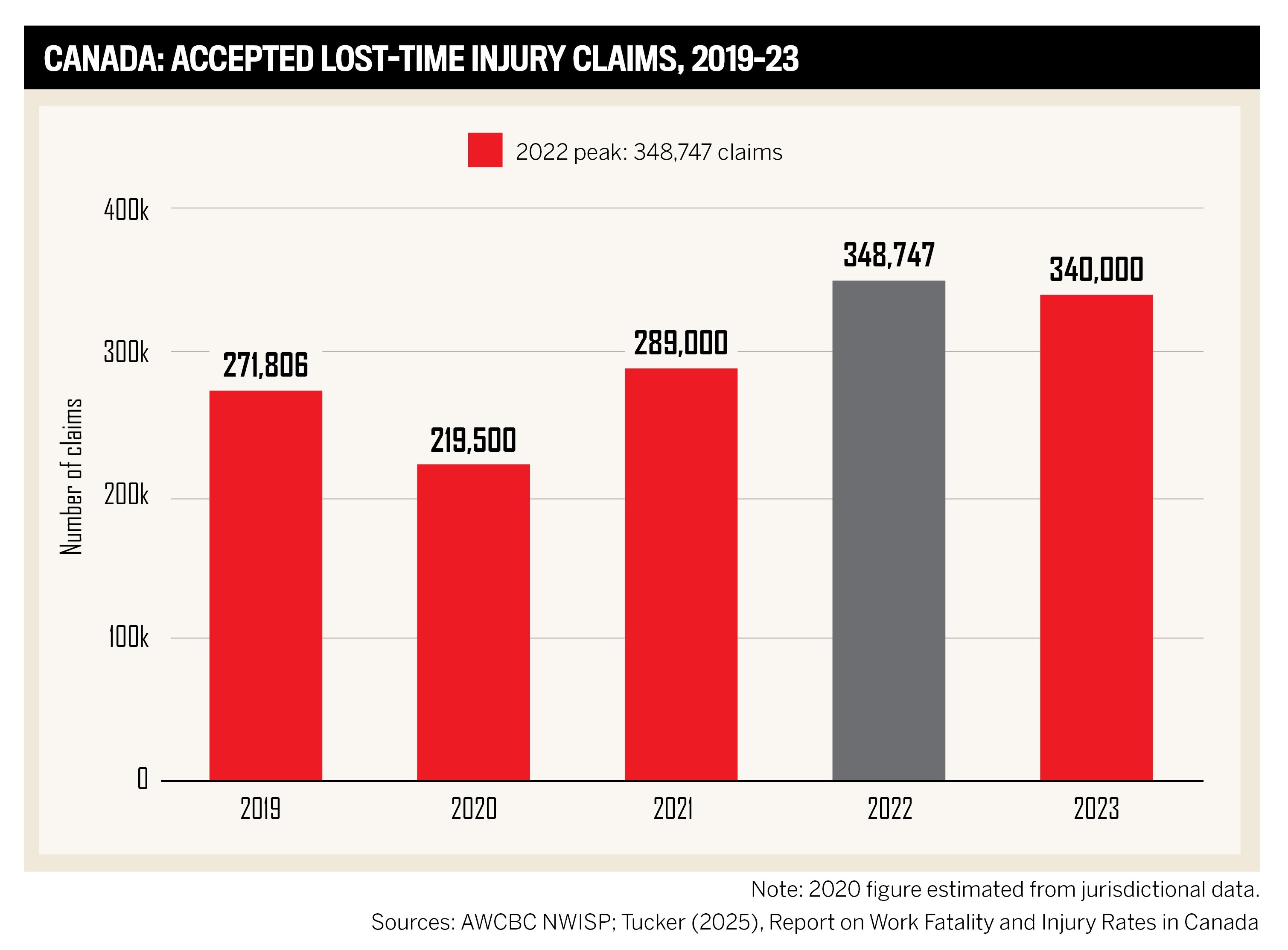
Collecting data is one thing. Turning it into actionable intelligence is another. This is where the gap between safety programs and safety cultures tends to be widest, and where the most sophisticated organizations are pulling ahead.
Morguard conducts quarterly metrics reviews that tell a story about each property and each region: does this site need extra support on training? on incident reporting protocol? on leadership engagement? Paredes describes the process as “having a crystal ball” – understanding the numbers deeply enough to foreshadow what is coming rather than simply recording what has passed.
Top Grade takes this further with a proactives-per-hour metric that allows the company to track, in near real time, the rate at which workers are completing hazard assessments relative to the hours they are working. When that rate drops, it is a leading indicator – a signal that something in the environment or workload may be creating pressure that erodes pre-task assessment. The company also identified a stark correlation: in 60 percent of incidents reviewed, the relevant proactive forms had not been completed that day. A correlation, not a certainty, but a number hard enough to anchor a serious conversation about prevention.
Sanofi has gone furthest in automating the analytical layer, feeding hazard reports directly into AI for theme identification and pattern recognition. What would otherwise require hours of manual review – reading hundreds of individual submissions, spotting recurring hazard types, cross-referencing with site locations – is compressed into a process that surfaces actionable insights in time for the next monthly manager meeting.
Independent observers see the same gap. Shawn Draper, supervisor of human risk services at Crawford & Company, notes that across Canadian industry, the biggest missed opportunity is not in data collection but in what happens next.
“Many organizations still focus on compliance reporting rather than using insights to drive behaviour change on the frontlines,” he says. The shift from lagging indicators – injuries, incidents, claims – to leading indicators like near-miss reporting and hazard identification is, in his view, what separates organizations that manage safety from those that genuinely advance it.
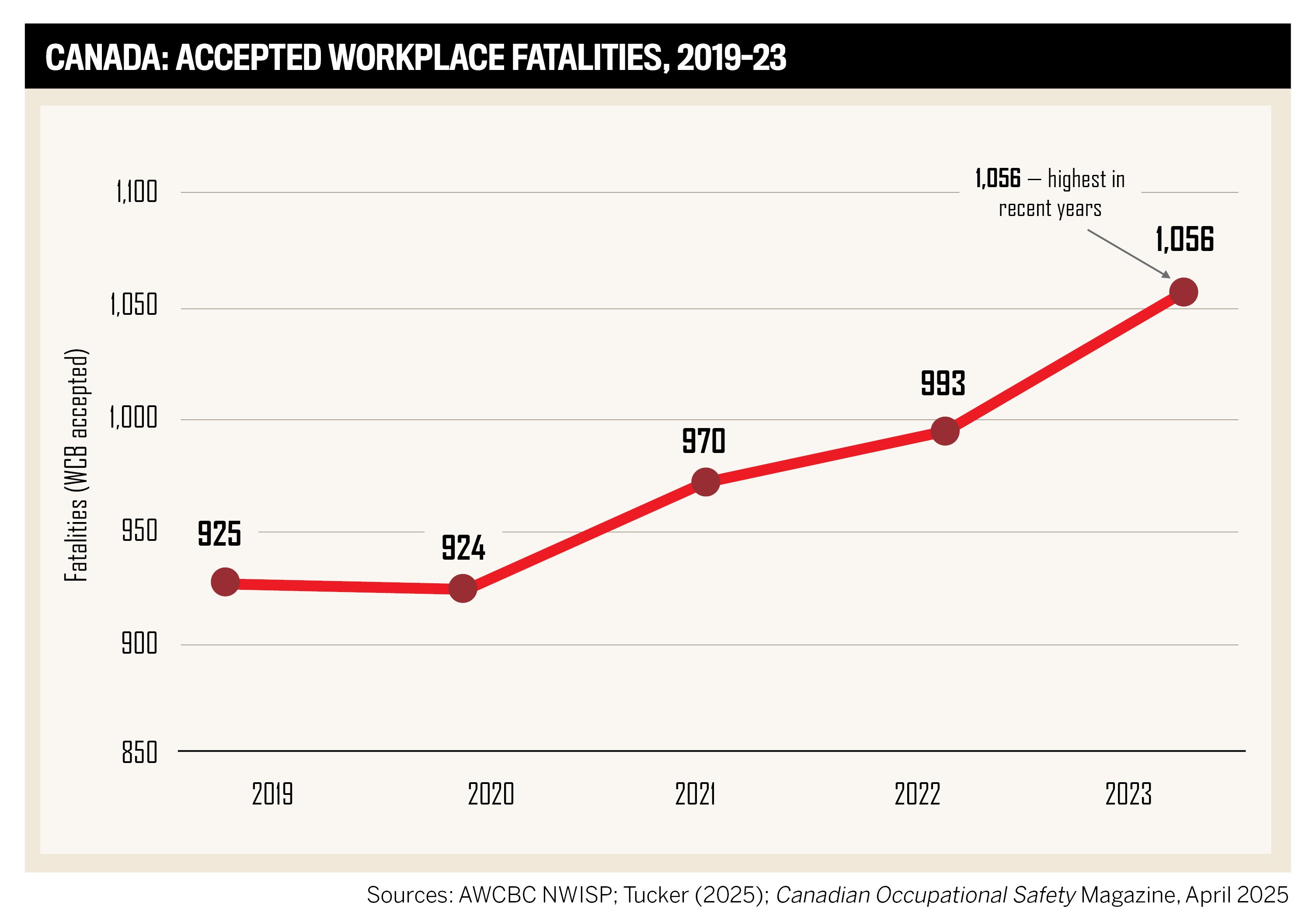
The technology deployed by these organizations ranges from the elegantly simple to the genuinely frontier.
At Top Grade, the core tool is a mobile app built on Site Docs, configured to be usable by any worker regardless of technical proficiency. The sophistication lies not in the platform itself but in how it is designed: structured inputs that minimize free text, limit the burden of form completion, and maintain data quality for downstream analysis. AI has been applied not to predict field-level incidents directly, but to crunch large data sets on the back end and surface insights in a form that supervisors can act on.
At Sanofi, technology enables a feedback loop that would be operationally impossible to run manually at scale. The hazard reporting app, the AI analysis tool, the Safety Flash communications, the TV screens in the cafeteria, the HSE Champion network – each is a node in a system designed to ensure that a risk spotted by one worker at one corner of the site reaches every other worker and manager within days, not weeks.
Siemens Canada operates at a different technological frontier. In its factories, digital twin simulations allow the company to model entire production lines in a virtual environment before any physical installation takes place. Engineers and safety professionals can stress-test layouts, identify ergonomic pinch points, simulate forklift movements, and resolve conflicts between human workflows and automated processes – all before a worker ever sets foot in the real space. Where digital twins identify repetitive, injury-prone tasks, cobots are deployed to take over that work. The human is moved to a less hazardous role. The hazard, in the most literal sense, is designed out of existence.
It would be a mistake to read this analysis as an argument that the best safety culture in the workplace in Canada is simply the one with the most sophisticated software. All four organizations are emphatic on this point: technology enables, but human connection sustains.
Tarnowsky spends 90–95 percent of his site visits not responding to incidents, but building relationships. He knows every worker’s name, asks about their weekend, and listens when they tell him a form is confusing or a tool does not work the way they expected. That investment – unglamorous and time-consuming – is what produced the buy-in that made a 448 percent increase in safety submissions possible.
Paredes talks about emotional intelligence as a safety competency: the capacity to recognize that workers want to be heard, that managers can be wrong, and that the best safety ideas sometimes come from the person doing the job rather than the person writing the program. His OHS Spotlight series gives employees a direct line into the health and safety agenda. Their survey responses shape the next year’s calendar.
Vuckovic’s work on psychological safety is perhaps the most explicit articulation of this principle. You cannot have a high-performing physical safety culture in an organization where employees are afraid to admit they are struggling. The Growth Talks, the Wellness Wednesday program, the employee-led peer groups – all of it is infrastructure for psychological safety. And psychological safety, the evidence consistently shows, is a precondition for the kind of open, high-volume reporting that feeds predictive analytics in the first place.
Choy is candid about where Sanofi sits on the predictive safety spectrum: “We’re not there yet. We’re trying to get there.” It is a position that most organizations in Canada would recognize – aspiring toward a future where the data is rich enough, and the analytical tools sophisticated enough, to identify where the next serious incident will occur before it does.
The organizations profiled here are further along that road than most. Their common denominator is not budget or technology stack. It is a shared belief that safety is not a department, but a system built from data, powered by technology, and held together by the kind of human trust that no algorithm can replicate.
Preston and Valin of TruStar Safety offer a note of measured caution that the winners would likely endorse: AI adoption without guardrails carries its own risks.
“Organizations need data quality, privacy, transparency, and bias controls so technology improves trust rather than eroding it,” Preston observes. “The tools are only as good as the culture that deploys them.”
That is what the best safety culture in the workplace in Canada looks like in 2026. Not a poster on a wall or a reactive investigation, but a living, breathing, forward-looking infrastructure – one that gets better every time someone raises their hand.



Canadian Occupational Safety’s 5-Star Safety Cultures entry process consisted of two steps: an employer submission followed by an employee survey. For the submission, organizations were required to complete an in-depth form detailing safety programs initiated over the preceding year. Companies that successfully completed the submission phase were then sent a link to an online employee survey to be circulated internally.
Organizations had to meet a minimum number of responses to be eligible for the 5-Star Safety Cultures award, with thresholds scaled by company size. The survey asked employees to rate their company across a range of metrics that constitute the key drivers of safety culture and employee confidence. Companies that achieved an overall satisfaction rating of at least 80 percent were recognized as 5-Star awardees.
The profiles in this report are based on in-depth interviews conducted with representatives of four 5-Star awardees. Quotes have been lightly edited for length and clarity.