Jump to winners | Jump to methodology
Keeping workers safe and reducing incidents is the sole focus of safety product providers. However, they have to contend with a variety of evolving factors across the industry, from mental health concerns to the technological demands of the modern economy. Meanwhile, climate change has increased risks like workers’ commutes to emergencies such as wildfires or floods.
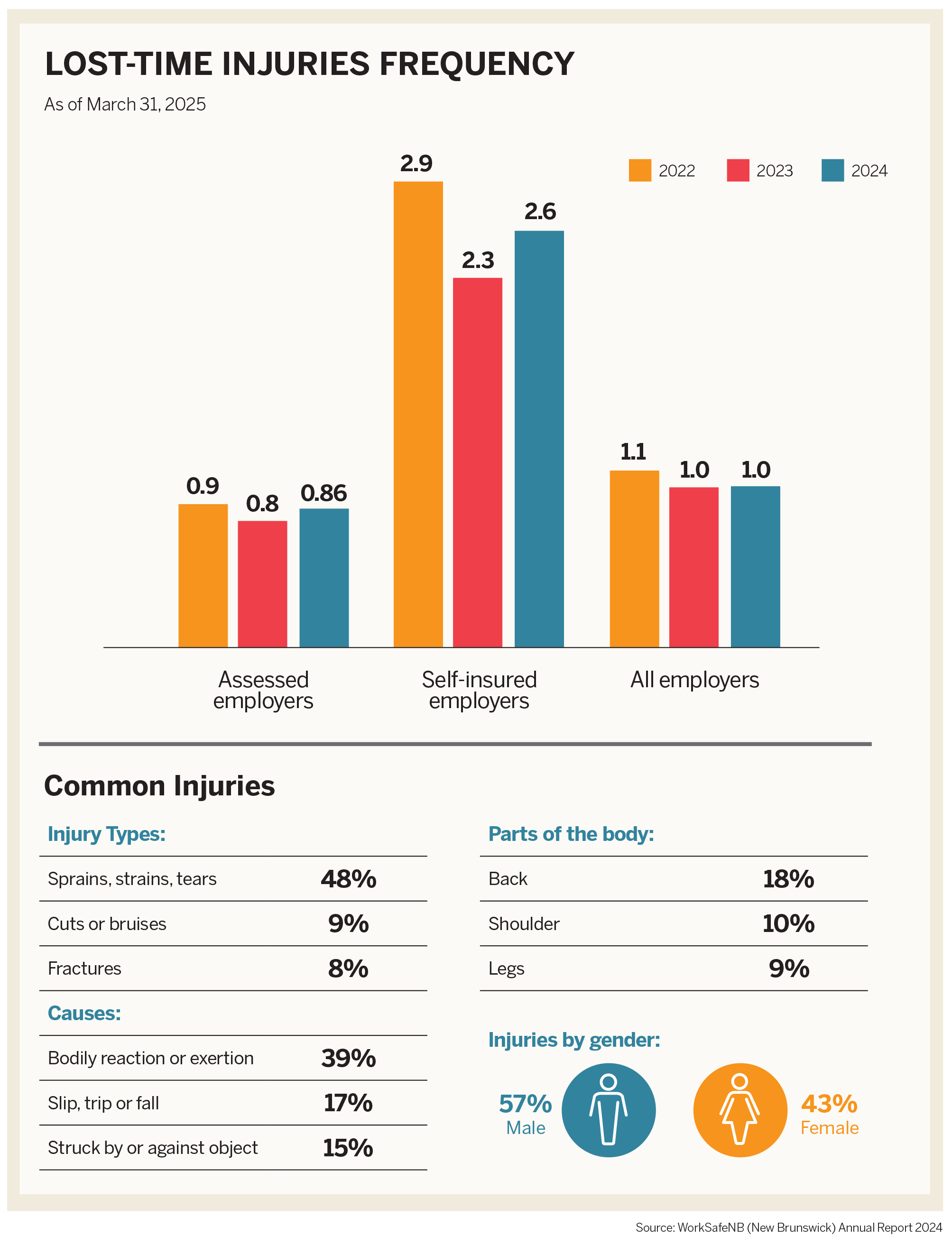
A snapshot of data from around Canada underlines how safety matters more than ever, as injuries and fatalities exist.
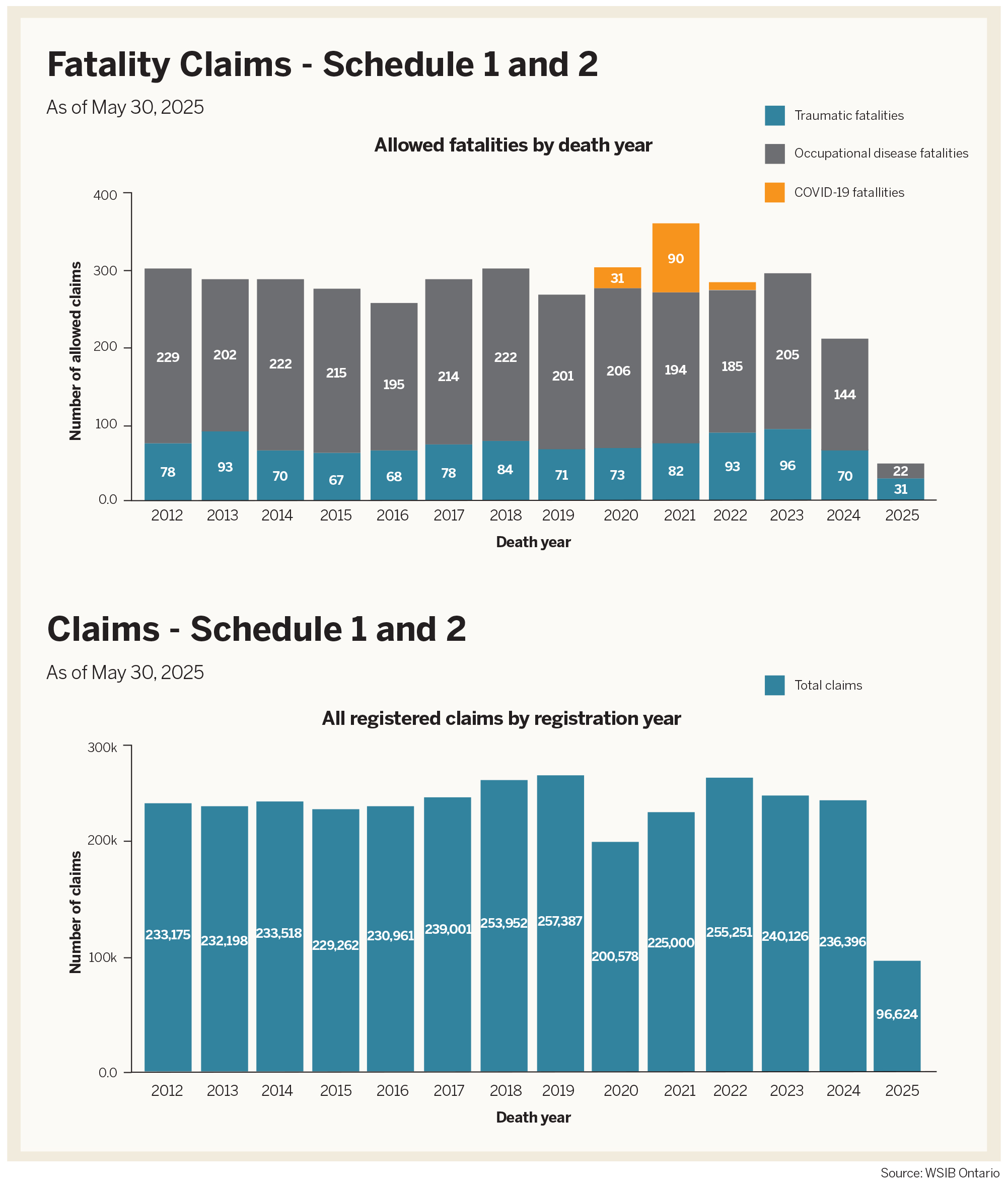
The top safety suppliers in Canada are committed to trying to reduce these numbers. Readers of Canadian Occupational Safety rated products and services available to the OHS profession across a number of categories, including consultants, emergency management, ergonomics, and facility safety. The best earned a place on the prestigious Readers’ Choice Awards 2025 list.
Businesses, especially small and medium enterprises, want safety guidance that is easy to understand and implement. With a diverse workforce including newcomers and young workers, plain language and accessible resources are essential.
There is a strong push for inclusivity, particularly in personal protective equipment (PPE). Providers are expected to supply PPE that fits all body types, especially women and diverse workers, addressing a historic gap in safety equipment.
Safety programs must also reflect the realities of a multicultural and multilingual workforce, with training and communication tailored to different backgrounds.
Now considered as important as physical safety. Businesses expect providers to offer resources, training, and support for psychological safety, stress management, and mental wellness.
The adoption of AI-powered safety tools, smart wearables, and real-time monitoring is accelerating. Businesses want predictive analytics to identify risks before incidents occur and value providers who can integrate these technologies into their safety programs.
Companies are moving away from reactive safety measures to proactive, data-informed strategies. They expect providers to help set and track SMART (Specific, Measurable, Achievable, Relevant, Time-bound) safety goals and to use analytics to drive continuous improvement.
With new and evolving regulations (e.g., Ontario’s Working for Workers Act and expanded definitions of workplace harassment), businesses need providers who are up to date on legal requirements and can help them remain compliant.
There is heightened focus on protecting vulnerable workers, such as newcomers, young workers, and those in precarious employment. Providers are expected to offer resources and training that address these groups’ specific risks and needs.
Environmental, Social, and Governance (ESG) factors are increasingly integrated into safety management. Businesses want providers who can help them align safety with sustainability and social responsibility goals.
Wearables and IoT: Smart devices are monitoring worker health (e.g., fatigue, posture, and exposure to hazards) and providing real-time data to supervisors.
Mental health initiatives: Data shows high rates of mental health issues, especially in high-risk sectors like construction, prompting more integrated mental health support in safety programs.
Rising fatality and injury rates in some sectors: Despite advances, fatality rates – especially in construction and among young workers – are rising, highlighting the need for ongoing vigilance and innovation.
Legal and regulatory changes: New laws are increasing employer accountability, expanding definitions of workplace violence and harassment, and imposing stiffer penalties for repeat offenders.
Winner: HSE Management Solutions
Meeting the unique needs of today’s workforce is BSI Group's focus as it supports a culture of safety that extends beyond compliance to proactive risk management. It embraces modern, flexible, and engaging methods such as microlearning, gamification, and hybrid training models, delivered digitally and in person.
The firm begins by gaining a deep understanding of an organization’s size, industry, maturity level, and current systems. From there, it designs tailored solutions that combine globally recognized standards with digital tools like self-assessments and sector-specific best practices.
“Our goal is to help clients embed training within their broader management systems, fostering lasting cultural transformation rather than short-term compliance,” says senior vice president Jessica Patel.


The firm highlights making use of the standards ISO 45001 for Occupational Health and Safety and ISO 45003 for Psychological Health and Safety. “One of the key strengths is their universal applicability – they offer flexible, scalable frameworks that suit organizations of any size and sector,” explains Patel. “Complementing this, our Qualification Pathway program delivers rigorously evaluated learning experiences designed to help individuals build deep expertise and lead on health, safety, and well-being within their organizations.”
Proving how BSI is at the vanguard of the industry, it has embraced leading-edge tech. Patel says, “AI supports our predictive assurance, helping clients identify potential risks before they materialize. Our proprietary platforms integrate IoT and ML to automate data collection, enhance reporting accuracy, and identify systemic gaps across organizations. This allows both our clients and internal teams to move from reactive safety to proactive and preventative strategies.”
Inclusivity is also becoming a bigger part of the industry to ensure that communications are accessible to a broader range of individuals. “Whether that is translating materials for local staff in different locations, customizing information for neurodiverse individuals, or just understanding the most effective ways to communicate with different individuals,” adds Patel.
Part of the shifting attitudes toward health and safety has seen the introduction of microlearning, where workers are taught safety concepts throughout the year, rather than the traditional “one and done” presentation style. Patel describes a system that still employs annual training meetings yet allows workers to continuously learn through digital learning models. “It allows a lot of flexibility for the employee to do it in their time and space on the digital device that works best for them as well,” she says.
As a company rooted in sustainability, BSI is at the forefront of aiding contractors to mitigate potential climate risks to workers through education and risk prevention. BSI highlights the need to be aware of day-to-day changes to clients.
Patel explains, “It’s important that we are making sure that our customers are aware of the changing dynamics around them and that they think about what the types of safety trainings are and where those elements of climate change are included.”
To judge the success of their output, BSI focuses on metrics such as incident reduction rates, employee safety engagement scores, successful audit completions, and certification longevity. Additionally, broader outcomes like regulatory compliance, ESG alignment, and employee well-being metrics matter.
Patel adds, “Internally, our goal is zero harm, and we track training completion rates, near-miss reporting, and feedback from employee safety surveys.”
The Occupational Health & Safety KPIs it uses include:
Incident rates: Lost Time Injury Frequency Rate (LTIFR), Total Recordable Injury Rate (TRIR), and near-miss ratio
Compliance: percentage of legal compliance achieved, number of noncompliances
Training: percentage of employees trained, training effectiveness scores
Employee participation: number of safety suggestions submitted, participation in safety meetings
Audits and inspections: percentage of audit findings closed on time, number of safety inspections completed
Corrective actions: time to close incidents, percentage of corrective actions implemented
Workplace conditions: ergonomics score, air quality levels, noise exposure readings
Winner: Spill Control Products, Lockout/Tagout Machine Guarding, and Signage & Identification
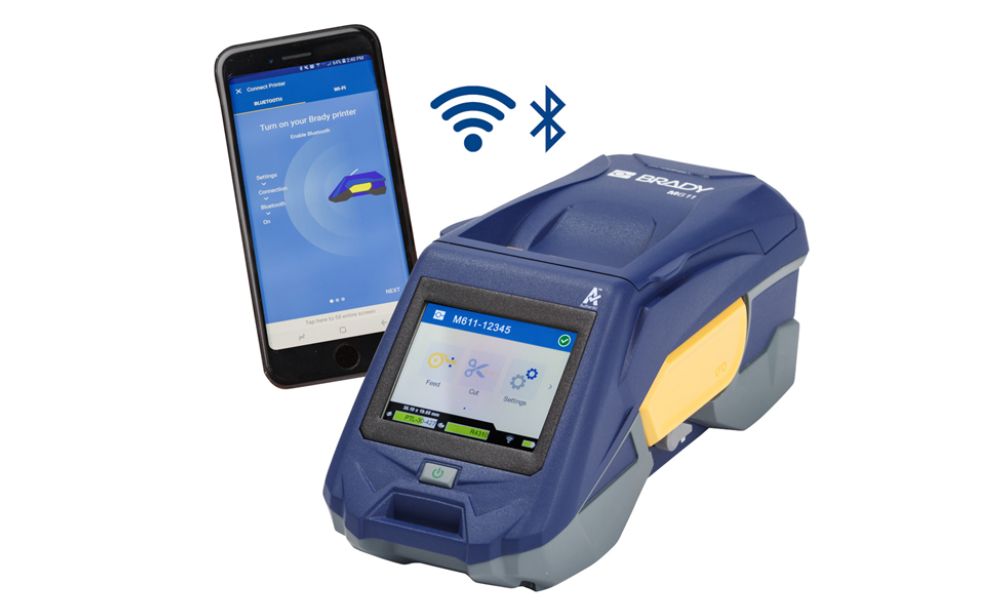
Unsurprisingly, for a firm whose products are found everywhere from the depths of the ocean to outer space, Brady Canada is renowned for its spirit of innovation. Among its most exciting technological advancements is the introduction of compact Bluetooth printers, which can be operated via an app. This cutting-edge solution enables clients to leverage voice-to-print technology, streamlining their processes and enhancing efficiency.

The company is able to print more than 40 label materials from a mobile device that can download label files, templates, and lists from the cloud. “This printer is the size of a tape measure, and you just have to say, ‘Make me 10 labels numbered 1 to 10’”, says country manager Jamie Button.
Shifting demographics in trades, particularly in the electrical field, is creating a demand for more tech-friendly products, which Brady has responded to. “The average age of electrical contractors in Canada was about 15 years ago; you would probably have said it was around 55. That workforce has transitioned to where you've got a combination of tenured people, but a lot of new people coming in. Printing something from a Bluetooth printer is going to show a lot of value for customers,” adds Button.
QR codes have become increasingly popular in the safety sector, with Brady innovating in that sphere too, along with acquiring a specialist QR code company. “We incorporate QR codes a lot into the labelling software program. If you’re on a job site and you need to reference a drawing, you scan the QR code and pull up the PDF on your device. As things evolve with respect to automating things, we try to stay ahead of that.”
The quality of Brady’s signs or labels is designed for the environment the customer needs, for example, by being resistant to heat, direct sunlight, and UV light. Button adds, “The durability of our QR codes means they remain scannable.”
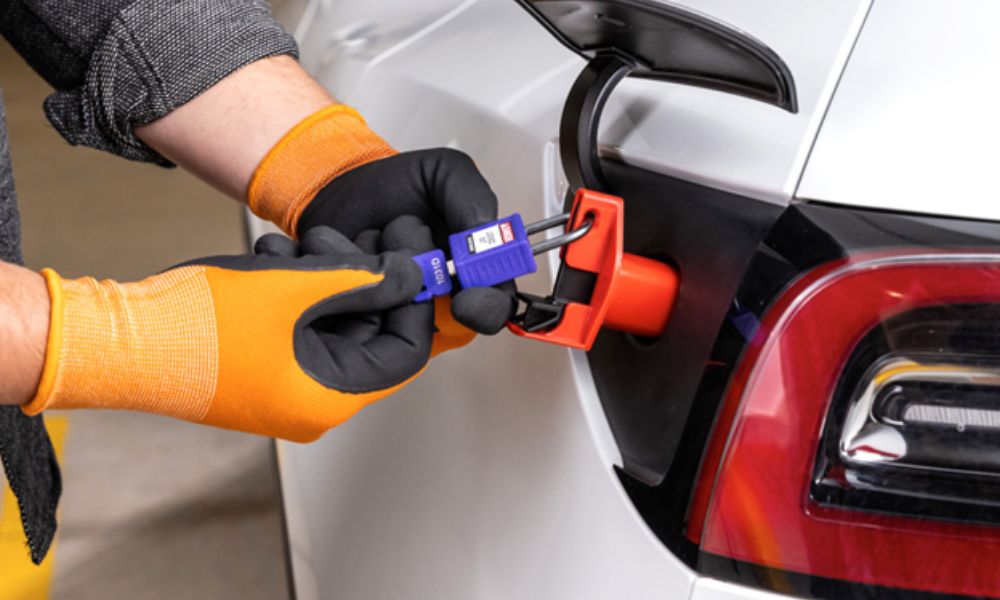
Further demonstrating the innovative mindset at Brady, Button highlights the example of employees collectively brainstorming to develop a product that enabled a Quebec-based client to remove electrical hazards for employees at their EV vehicle plant with a charging port lockout.
“The customer said, ‘I would like to be able to lock the charging device.’ So, we developed a specific product to work with three different types of EV electronic vehicles,” says Button.
Made of glass-filled nylon, the device:
blocks access to an electric vehicle charging port
fits all charging ports designed for the North American Charging Standard (NACS)
mitigates electrical hazards with nonconductive nylon construction
prevents unauthorized removal with tamper-resistant features
avoids interference with surrounding equipment and parts
withstands harsh environments and repeated use
snaps easily into place inside the port and secures with a standard padlock
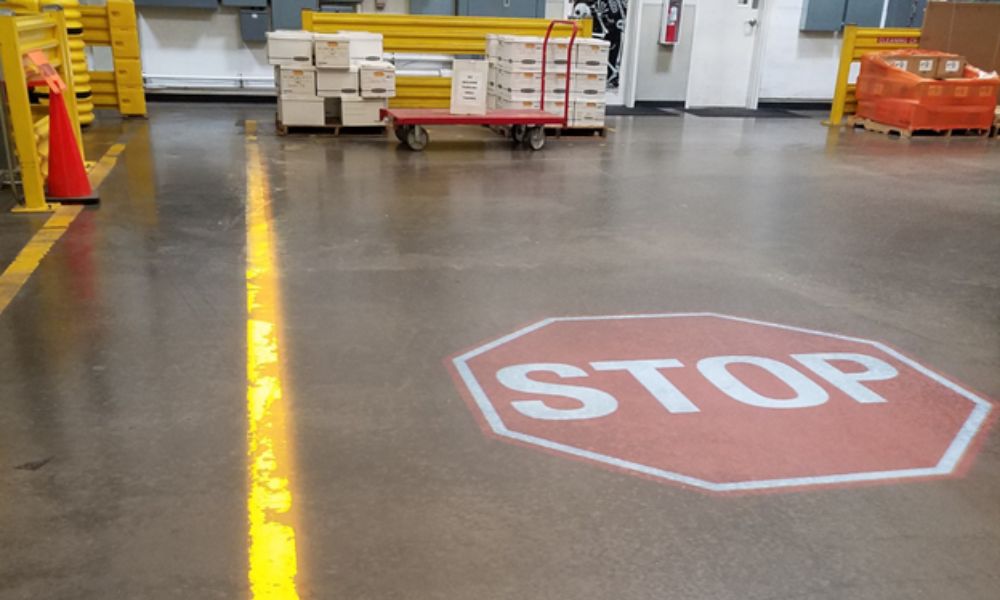
Signage is another of Brady’s areas of expertise. From virtual line projectors to LED sign projectors, the firm delivers clear floor and area markings in even the most challenging environments. It provides adaptable alternatives to traditional floor and area marking methods, such as paint and tape.
An area where Brady’s products are being used more commonly is in the construction of data centres, part of the AI boom. Button says, “We’ve always sold into data communications, but specifically for this need, we’re making sure that our solutions are easy to use, as that’s a big thing for these places, and obviously, we focus on affordability.”
Brady has been in the Canadian market since 1958, and this longevity is reflected in their insight. “I’ve been with the company 31 years, and I’ve got a lot of colleagues on my sales team who’ve been here a long time too,” adds Button. “That speaks to the knowledge that our team has to educate both end users and our distributor partners.”
Winner: Legal Service
It may not be immediately obvious how the firm impacts workplace safety, being one step removed. However, Aird & Berlis LLP has the expertise and skills to educate clients, who range from small businesses to large municipalities across Canada, to understand the need for comprehensive safety procedures.
This is often driven by legislative changes, notably in its home province of Ontario. Zachary Sippel, labour and employment lawyer at Aird & Berlis, highlights the pace of change.

“They have been kind of nonstop through the Ford government, which has been great in some respects, but keeping up on those changes and keeping our clients apprised from an OHS perspective has been a challenge,” he says.
One update has come in the Occupational Health and Safety Act (OHSA), specifically Section 66, which slaps a minimum fine of $500,000 for a company responsible for two serious incidents within two years. Aird & Berlis works to support clients in drafting policies and responding to complaints.
It then becomes involved again in formal incidents where a client faces charges due to an injury or fatality. Previously, the firm might have advised clients to consider accepting a plea deal with the Crown, as this would avoid the expense and duration of a trial. However, with the introduction of the new law, this approach has changed.
Sippel explains, “This is like a whole other ballpark, because now if you’ve got this second serious injury within two years, it’s this massive penalty, and it’s changing the way we approach these situations.”
To avoid clients being in this predicament, Sippel advocates for appropriately trained supervisors and robust policies. With that in mind, he informs clients that, even so, incidents will occur.
“A lot of our emphasis focuses on preemptively building a due diligence defense, so making sure that you’ve got all the procedures in place, your employees are appropriately trained, and your supervisors are appropriately trained and are present,” he says. “So, if heaven forbid somebody is injured, then at least we can stand before the judge and say, ‘It’s really unfortunate this happened, but we did everything we could have done in the circumstances.’”
Sippel notes that employers are becoming more vigilant in onboarding workers to ensure they are aware of policies and devising increasingly engaging ways to deliver this information. “There has been a very big emphasis in the courts recently on supervisors and individual liability, and we’ve seen a lot of our clients ramping up on making sure that their supervisors are what's called a competent person under the Act as well.”
Canada’s Temporary Foreign Worker (TFW) program has seen a surge of new workers, particularly in Ontario’s manufacturing sector. Sippel says that since many are hired through temporary agencies, there can be confusion about whether the employer or the agency is responsible for training. Some employers may pass the blame to agencies should an incident occur, but Aird & Berlis consistently advises clients to assume all reasonable responsibility.
“Fundamentally, OSHA does not support finger-pointing of any kind. If you think you may be an employer of somebody, and that definition is quite expansive, then act basically as though you are and take as many reasonable precautions as you are physically able to do so,” says Sippel.
A possible scenario is that a foreign worker’s English skills may not be good enough to undergo safety training, but the employer doesn’t have the ability to provide that accommodation in a foreign language, so they refer it to the employment agency.
“That’s something that the employer could point to and say, ‘I knew that there was an issue, and I identified that there was a deficiency. I instructed them to get training, but it’s beyond my powers to take it any further. So, I’ve instructed the temporary agency, which does have the power to do it, to do so.”
Another area of interest for Sippel is around remote workers, as it’s still unclear if they should be part of joint health and safety committees. He cites the example of harassment and sexual harassment definitions being changed to include online forms, and digital workspaces being included in the definition of a workplace.
“It seems to me that there are risks and commonalities amongst remote workers, be it subject to psychological or emotional harassment through online means, as it can still happen through Teams and Slack,” says Sippel. “There are also still physical hazards in a remote workplace around slips, trips, and falls, and ergonomics.”
He points to how British Columbia has responded to this with a significant overhaul of their occupational health and safety laws, as have Alberta and Manitoba. “There’s a move to treat psychological and emotional safety just the same as physical safety when it comes to occupational health and safety, which I find particularly fascinating,” he adds.
Canadian businesses in 2025 expect workplace safety providers to deliver accessible, inclusive, tech-enabled, and data-driven solutions that address both traditional and emerging risks, with a strong focus on mental health, compliance, and measurable results:
culture of shared responsibility for safety at all levels
inclusive, accessible, and tailored safety solutions
integration of technology and data for proactive risk management
support for both physical and psychological health
ongoing compliance with evolving regulations
demonstrable, measurable improvements in safety outcomes
The survey for Canadian Occupational Safety’s 10th annual Readers’ Choice Awards 2025 took place between March 3 and 28, 2025. The COS team compiled for nomination an impressive list of vendors and suppliers to the OHS community from across the country, based on the team’s knowledge and additional research within each area.
Readers were invited to cast their ballots in an online survey, and responses were completely confidential. Participants were asked to rate products and services available to the OHS profession across a number of categories, including consultants, emergency management, ergonomics, facility safety, and more. The top three nominees who received the most overall votes were awarded the Readers’ Choice designation.