

Families, unions and officials marked the solemn day with ceremonies, new fatality data and fresh demands to be better
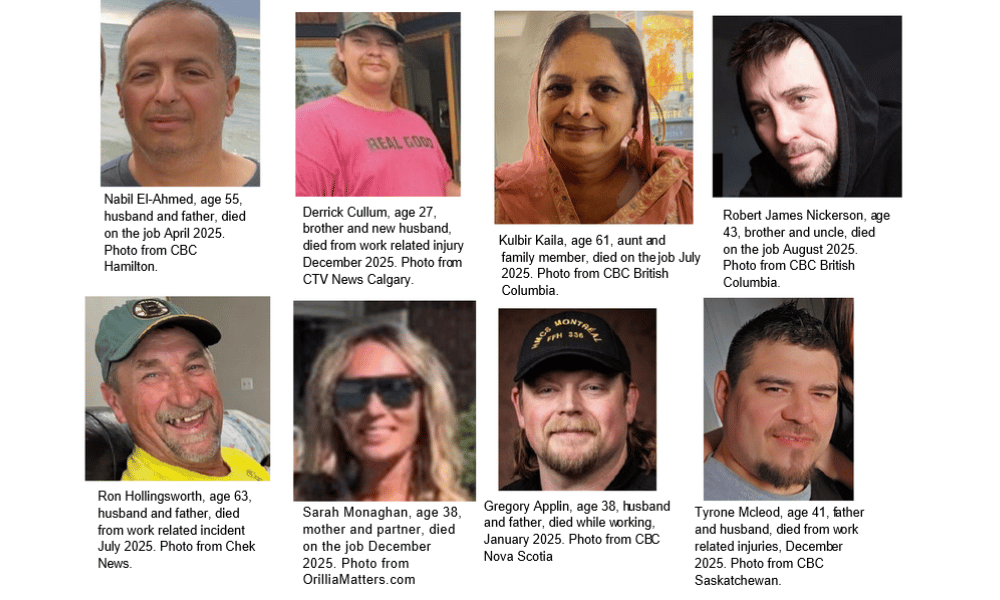
As Canadians marked the National Day of Mourning on April 28, ceremonies, new data and memorial projects across the country underscored both the scale of work‑related harm and the ongoing push for safer workplaces.
Remembering the origins and meaning of the day
At a virtual ceremony hosted by Threads of Life, a national charity supporting families affected by workplace tragedy, executive director Eugene Gutierrez reminded participants that the Day of Mourning grew out of worker activism in Sudbury in 1984, and became a national observance in 1991 when Parliament officially recognized it as the National Day of Mourning for persons killed or injured in the workplace.
Gutierrez said the day is dedicated to workers who have died, been injured or made ill because of their job, and to the families living with that loss. For many Threads of Life members, he added, it is both a time to honour loved ones and an opportunity “to help others understand the lifelong impacts of a workplace tragedy,” with the hope of building “a world where nobody else has to experience this.”
The ceremony included a candle‑lighting and moment of silence. Gutierrez described the candle as “a symbol of hope and healing” that “lights the way for others to see,” offering strength and guidance to families whose lives have been changed by work‑related harm.
A personal story behind the statistics
For Todd Smith, chair of Threads of Life’s board and a long‑time volunteer speaker, the day is rooted in personal loss. Sharing his family’s story during the virtual event, Smith said that when his brother went to work on the day he died, he knew the job he was asked to do was risky and that the proper safety equipment was not available, but was told to proceed anyway.
“This tragedy didn’t happen because of a freak accident,” Smith said. “It happened because safety was treated as an option rather than a right.”
Smith said the ripple effects of such incidents “touch parents, spouses, children, friends,” and that Threads of Life helps families “knit back together their lives that have been torn apart” through peer support and community. He pointed to the Day of Mourning motto, “mourn for the dead, fight for the living,” arguing that no worker should have to choose “between their paycheck and their life,” and that employers’ greatest asset “isn’t your equipment, it’s the people that operate it.”
New national data on deaths and injuries
New national numbers released to coincide with the Day of Mourning highlighted the stakes. According to the 2026 Report on Work Fatality and Injury Rates in Canada, workers’ compensation boards accepted 1,042 work‑related death claims in 2024. Those included 381 traumatic injury deaths and 661 fatalities attributed to occupational disease, with Alberta recording the most injury deaths and Ontario the highest number of disease‑related fatalities.
The report’s authors, Sean Tucker and Anya Keefe, stress that compensation data underestimates the true toll, noting previous research suggesting the actual number of work‑related deaths could be roughly 10 times higher once uncovered workers, unfiled claims and undiagnosed occupational diseases are factored in.
They also point out that in many jurisdictions, occupational disease fatality rates have now surpassed, or nearly surpassed, injury fatality rates, driven in part by recognition of long‑latency cancers and policy changes such as presumptive coverage for firefighters.
Memorials and policy signals in Ontario
In Ontario, the provincial government used the National Day of Mourning to announce the design of a new construction workers’ memorial at Queen’s Park in Toronto. The monument, expected to be completed in 2027, will feature a raised structure of plaques listing construction workers who have died on the job, with a new plaque added each year on April 28.
Premier Doug Ford described it as “a place to honour their sacrifices and stand as a reminder of our duty to make sure workers always come home safely,” while Labour Minister David Piccini said the memorial reinforces the message that “workplace safety is non‑negotiable and protecting workers must always come first.”
Municipal and labour leaders framed the project as both commemoration and a call to action. Toronto mayor Olivia Chow called the monument “a powerful place for reflection and a reminder that one life lost is one too many,” and labour representatives said it should spur continued collaboration “so that we can eliminate all workplace exposures and fatalities.”
Safety concerns in health care and other sectors
In British Columbia, the day was marked by renewed warnings from health‑care unions about the conditions facing nurses and other front‑line staff. The BC Nurses’ Union pointed out that while the sector accounted for only one of 138 workplace deaths recorded in the province in 2025, injuries and psychological harm remain a major concern.
Union president Adriane Gear noted that injury rates for nurses have risen significantly since 2019, including a sharp increase in psychological injury claims linked to violence and trauma on the job. She argued that every nurse taken out of the system by a workplace injury is “one less person that is available to deliver care,” contributing to longer waits and heightened tensions in crowded emergency departments.
Hospital Employees’ Union leaders also used the day to emphasize that workers who are seriously injured, not only those who die, need to be remembered and better protected. “Nobody in this province, no worker, should ever have to go to work and then be harmed,” Gear said, warning that without stronger measures to address violence and safety concerns, more serious incidents could occur.
Across northern regions as well, advocates have been calling for more robust action on workplace deaths and injuries, pointing to small workforces, hazardous industries and limited enforcement capacity as factors that can leave workers and families particularly vulnerable.
From mourning to prevention
As the Threads of Life ceremony drew to a close, Gutierrez thanked participants and stressed the importance of community for both remembrance and prevention, saying it is “made up of families, individuals affected by workplace tragedy,” and of people who “work tirelessly every day to prevent further tragedies.”
Smith urged Canadians to let the memories of those lost “be the fuel that drives us to make zero workplace tragedy a reality, not just a goal,” a message echoed by unions, researchers and governments across the country as they marked this year’s National Day of Mourning.