

Canadian employers moving beyond checklist compliance toward connected, data‑driven safety
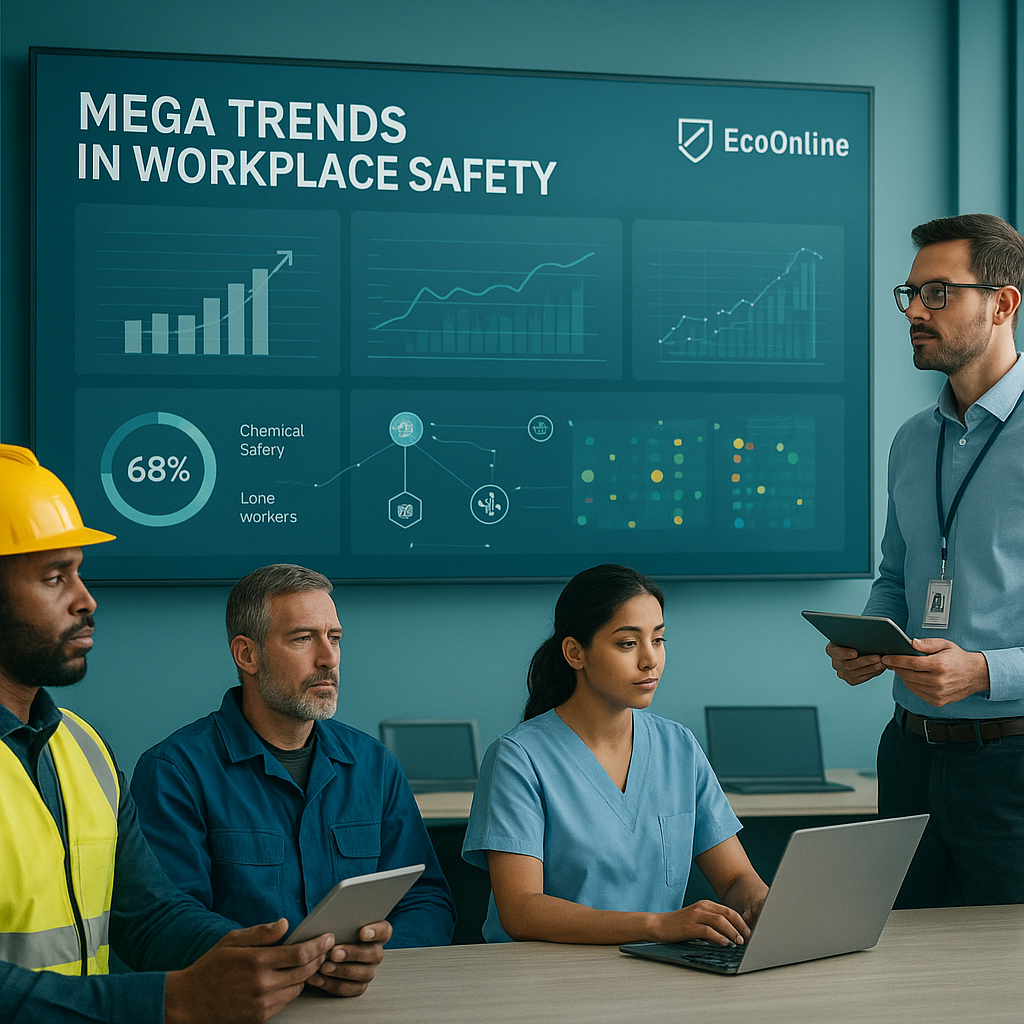
EcoOnline’s new Mega Trends report is warning Canadian organizations that workplace health and safety is fast moving beyond box‑ticking compliance and into a more connected, data‑driven view of operational risk.
Drawing on 18 months of research with hundreds of executives, EcoOnline analyzed findings across multiple studies to identify seven major forces transforming safety practice. Jim Somers, chief marketing officer at EcoOnline, says the research confirms what the company is seeing on the ground.
Compliance to connected risk
“We found that the market is obviously getting much more complex,” Somers says. “The buyers… are expanding beyond just the traditional health and safety professionals. It’s going to the operations team, the CFO, the CEO’s office. And it’s going beyond just merely compliance and adhering to regulations.”
A central pain point is fragmentation. Many organizations, including in Canada’s resource, construction and logistics sectors, are juggling multiple, unconnected safety tools. Somers notes about half of the leaders surveyed are using four, five or even six-point solutions.
“There’s a lot of hidden value pent up in data that’s being collected across different point solutions that companies are buying,” he explains. As a result, EcoOnline is seeing rising demand for connected suites, with one in four companies now looking to buy multiple integrated solutions, such as safety platforms linked with training and learning management systems.
Chemicals, lone workers and field risk
Chemical risk management emerges as another key pressure area for employers handling hazardous products from coast to coast. “We have found that there’s still a lot of room for people who are looking for more mature chemical safety solutions,” Somers says, pointing to strong growth in EcoOnline’s chemical safety offering, including in North America.
The report also highlights the growing challenge of protecting an increasingly distributed and mobile workforce, from lone workers in remote regions to contractors on complex project sites. EcoOnline’s lone worker solution “continues to grow and grow to the tune of about 30% year over year,” Somers notes. The goal, he says, is “managing safety at the point of risk,” ensuring employers know where workers are and can respond quickly in a crisis.
Worker engagement and training underpin many of the trends. “Your safety programs are only as good as it gets used,” Somers says, emphasizing the need for ongoing training, simple user experiences and mobile access if organizations want to see a return on their safety technology investments.
AI with human oversight
Artificial intelligence is part of the future picture, but Somers says EcoOnline is deliberately cautious. “We don’t want to outsource safety, and we don’t think they should be outsourcing safety too much to the AI. So the human oversight is absolutely critical,” he says, adding that the company is focusing on targeted use cases rather than hype.
For health and safety professionals, Somers says the main takeaway is strategic. “The future of safety in our minds is about really connecting the insights throughout the business… and moving beyond just being reactive in adhering and meeting compliance towards more real-time visibility and predictability across operational risk,” he says. That shift, he argues, will help Canadian organizations prevent harm while building more resilient, productive operations.