

CSA Group report warns Canada’s mental health crisis is becoming an economic and workplace safety issue
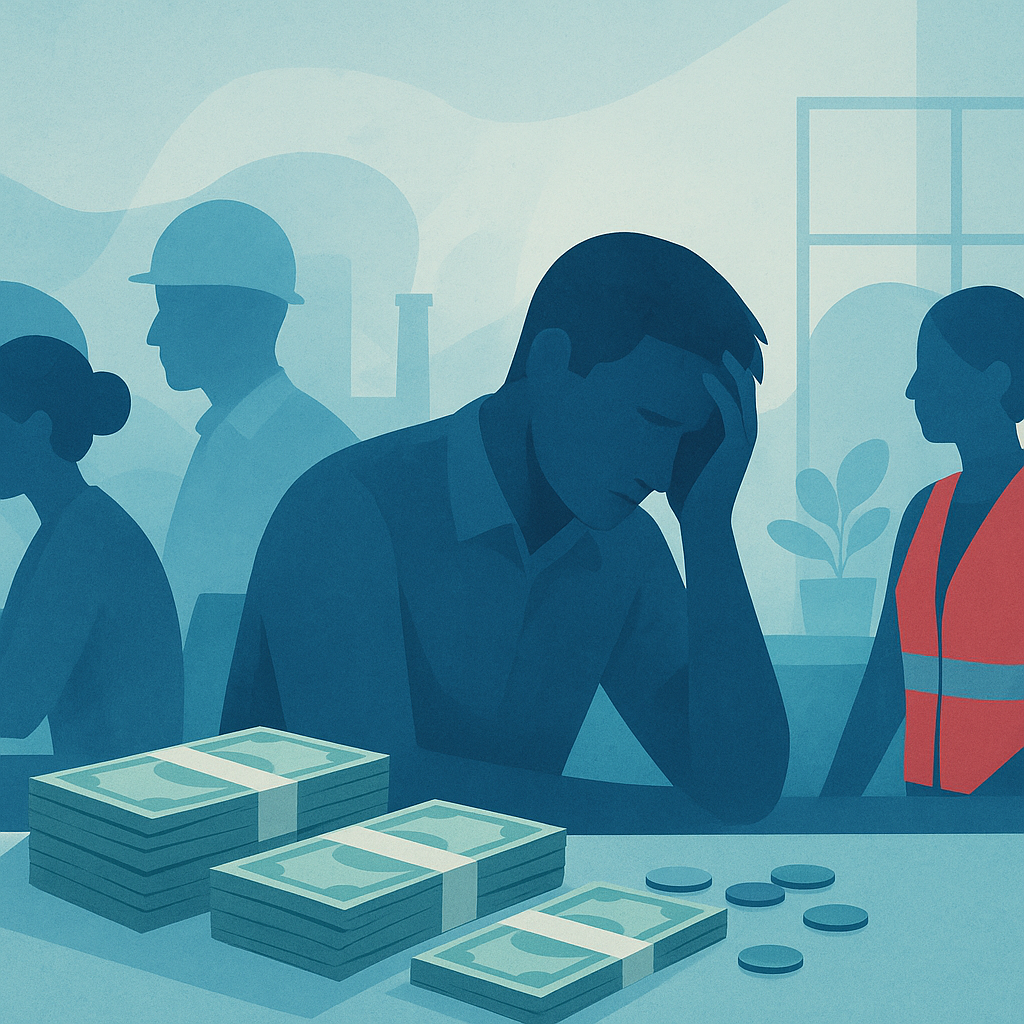
A new report from CSA Group’s Public Policy Centre pegs the annual economic cost of poor mental health in Canada at $180 billion, a figure the authors say is likely conservative. The modelling focuses largely on working‑age Canadians and counts direct health and social service spending alongside lost productivity.
A $180‑billion drag on growth
If nothing changes, those costs could climb to nearly $600 billion by 2050, approaching one fifth of projected GDP, the report warns.
Lead author Olga Morawczynski, a CSA Public Policy Fellow and co founder of Heal‑3, says even the $180‑billion estimate likely understates the problem. “What we did is we created models based on available data,” she says. “Because of these data gaps, I think this is an underestimation overall.”
The report calls for two major shifts: putting mental health on par with physical health in funding and coverage, and reorienting systems toward prevention rather than crisis response.
Employers paying the biggest price
Of the $180‑billion total, roughly $110 billion falls on employers, through disability claims, benefits, wage replacement, accommodations and insurance premiums. Morawczynski notes that this makes employers “the single largest payer for poor mental health in the country.”
Yet relatively little of that spend is preventive. The report estimates only about 14 per cent of employer mental health related expenditures go to prevention, things like mental health training, psychological health and safety programs, employee assistance plans and benefits.
“That’s a small amount,” Morawczynski says. “The balance of that is going downstream, after the harm occurs, disability leave, turnover, overtime, legal costs and investigations.”
Her advice to organizations is to flip that ratio over time. “If employers put more towards preventative services, the overall cost will be much lower moving forward,” she says, pointing to year over year growth in long duration mental health leaves and workers’ compensation claims.
Presenteeism, not unemployment, drives productivity losses
The report also challenges a common assumption that the biggest economic costs of mental illness are tied to people who are out of the workforce. Co-author Kathleen Dobson, an associate scientist at the Institute for Work & Health, stresses many people with mental illness are working but struggling.
“Indirect costs challenge the assumption that costs associated with mental illness primarily stem from unemployment,” she says. “In reality, many individuals are employed, but our analysis shows their productivity is affected.”
Presenteeism, showing up but not fully functioning, accounts for about $12.5 billion a year and nearly 90 per cent of productivity related losses, the report finds. Dobson notes that “presenteeism accounts for roughly 80 per cent of productivity losses,” meaning most of the economic hit comes from people working while unwell, not staying home.
For a country already lagging peer nations on output per worker, those losses matter. Nearly one in three Canadian workers reports their performance is directly affected by mental health challenges, according to national survey data cited in the report.
What safety leaders can do
For occupational health and safety professionals, the findings reinforce that psychological health is now squarely a core safety issue. Morawczynski argues three foundational steps should be in place “in all organizations.”
First, ensure benefits for mental health are adequate. “If somebody’s really struggling, $500 a year covers two sessions,” she says. “We’ve seen employers raise that ceiling, which is a good baseline.”
Second, even smaller employers should assess psychosocial hazards, whether through a full psychological health and safety program or a lighter touch survey, to understand which workplace factors are damaging mental health.
Third, managers and supervisors need training. “Train managers and leaders to identify signs of mental strain and, more importantly, to point employees to the resources the organization offers,” Morawczynski says.
Dobson adds workplaces have levers beyond benefits. “Creating a supportive and communicative environment is key,” she says. “Workplaces can support employees by offering accommodations, promoting mental health awareness, and addressing risk factors like high stress, low job control and unfair treatment.”
Both researchers stress the next five to 10 years must focus on prevention, embedded into systems, legislation and everyday management practice, if Canada is to bring mental health costs, and the human toll behind them, under control.