
Safety professionals gather in Markham on May 7 for conference co-hosted by 4S Consulting and WSIB
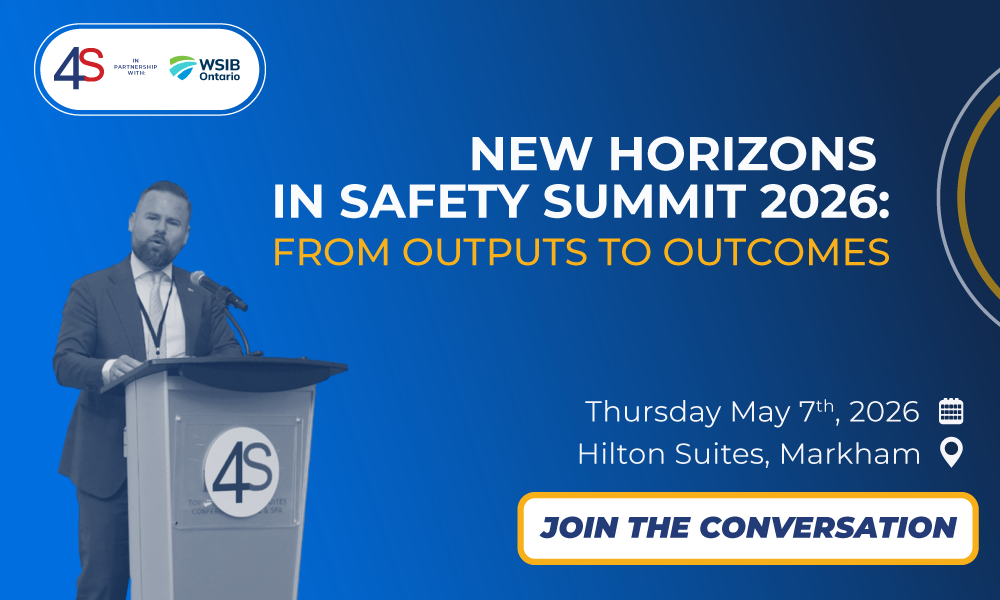
Ontario safety leaders will gather in Markham on May 7 as the New Horizons in Safety Conference 2026 returns for its third year, with a sharpened focus on measuring real-world outcomes rather than tallying activities.
Co-hosted by 4S Consulting and Ontario’s Workplace Safety and Insurance Board (WSIB), the event is expected to draw more than 500 business owners, senior leaders, and safety professionals from sectors including construction, manufacturing, healthcare and the public sector.
Ron Kelusky, advisor to 4S Consulting Services and former Chief Prevention Officer and Assistant Deputy Minister at Ontario’s Ministry of Labour, Immigration, Training and Skills Development, says the conference is designed to reflect a shift underway in the province’s prevention system.
“We’re trying to move from output to look at it from a perspective of outcomes,” says Kelusky, who explains training 1,000 workers on a specific safety task would be an example of output. “Did that training make a difference? Are we able to measure success?”
That lens aligns with WSIB’s growing emphasis on outcome-based research. As an insurer, Kelusky notes, the WSIB “wants to be able to see that interventions from a safety prevention area have good positive outcomes” and are demonstrating reductions in workplace injuries and occupational illnesses.
Showcasing research, innovation and policy change
The conference theme, “From Outputs to Outcomes,” will be reflected throughout plenary sessions, panels, and targeted research presentations, highlighting WSIB-supported investments in applied research and innovation across Ontario institutions.
The program will feature experts such as Dr. Arif Jetha of the Institute for Work & Health on AI and workplace safety; Dr. Chris McLeod of the University of British Columbia on outcomes from WSIB programs; Dr. Amin Yazdani of the Canadian Institute for Safety, Wellness and Performance on innovations in construction; and Dr. Jack Callaghan of the University of Waterloo on musculoskeletal disorder prevention.
Kelusky says the day will open with plenary presentations followed by panel discussions “to suss out more of what is going on” and the importance of outcome-based research over time.
Another panel will explore recent legislative developments under Bill 30, the latest Working for Workers Act, including the equivalency of ISO standards with the Certificate of Recognition, changes to the Occupational Health and Safety Act, and “Buy Ontario” provisions tied to defibrillators on construction sites.
A full day aimed at employers and practitioners
Afternoon sessions will drill into sector-specific and cross-sector research and innovation. Planned topics include a “bus of the future” transit safety project involving Centennial College, the Toronto Transit Commission and the Amalgamated Transit Union; research demonstrating significant reductions in slips, trips and falls in manufacturing; construction and mental health; digitizing health and safety management for small business; and WSIB’s mental health strategy.
Kelusky stresses that while the conference is rooted in the “latest innovative research,” it is deliberately structured for business audiences, including small and medium-sized employers. “We’re trying to not only appeal to people interested in research and share the outcomes from that research, but also have it tailored so it’s health and safety professionals, occupational health and nursing, business associations and businesses that have a strong presence in the safety industry,” he says.
Ultimately, he adds, the goal is to help employers who “really want to know what can they do to protect their employees” and to show more hesitant organizations “there is good evidence to show that not only can you save money, but you can also reduce injury.”
With WSIB as co-host and a growing roster of partners across Ontario’s prevention system, Kelusky sees the 2026 conference as part of a longer-term effort. “We’ve worked with them closely to come up with an effective agenda that appeals to a wide swath of people,” he says. “This is really building for the future.”