TSB investigation found hull strength untested, oversight absent, and six recommendations now directed at Transport Canada
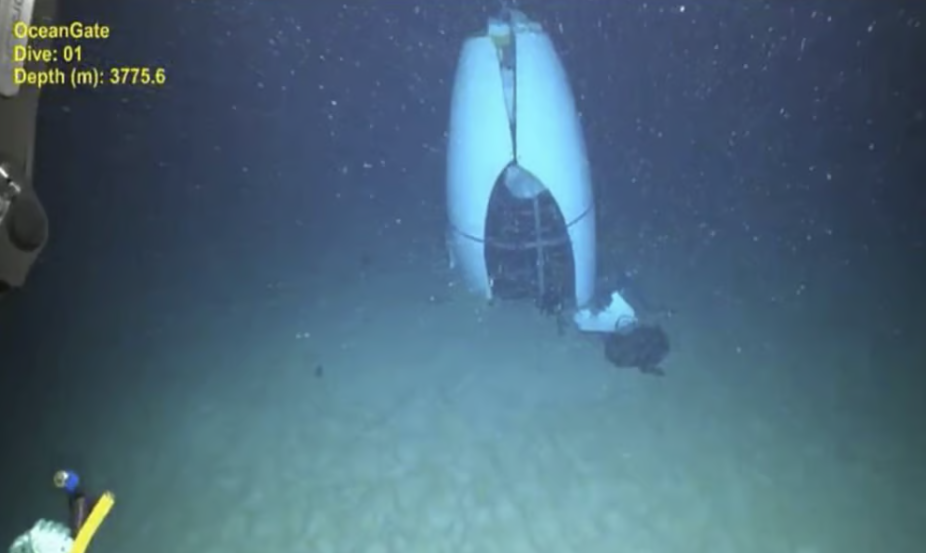
The carbon fibre pressure hull at the centre of the 2023 Titan submersible implosion was never validated to confirm it met the theoretical values used in its design, and the vessel operated in Canadian waters for years without a single inspection from Transport Canada, according to a sweeping investigation report released by the Transportation Safety Board of Canada (TSB).
The report, the result of a three-year investigation into the implosion that killed all five people aboard on June 18, 2023, concludes that OceanGate failed to follow standard engineering practices throughout the Titan's design and construction, and that a fragmented federal oversight system allowed the unregistered, uncertified, and unclassed submersible to dive repeatedly to 3,800 metres without any regulatory scrutiny.
"The actual strength of the manufactured pressure hull was not validated against the theoretical design," said Jason Melvin, a regional senior investigator in the Atlantic Region with the TSB and the investigator-in-charge for the occurrence. "Engineering good practices were not followed and standards were absent."
Melvin added that TSB investigators also identified problems with the submersible's monitoring systems, and a progressive deterioration of its fatigue life in the dive cycles leading up to the fatal implosion.
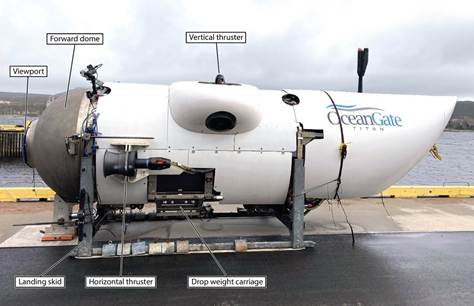
The Titan submersible in May 2023 (Source: TSB/Third party, with permission)
What the investigation found
TSB analysis of trimmed-off end pieces from the Titan's carbon fibre cylinder found that the laminate composite material met the required safety factor of 1.25 in the axial direction, but did not meet it in the circumferential direction in areas where severe ply waviness existed. The calculated safety factor in those areas was 1.11, below the required 1.25.
The investigation determined that OceanGate never tested the actual compressive strength and stiffness of its carbon fibre laminate composite against the theoretical properties used in the design, even after a structural analysis contractor specifically requested this testing. Instead, OceanGate proceeded on the assumption that its theoretical calculations would hold.
The TSB found that manufacturing defects, including ply waviness, porosity, and areas where raised sections were ground down (severing carbon fibre strands and introducing surface defects), likely caused the cylinder to fail progressively, with damage accumulating during each dive cycle until the hull imploded. Laboratory analysis showed the cylinder could have used more than 82 per cent of its fatigue life by the time of the occurrence dive, based on the sample with the lowest compressive strength value from the trimmed-off end piece.
OceanGate built two monitoring systems to track hull integrity: an acoustic emission monitoring system intended to provide real-time warning of an impending failure, and a strain monitoring system for post-dive analysis. Both fell short. The acoustic emission system was never tested to demonstrate it would provide sufficient advance warning, and it did not function as intended during the fatal dive. The strain monitoring system showed significant non-linear readings in at least one gauge as early as July 2022, an indicator of potential damage, but OceanGate's analysis was inconsistent and did not result in the hull being taken out of service.
A loud bang was reported by crew and passengers during a surfacing on July 15, 2022. OceanGate did not conduct a thorough inspection of the pressure hull afterward.
The investigation also found that risk management at OceanGate was hindered by organizational power dynamics and social and psychological factors. "Obviously this was a very complex organization and they deviated from standard engineering principle," said Étienne Séguin-Bertrand, a marine investigator and safety analyst at the TSB who was part of the investigation team.
No oversight reached the Titan
The investigation also exposed a systemic gap in how Canada oversees vessels operating in its waters. Despite OceanGate conducting operations from St. John's, Newfoundland and Labrador, from 2021 to 2023, the Titan was never subject to domestic or foreign regulatory oversight from Transport Canada.
Transport Canada (TC) was aware the Titan was operating in St. John's and that it was supported by Canadian vessels. But it did not verify the Titan's registration status and was never informed that the submersible was operating in Canadian waters or Canada's exclusive economic zone (EEZ).
OceanGate was not operating secretly. The company imported the Titan into Canada with proper Canada Border Services Agency (CBSA) paperwork, operated openly from the Port of St. John's, and publicly promoted its missions globally. It also interacted with multiple federal departments: Fisheries and Oceans Canada (DFO), the CBSA, Global Affairs Canada, and Parks Canada.
None of that information made its way to TC's Marine Safety and Security branch. "There's not a central focal point for maritime safety information to make it to the people that have the power to enforce and oversee those operations," Séguin-Bertrand said.
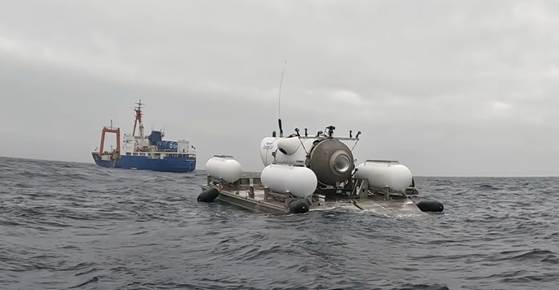
The Polar Prince towing the LARS and the Titan. (Source: OceanGate)
TC did have interactions with the operation, but those focused on the Polar Prince, the certified Canadian support vessel. Investigators found that TC never looked beyond the support ship to verify what was attached to it. "Transport Canada concentrated on overseeing the support vessel, the Polar Prince, because that vessel is certified and registered," Melvin explained. "But they didn't look into the Titan any further."
The report notes that this gap is not unique to the Titan. According to the TSB, approximately 75 per cent of registered Canadian commercial vessels do not require a certificate to operate and fall under a risk-based oversight regime that, as the TSB found, is poorly defined. These are vessels under 15 gross tons or carrying fewer than 12 passengers, and the investigation found that the criteria and priorities for inspecting them are not clearly established.
For safety professionals working across regulated industries, the oversight failures uncovered here have direct parallels. Multi-agency communication breakdowns have long been identified as a systemic risk factor in Canadian workplace safety investigations, and the Titan case illustrates how the absence of a central accountability mechanism can leave dangerous operations entirely invisible to regulators.
Six recommendations to Transport Canada
The TSB has issued six recommendations, all directed at Transport Canada. Three address oversight gaps, two address standards for submersible craft, and one addresses safety management for multi-party vessel operations.
On oversight, the recommendations call on TC to define clear criteria and priorities for risk-based inspections of Canadian commercial vessels not required to be certificated (Recommendation M26-02), establish similar criteria for commercial vessels not registered or captured by port state control (Recommendation M26-03), and create formal processes to obtain relevant safety information from other government departments (Recommendation M26-04).
On standards, the TSB is asking TC to advocate at the International Maritime Organization (IMO) to incorporate the existing IMO circular on passenger submersible design and operation, MSC Circular 981, into binding international conventions or codes (Recommendation M26-05), and to require all human-occupied submersibles operating in Canada or with a Canadian support vessel to comply with that circular (Recommendation M26-06).
The sixth recommendation (M26-07) addresses safety management, calling for bridging documents that integrate safety management systems when multiple groups operate aboard the same vessel. This issue was highlighted in the Titan case because the Polar Prince and OceanGate had no such document, leaving the ship's master in an ambiguous position and OceanGate's missed-communications protocol taking precedence over maritime best practice of notifying search and rescue authorities immediately.
Under the Canadian Transportation Accident Investigation and Safety Board Act, Transport Canada must respond to each recommendation within 90 days. The TSB will follow up annually to assess whether the responses are satisfactory.
Bridging documents and clear safety management responsibilities for multi-party operations are increasingly relevant across Canadian industrial sectors, from offshore oil and gas to construction. The Titan investigation highlights the risks that emerge when the boundaries between operators are undefined and no external verification exists.
Lessons for health and safety professionals
Melvin said the investigation carries lessons that extend well beyond marine operations. "The importance of regulatory oversight, the importance of standards, and to ensure that equipment and operations are done to a standard," he said, are the key takeaways for safety professionals in any industrial setting. "Safety management must be taken seriously and incorporated into the day-to-day business of everyone that's involved."
He also pointed specifically to the groupthink findings, noting that the organizational dynamics section of the report will be of particular interest to safety leaders. "The report goes into the details of what we call groupthink, where an organization is going to align everybody's thinking and kind of silence dissent in certain situations," Séguin-Bertrand said. The TSB found that over OceanGate's history, subject-matter experts who raised safety concerns were marginalized or dismissed rather than elevated.
Séguin-Bertrand closed with a note that the implications reach far beyond the submersible industry. "This is about a submersible, but the gaps in the safety regime that allowed this to happen also apply to a lot of smaller vessels," he said. "Fishing vessels, small passenger crafts with fewer than 12 passengers are also subject to this risk-based inspection regime. And there is a risk that they may fall through the same cracks."
The Titan report arrives at a moment when Canada's approach to risk-based oversight of smaller commercial vessels faces growing scrutiny, with the TSB noting that a lack of regulatory oversight has been a contributing factor in multiple previous occurrences involving uncertified fishing vessels and tugs since 2015. Transport Canada's response to the six recommendations in the coming months will determine how swiftly those gaps are addressed.