

Selecting compliant safety footwear starts with a proper workplace hazard assessment, not just a certification label
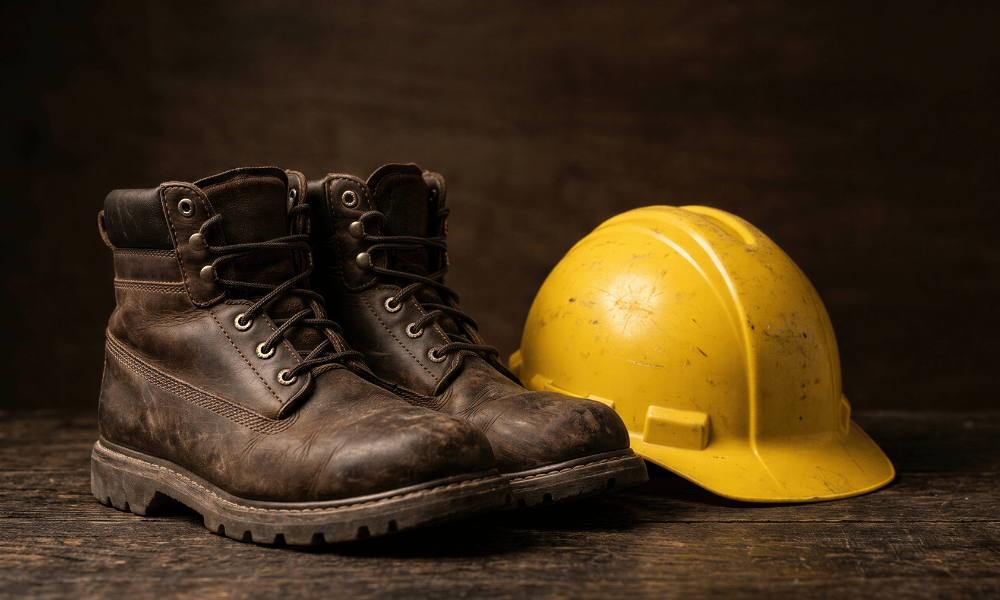
For many Canadian employers, choosing safety footwear starts and ends with the certification label on the box. Jay Yuan, Technical Marketing Director at Safetoe, an occupational safety footwear and PPE brand developed by Shanghai Langfeng Industrial Co., Ltd., says that approach gets the process backwards. The starting point should be the hazard itself: what is underfoot, what is overhead, and what a worker's feet will be exposed to across an eight, ten or twelve hour shift.
"The first step in safety footwear selection should always be understanding the actual workplace hazards," Yuan said. Across construction, manufacturing, mining and other industrial environments, he pointed to a recurring set of risks: falling or rolling objects, sharp materials that can penetrate a sole, slippery surfaces, electrical hazards, water and cold conditions, and fatigue built up over long shifts.
Start with the hazard, not the boot
Those risks do not land the same way in every industry, Yuan said. "A construction worker may need strong impact and puncture protection, while a mining worker may require additional metatarsal protection. Workers in electrical environments may need footwear designed for electrical hazards." Rather than building one boot to cover every condition, Safetoe designs footwear around specific workplace applications.
For employers building out a broader safety programme, a wider breakdown of personal protective equipment requirements across Canadian jurisdictions outlines how selection responsibilities can vary by province.
Meeting Canada's CSA Z195 requirements
For many Canadian workplaces, protective footwear is selected in accordance with CSA Z195 and applicable provincial occupational health and safety requirements. CSA Group, formerly the Canadian Standards Association, sets requirements covering toe impact resistance, sole puncture protection and electric-shock protection, among other criteria. Safetoe also develops and certifies products to ASTM F2413 for the U.S. market and EN ISO 20345 for European and other international markets, but Yuan was clear that the three standards are not interchangeable.
"We do not consider these standards interchangeable. Each standard has its own requirements, classifications and test methods," he said. "Our approach is therefore to identify the target market and workplace application first, then design and test the footwear against the applicable requirements."
Additional guidance on selecting and maintaining protective footwear against Canada's foot protection standards can help occupational health and safety (OHS) professionals cross-reference requirements as they build out a footwear program.
Matching features to the actual job
Beyond toe protection, Yuan said employers should assess the complete hazard profile of a role before adding features. Puncture-resistant midsoles matter where nails, metal fragments or construction debris are present; metatarsal protection matters where heavy materials could strike the top of the foot; electrical protection and slip resistance depend on the surfaces and equipment involved.
"The key is not to select the footwear with the greatest number of features, but to select protection that matches the actual risk assessment," he said.
That principle extends across sectors. Forestry, mining and energy work each carry different footwear demands, but Yuan said the starting point is consistent. "We recommend starting with the workplace risk assessment rather than starting with a particular boot," he said, noting that two workers in the same facility, such as a maintenance electrician and a warehouse worker, may need entirely different footwear.
Foot injuries remain a persistent workplace safety concern, and reducing the risk of workplace foot injuries often comes down to this kind of task-level matching rather than a single industry-wide standard.
Comfort without cutting protection
Comfort is not an afterthought, Yuan said, since a boot has to hold up through a full shift to be effective. "Protection must always come first, but comfort is also an important part of effective PPE," he said. Weight, fit, cushioning and breathability all affect whether workers wear their footwear consistently.
Safetoe has focused on lighter protective materials, including composite toe caps and textile puncture-resistant midsoles, paired with cushioning systems and ergonomic construction. "The objective is not to reduce protection in order to make footwear lighter," Yuan said. "It is to use material and design improvements to achieve the required protection while improving long-shift wearability."
Common mistakes and what comes next
Yuan pointed to a familiar pattern of errors: selecting footwear based only on the toe cap or certification label, assuming one boot fits every employee, and overlooking fit and maintenance. Footwear should be inspected regularly for sole wear, cuts and separation of components, he said, and treated as PPE that should be regularly inspected and replaced when wear or damage may compromise its protective performance.
Looking ahead, Yuan expects the next phase of safety footwear development to focus less on adding features and more on achieving the required level of protection through lighter, more specialized materials, an approach Safetoe is building into its own product development.
This article was produced in collaboration with Safetoe.
Safetoe CSA Safety Boots for Canadian Workplaces (https://www.safetoe.net/worksite-solutions/canadian-safety-boots)