
St. Joseph's Healthcare Hamilton pleads guilty after a poorly maintained centrifuge lid critically injured a worker
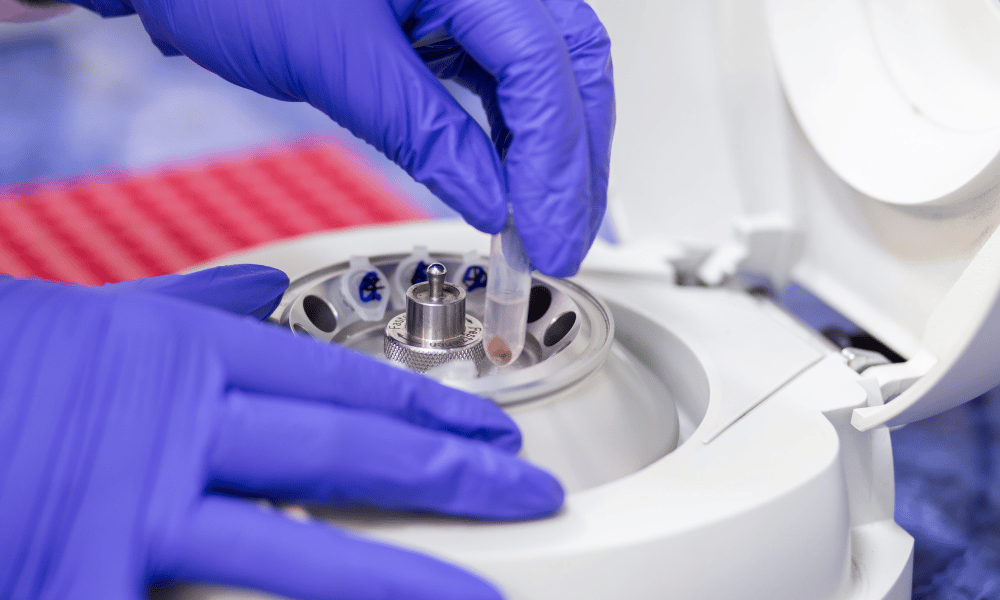
St. Joseph’s Healthcare Hamilton has been fined $65,000 after a worker was critically injured by a laboratory centrifuge. The lid failed while the machine was being loaded.
The conviction was entered on June 18, 2026, in the Provincial Offences Court in Hamilton following a guilty plea under Ontario’s Occupational Health and Safety Act (OHSA).
The incident is a clear reminder that hospital equipment maintenance failures carry both serious legal and human consequences.
The incident: a preventable equipment failure
The injured worker was loading samples into a Thermo Scientific Heraeus Megafuge 16R Centrifuge in the hospital’s virology laboratory on August 28, 2024. The machine is used in diagnostic testing and research. A gas strut, the device that holds the centrifuge lid open during loading, had been flagged as needing replacement.
Because the gas strut was faulty, the worker had to hold the lid open manually. While loading, the lid slipped and fell, causing a critical injury.
Ontario employers have faced significant fines for similar equipment failures under the OHSA. Here’s one example: General Motors of Canada Company was fined $275,000 following a maintenance-related injury at its St. Catharines facility.
In the St. Joseph’s case, Justice of the Peace Krista Whittard imposed the $65,000 fine. The court also applied a 25 percent victim fine surcharge, as required by the Provincial Offences Act.
How a known equipment defect led to the Ontario fine
The gas strut issue was not a surprise. Calibration and maintenance records show the Megafuge was serviced in both June 2023 and June 2024. Both reports flagged the lid gas strut as requiring replacement.
Following the June 2024 report, the hospital attempted to order the part. The repair was delayed after an incorrect replacement part was received. The fix was ultimately completed on August 30, 2024, two days after the incident.
Ontario’s OHSA, under section 25(1)(b), requires employers to ensure that equipment, materials, and protective devices are maintained in good condition. The hospital was convicted of failing to meet this obligation.
For safety professionals, this case shows how a documented maintenance backlog can still result in criminal liability if a worker is harmed even when a repair is actively underway. A Hawksville manufacturer learned a similar lesson after a young worker was injured using a lifting device with inadequate supervision.
What this case means for employers
The St. Joseph’s case highlights a critical gap: the difference between knowing a piece of equipment is unsafe and removing it from service. A known defect – documented across two inspection cycles – was left in operation while a repair was pending.
Ontario’s enforcement environment has tightened considerably. Ontario now enforces some of the strictest penalties in Canada for Occupational Health and Safety Act violations, with maximum corporate fines reaching $2 million.
Employers in healthcare and other high-risk settings should treat outstanding maintenance orders as an active liability, not a deferred task. Regular audits of maintenance logs are essential. Any flagged item must be repaired or removed from service before a worker is put at risk.
This hospital equipment maintenance fine in Ontario is a practical case study for safety teams reviewing their own inspection and repair protocols.