Transportation Safety Board of Canada deploys up to six investigators to coordinate recovery off Nantucket
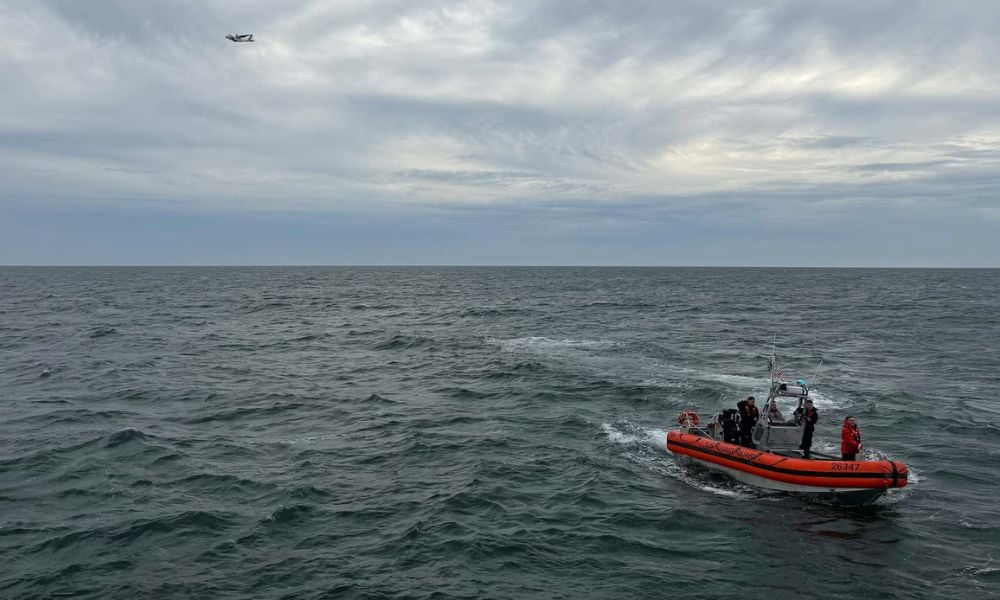
The Transportation Safety Board of Canada (TSB) has deployed investigators to the Nantucket, Massachusetts, area as it works to locate the Latitude Air Ambulance Gulfstream G100 that went missing on Oct. 3, 2026, with the agency's director of investigations saying the top priority remains finding the aircraft and its flight recorders.
"The focus right now is really on locating the aircraft and then the ensuing recovery," said Craig Johnston, the TSB's director of investigations, in an interview Thursday, Oct. 8, 2026. Johnston said up to six investigators are being sent to the Nantucket-Cape Cod area over the weekend to help coordinate the search, working alongside the Massachusetts State Police, the U.S. National Transportation Safety Board (NTSB) and other federal and local agencies.
The search for the black box
Investigators are relying on drift modelling based on the aircraft's last known position, wind and sea conditions to narrow the search area, Johnston said, and are hoping the aircraft's underwater locator beacon, attached to the flight data recorder and cockpit voice recorder, is still transmitting. "We think we have a fairly good idea of where it could be," he said, noting crews can detect the beacon's ping with a hydrophone or other acoustic monitoring equipment. If that signal isn't found, some of the vessels under consideration carry side-scan sonar capable of locating wreckage on the ocean floor. Bad weather forecast for next week could slow the search if the aircraft isn't located over the weekend.
The crew's reported electrical difficulties before the aircraft's rapid descent remain a central line of inquiry, though Johnston cautioned that nothing has been confirmed. "The reported electrical problems that they had definitely piqued our interest," he said, adding that investigators will look for physical evidence of failure once wreckage is recovered, and that the cockpit voice recorder could reveal which systems weren't functioning and what was communicated between the crew and air traffic control.
As with any investigation, the TSB will also review the aircraft's recent maintenance records, crew training and currency, and weather conditions at the time, Johnston said, to help rule factors in or out; he said it is not yet known whether weather played a role.
A rare loss for Canadian aviation
Johnston called the occurrence highly unusual for the TSB, drawing a comparison that will resonate with longtime readers. "The last time I think we've lost a Canadian aircraft at sea was probably back at the Swissair 111 days, you know, 25, 30 years ago," he said. The TSB and NTSB have been "working hand in hand" throughout, he added, with strong cooperation across agencies on both sides of the border.
Beyond determining the specific cause, Johnston said investigations like this one can shape safety practice well beyond a single operator. While recommendations for legislative or regulatory change go through Transport Canada and "take a fairly long time to implement," he said findings of cause and risk findings are often more immediately actionable at the company level, prompting operators to review whether their own operating procedures and practices remain up to date without waiting for a federal regulatory change.
Asked what has been hardest about leading the investigation so far, Johnston pointed to the location itself. "Having to search for it in international waters is definitely a challenge that we do not do regularly," he said, contrasting it with land-based accidents where investigators can reach a site immediately. The experience echoes other marine and aviation recovery operations in Canadian waters in which locating the wreckage, not determining the cause, proved the most time-consuming phase.
For the broader air medical transport sector, and for the Latitude Air Ambulance colleagues of those lost, the coming weeks are also likely to raise separate questions about support for frontline and emergency medical workers processing a loss of this scale. No cause has been determined, and the TSB has not provided a timeline for a preliminary report.