Director outlines a four-level risk management system grounded in certification, daily field accountability, and a culture of respect
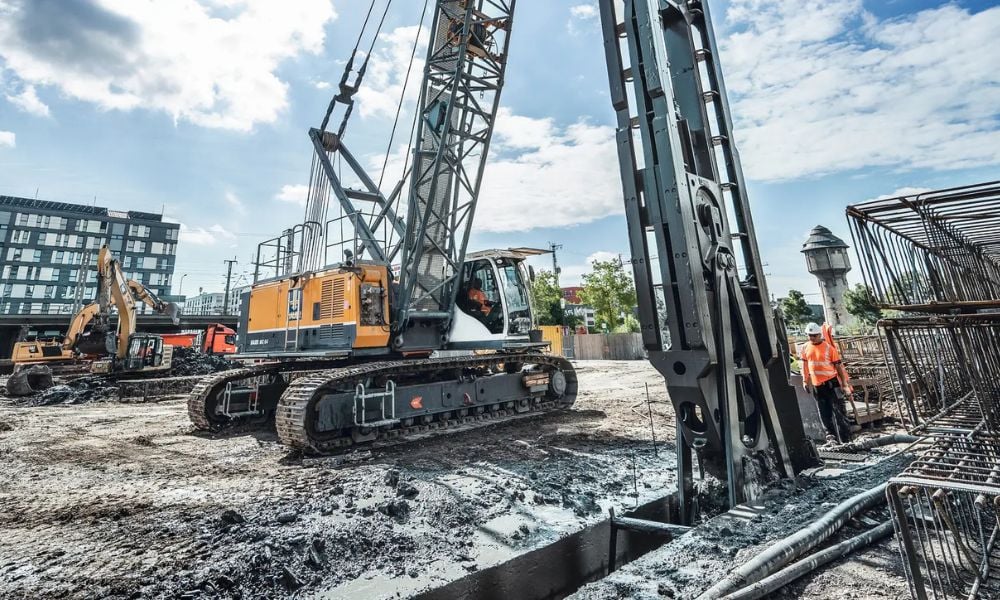
Prevention and risk management in construction starts before the first worker steps on site. At Bauer Foundations Canada, it begins at the tendering stage, and the framework that follows it does not change regardless of a project's size or dollar value.
James Finbow, Health and Safety Director at Bauer Foundations Canada, has shaped that framework since joining the company in 2011. He oversees a safety system that spans the country, from major foundation projects in Quebec and Toronto to an upcoming project in Vancouver later in 2026. Finbow says every job carries risk, and every job gets the same level of attention.
"We don't see any job as not having a risk element that doesn't need that level of control," he said.
Construction remains one of Canada's most hazardous industries. According to the Association of Workers' Compensation Boards of Canada (AWCBC), the sector consistently accounts for a significant share of workplace fatalities reported annually across the country, making structured, layered risk management systems a practical necessity rather than a compliance checkbox.
A four-level system built for the field
Bauer's prevention framework operates in four distinct layers, each designed to capture risks the level above might miss.
The foundation is a corporate health and safety manual that sets the standard for all operations across Canada. Below that, site-specific health and safety plans are developed for each individual project. Critically, Finbow said, the decision to produce those plans is never based on the value of a contract.
"It's done on risk," he explained. "Once we know what we want to do on that project, we'll then look at a risk assessment for the whole project."
The third layer involves job hazard analyses (JHA) for every individual task. These documents break down each step of an operation, assessing the probability and severity of potential harm at each point. Safety professionals looking for practical guidance on structured hazard identification in Canadian workplaces will recognize this as a deliberate effort to get specific, rather than general, about risk.
The fourth and most granular layer belongs to the workers themselves. Each day, crew members complete individual field-level hazard assessments that capture conditions no planning document can fully anticipate: current weather, nearby excavations, and what Finbow calls "simultaneous operations," the overlapping activities happening on the ground at that moment.
"That's how we manage our health and safety and our risk assessments through our business," he said. "And that's the same on every job."
Where gaps can form and how to close them
Finbow is candid about the limits of any safety system. When asked whether field-level assessments are where things are most likely to get missed, he pushed back on the premise.
"There's potential at every level," he said.
That is why supervisor competence is a central pillar of Bauer's approach. Supervisors are not simply promoted into the role. They are developed through a structured process that begins with working alongside experienced supervisors as foremen. During that period, candidates complete formal training through recognized bodies such as the Alberta Construction Safety Association (ACSA), building what Finbow calls "soft education" alongside hands-on experience.
"Once we feel that they are complementing their capability with a level of competence that makes us as the management team more comfortable," he said, "they move up."
It is a measured approach at a time when supervisor accountability is under greater legal scrutiny than ever. Canadian courts have seen supervisors face civil and, in some cases, criminal charges in connection with serious construction site safety failures across the country. Finbow's structured development pathway reflects the reality that the person setting up a task and assigning a crew carries significant legal and moral responsibility.
Safety that starts with a culture of respect
Ask Finbow what ultimately drives prevention at Bauer and he does not reach for a process. He reaches for a principle.
Culture, he said, is the foundation beneath every document, certification, and procedure the company maintains. Management positions itself as a support function for field sites, not an oversight body. The message to workers is that the team exists to help them succeed.
"We're tough when we have to be, but we're also empathetic as a management team and supportive," Finbow said. "We almost see ourselves as the support function for the sites."
The practical benefit of that approach shows up in retention, a challenge Finbow acknowledges is acute in Bauer's niche piling market. Qualified workers in this specialty are not widely available, which means the company invests heavily in developing people from scratch, providing certifications for equipment including skid steers, loaders, and elevated work platforms, along with first aid training and other credentials.
Keeping those workers once trained is where culture earns its place in the safety system.
"What that generates is a loyalty, which you can't buy," Finbow said. "Loyalty, you have to earn it. And that comes from respect and dealing with people in a proper and adult way and looking after people."
That loyalty feeds directly back into safety. Workers who feel supported are workers who speak up. When Finbow visits sites, he goes beyond formal audit activities and simply talks to crew members, asking how they are feeling and what, if anything, needs to change.
"They open up, and because we have this open culture, they tell us things, some of them very bluntly, which is good," he said. "And then we can take that information and build it into our change philosophy."
Those interested in how psychological safety and open communication shape construction workplace culture in Canada will find Bauer's approach a concrete example of those principles in daily practice.
Staying verified, staying current
Bauer's safety system is not self-assessed. The company holds ISO 45001 certification covering its operations in Alberta and British Columbia, as well as Certificate of Recognition (COR) certification in both provinces. Finbow noted that the company recently completed its annual ISO audit with only three or four minor observations.
That external verification matters in a sector where regulatory expectations continue to rise. ISO 45001 and COR provide independent confirmation that a company's occupational health and safety (OHS) management system meets recognized international and provincial benchmarks. For a company operating from Vancouver Island to Nova Scotia, consistency of standard across jurisdictions is not just a credential: it is a framework for accountability.
Finbow's closing thought captures the philosophy that ties the whole system together. Systems, audits, and documentation are necessary, he said. But they are not sufficient on their own.
"Your gut tells you a lot when it comes to safety," he said. "You only have to talk to the guys for 10 minutes to find that out."
This article is part of our Monthly Spotlight series, which in June focuses on prevention and risk management.