

Dave Turner aims to revive association marred by dwindling membership and financial setbacks
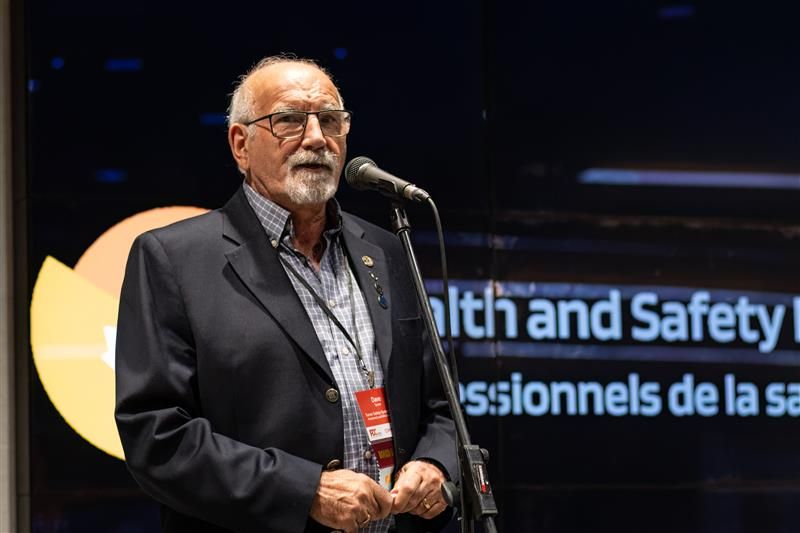
The Health and Safety Professionals of Canada (HSPC) held its annual professional development conference (PDC) earlier this month in St. John’s and billed it as ‘Safety on the Rock.’ A fitting title because the president believes the association is “at rock bottom.”
Once considered Canada’s leading voice in occupational health and safety, the former CSSE, now rebranded as HSPC, is in crisis.
“Absolutely, it went right down…right, right down,” said HSPC president Dave Turner in a candid interview during this year’s conference.
The problems facing the association are deep and long-standing. From falling membership to financial instability, the situation came to a head during the pandemic, but the roots run deeper, with members quietly walking away, frustrated by what they describe as secrecy, inaction, and self-serving governance.
“Many people who were involved in the CSSE have left it behind and feel it is dead and buried,” said one former insider. “This is after long years of financial mismanagement and secrecy.”
Another described the group more bluntly: “It’s just become kind of irrelevant.”
Trust lost, chapters cancelled, community ignored
Turner admits trust within the membership was lost years ago. In his view, it was poor communication that sparked much of the collapse particularly when the organization’s local chapters were unilaterally dissolved amid concerns over tax compliance and financial controls.
“People like to be in charge of themselves and their communities,” Turner said. “It wasn’t conveyed correctly... [members were told] there’s no chapters anymore. Everything is dead. People don’t like that.”
The board at the time opted to centralize operations through a national office, in part due to concerns raised by the CRA about fragmented chapter finances and inconsistent reporting. But rather than conducting proper audits or implementing oversight systems, the chapters were shut down entirely.
“People, rather than doing the hard work of auditing and going through everything, said we’re just going to shut it down,” Turner explained.
The result? Long-time members walked. Turner describes it simply: “Money. Membership. People — yeah, sort of quitting. Just, the hell with it.”
Frustration among the safety community continues to simmer. “They ask for ideas and when I offer them, they ignore them,” said one current member who attended the conference.
“Bad governance and a self-serving board destroyed the organization,” said one former member, an experienced safety professional, who confirmed they cancelled their long-standing membership out of “pure disgust.”
A financial cliff, then a climb
According to Turner, the association ended 2024 with less than $50,000 in the bank, a precarious number for a national organization trying to represent a profession across Canada.
“We’re now building ourselves back up to where we should be,” said Turner. Thanks to improved sponsorships and successful conference revenues, he projects the bank balance will hit between $400,000 and $500,000 by year-end.
“We’re better than last year. The bank account right now is really, healthy — but we’ve still got expenses.”
He hopes that by 2027, the association’s financial reserves will rise to $600,000 or more, but he’s clear that the path forward is long.
“If it takes you three years to get into trouble, it takes you six years to get out of it,” Turner said. “It’s building that trust again.”
Terrier at the helm
Despite the damage, Turner remains defiantly optimistic.
“I’m like a terrier dog — once it’s in my teeth, I don’t let go,” he said.
Turner says HSPC is returning to its roots — small, high-quality events, better communication, and a new management firm to handle day-to-day operations. He sees competing safety organizations emerging across Canada, but believes a fractured profession is the wrong direction.
“My concern is, other people may start organizing other organizations. The safety industry is too small to have competing ones. Have one. Let’s get together.”
A small but spirited gathering
In the lead up to this year’s PDC Turner was being told “we wouldn’t make our numbers.” They needed just over 200 people to show up, and they just got there, with about 225 attendees. But that’s a far cry from the 600+ participants the event once attracted under the CSSE banner. Turner acknowledges the decline is concerning.
“You’d always like to see more people. We know there’s a lot of folks who’ve walked away,” he said. “But this is a start.”

(HSPC PDC Gala dinner and dance in St. John’s on Tuesday September 16, 2025)
While modest in size, the 2025 conference drew a spirited, engaged group of attendees, many of whom voiced frustration about the association’s past but expressed a willingness to re-engage if genuine change takes hold.
Some see this committed core as a potential foundation for renewal — not just participants, but believers.
“You build on what’s solid,” said Turner. “And I think what we’ve got right now is a solid group. It’s smaller, yes, but they’re here because they want to be.”
Nowhere to go, but up
HSPC may be alive, but its reputation remains deeply wounded. Even among those who want to see it succeed, there’s lingering doubt.
Still, for those who made the effort to attend this year’s conference — to show up, to engage, and to speak up — there may be something left to fight for.
As Turner put it, “you just got to keep going and make it positive.”