AFL calls for criminal investigation as body recovery operation continues nearly one month after machine sank in muskeg

Authorities have not released the name of the contract worker who is missing and presumed dead after the piece of heavy equipment he was operating sank into muskeg at Suncor’s Fort Hills oilsands site on January 13th. But in his hometown of Souris, P.E.I., and online, family and community members are openly identifying him as Kenny MacAulay.
Family and community put a name to the missing worker
Comments on Facebook suggest MacAulay leaves behind a wife, daughters, and two sisters including Maureen MacAulay Huet, who posted on her personal Facebook profile: “Thank you all for your heart felt kind words and prayers. Please now pray for the men and women involved with the retrieval operation that will bring Kenny home to his family and laid to rest in his beloved PEI.”
Kim, a waitress at The Tipsy Farmers restaurant in Souris, knew him and suggested most of the town knew who he was. “You can pretty well talk to anybody here. We all know him,” she said, describing him as an older worker “in his 60s” and “a good man.”
Despite this, RCMP say they cannot confirm his identity until recovery is complete. Cpl. Matthew Howell said after checking the file on February 5th, there was “still no information with regards to recovery” of the worker’s body and explained that identity is not being published because “until the body is recovered, we won't be able to actually confirm identity.”
Nearly a month of recovery efforts, with contractors and employers under scrutiny
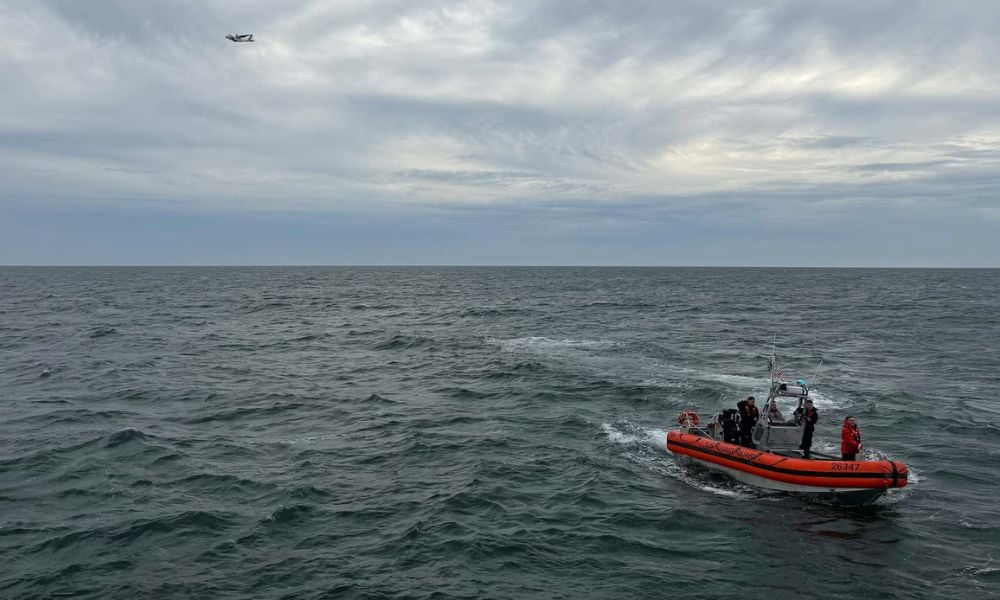
The effort to recover MacAulay’s body is now stretching toward the one‑month mark. Earlier police information indicated Suncor hired a private industrial dive team to support search operations, with RCMP assisting on grid searches and magnetic probing of the area. Howell said the file still reflects the private dive team is involved, although he is awaiting further updates from the local investigator.
An anonymous source connected to the oilsands industry said MacAulay was operating a mulcher on muskeg when it broke through the ice and sank, details corroborated on a Facebook group called Keepers of the Water. Alberta OHS confirmed Command North Construction Group Ltd. as the contracting company MacAulay was working for at Fort Hills. Alberta OHS issued a compliance order to the company on January 19th "related to assessing, eliminating and/or controlling hazards." It says the order remains open. When Canadian Occupational Safety phoned Command North and mentioned MacAulay’s name, the woman who answered immediately hung up. Canadian Occupational Safety also submitted a written request for comment, but Command North did not respond.
Suncor, which operates Fort Hills, has previously said the worker was a contractor operating heavy equipment near a body of water when it became submerged, and suggested in a statement to local media there were indications the incident may have been the result of a medical event. Canadian Occupational Safety reached out to Suncor three separate times with follow‑up questions about the recovery operation, the contracting company, MacAulay’s identity and about the “medical event” characterization; the company has not responded.
For health and safety leaders, the combination of an extended, complex recovery, multiple contractors, and limited public communication from the companies involved illustrates how quickly trust can erode when key facts remain unanswered for weeks after a fatal incident.
Criminal-investigation demands, safety concerns and doubts about ‘medical event’ claim
The Alberta Federation of Labour (AFL) is using this case to call for a criminal lens on workplace fatalities. In a recent press release, the federation urged the provincial government to ensure police investigate this oilsands death and all workplace fatalities, not just occupational health and safety regulators. Pointing to the federal Westray amendments to the Criminal Code, the AFL argues that fines and regulatory penalties “are not always sufficient to deter dangerous workplace practices” and that serious incidents should be assessed for potential criminal negligence.
Workers and community members are also raising substantive safety concerns. On that Facebook group Keepers of the Water, multiple commenters describe muskeg as “unforgiving,” note that snow can insulate the ground and prevent it from fully freezing, and recount experiences of heavy equipment breaking through weak surfaces at northern sites. Some share stories of near misses or incidents they believe were minimized or “covered up,” reflecting a perception that systemic soft‑ground risks are not always fully controlled.
That same thread shows pointed skepticism about Suncor’s early suggestion the incident may have been a medical event. Commenters ask, “how Suncor is able to release a comment stating that it was a possible medical event even though they are still working to find the worker’s remains,” argue that “they can’t classify it as a medical emergency when they can’t prove anything prior to this happening,” and question “how can they try and relate it to a medical event without recovery” when “no one has found the body yet or the machine.”
For health and safety leaders, these reactions underline several emerging expectations: that investigations into high‑energy incidents in complex environments like muskeg will examine not only regulatory compliance but also potential criminal liability; that employers and contractors will be transparent about ground‑condition controls and decision‑making; and that early public statements about cause will be clearly framed as preliminary until both recovery and a full evidentiary picture are in place.