The advice is simple, hard-won and rarely taught: stop talking about safety and start talking about what executives actually care about
Lee-Anne Lyon-Bartley was the lowest-ranking person in the room. As a manager presenting training requirements to a room full of vice presidents, her CEO stopped her mid-presentation.
"You're wrong, young lady. That's not correct."
She knew she was right. He pushed back again, publicly. Colleagues around her signalled her to stand down.
She refused.
"If you are 3,000 per cent sure, don't be afraid to hold your ground," she told the audience. That evening, the CEO found her. "I looked it up and you were right."
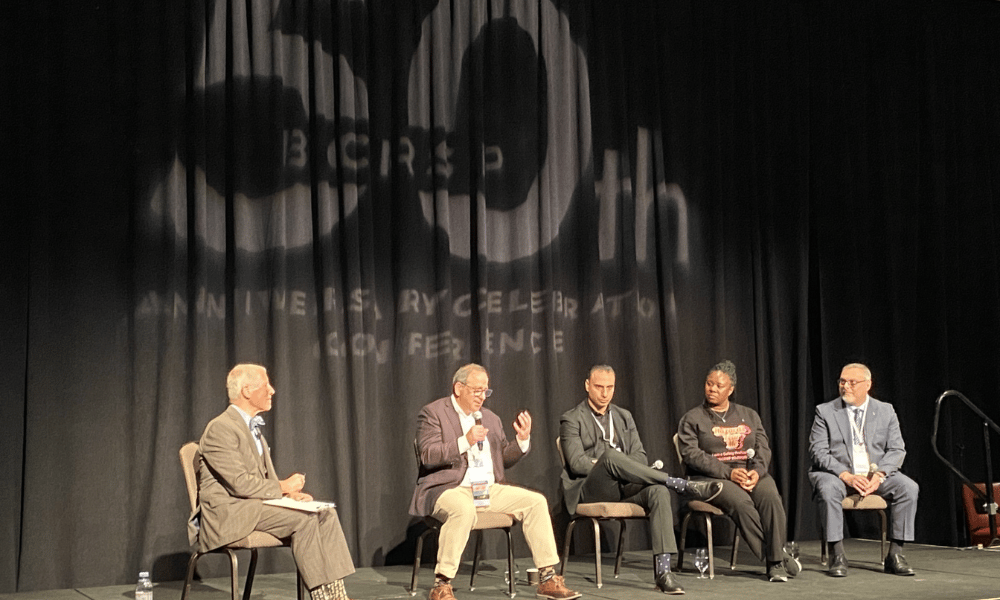
Lyon-Bartley, now vice president of health, safety and environment at Dexterra Group, shared that story at the Board of Canadian Registered Safety Professionals' 50th anniversary conference in Niagara Falls earlier this week. The session, moderated by BCRSP Board of Governors chair Larry Masotti, brought together four senior safety executives to tackle one question: how do you speak to C-suite executives who have a thousand other things on their mind?
Be a thermostat, not a thermometer
Sonny Brar, senior vice president of global food safety, occupational health, safety and quality assurance at Upper Crust, has a framework he returns to when coaching his teams.
"You can be a thermometer person or a thermostat person. The thermometer lets the temperature in the room dictate your reactions. The thermostat sets it."
He learned that the hard way. On his second day as a vice president, a board member asked him mid-introduction to outline his top three health and safety priorities and how he would achieve them by the end of the year. Brar froze, sweated through his shirt, and stumbled through an answer.
Three months later, the same person asked the same question. Brar knew every number cold.
"Know your numbers before you walk in, every time. Your LTIs, your severity, your frequencies, your lost times, your reportables, your recordables, your WSIB statements. You might get asked, you might not. But if you do, know your numbers."
And if you don't know something? "People can read it when you're making something up. Just own it and move forward."
It's not about winning one meeting
David Deveau, vice president of corporate safety and sustainability at The Inland Group, turned his sharpest observation on his own profession.
"I think sometimes we are our own biggest problem."
The attitude safety professionals bring into executive conversations, before a word is spoken, can undermine everything. The quiet belief that the C-suite doesn't care, that they only understand spreadsheets. "It is our job to influence leaders. It's not the leader's job to be influenced."
He described arguing against disciplining pilots following a serious incident, a position that left him isolated in the room. An executive told him he "must have just got back from Disney" because he was still "on the teacup ride." He held firm. The CEO came around. Then the next incident happened, and the same CEO's first instinct was discipline.
"It's not about winning a conversation. It's about a journey of conversations. You're trying to change the culture behind the decision-making."
Find out what the CEO's actual problem is
Sandro Perruzza, CEO of the Ontario Society of Professional Engineers, once sat at the back of a boardroom while a health and safety team spent 40 minutes presenting LTI rates to a stone-faced CEO. By the end, the room had lost him.
When the CEO asked Perruzza what he thought, his answer reframed everything.
"I don't know what your problem is. I know what they think your problem is. But I don't know what you think your problem is."
The CEO thought his problem was an upcoming audit. Perruzza had read the annual report. He knew the profit margin was three per cent. He did the math out loud: over eight years, the company had needed $8 billion in sales just to cover WSIB surcharges.
"Was that with a B?"
"Yes."
Two weeks later, Perruzza pitched a three-year, $3.5 million solution in 15 minutes. "He understood profit margin. He didn't understand LTI rates. Come prepared with their annual report. Don't waste their time."
Health and safety are not the same word
The panel's final thread was perhaps the most overlooked: in most organizations, health is quietly subordinate to safety in everything from communications to reporting systems.
Lyon-Bartley catches it constantly in her team's own drafts. Brar reframes it with language: "I don't call it work-life balance. I call it life-work balance, because life always comes first." He challenged the room to consider how differently a worker returning from a workplace injury is treated compared to one returning from a personal accident. "Are you asking about their mental health? Are they getting flowers?"
Deveau's fix is structural. "If health is not in your reporting categories, it's going to get lost in your safety program. Give it a place to be."
This article is part of our Monthly Spotlight series, which in May focuses on safety culture.