

Union says crews are stretched to 61 per cent of capacity as Ontario's wildfires outpace staffing and training investment
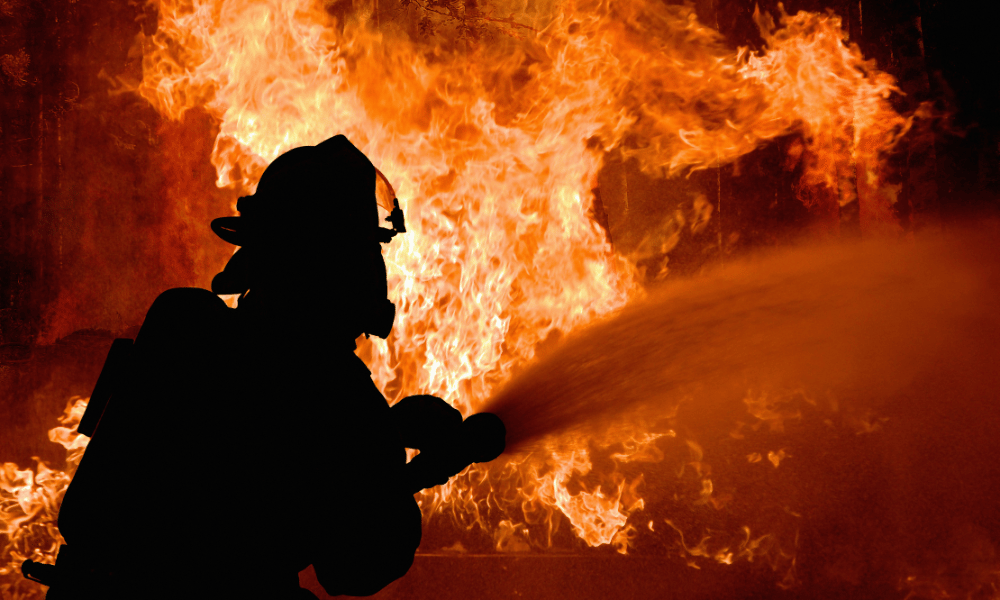
Ontario's wildland firefighter staffing shortage moved to the centre of the province's wildfire response this week, as the Ontario Public Service Employees Union (OPSEU/SEFPO) warned that crews are operating at just 61 per cent of the capacity needed to fight nearly 200 active fires, while Premier Doug Ford defended the province's investment record at a press conference in Toronto on Monday.
Union says fire crews are stretched thin
OPSEU/SEFPO said Ontario currently has roughly 153 initial attack crews, the first wildland firefighting teams dispatched to a new fire, available for deployment, well short of the 250 crews the union says the situation demands. The province has recorded 483 forest fires so far in 2026, compared with 351 at the same point last year and a 10-year average of 320, according to the union's release, which cites the province's forest fire information hub.
"The fact is that Ontario's fire seasons have changed, but our staffing hasn't kept pace," said Jeremy Rouse, chair of the Ministry Employee Relations Committee for the Ministry of Natural Resources at OPSEU/SEFPO. "We cannot continue to respond to increasingly severe fire seasons with fewer resources than the situation demands."
JP Hornick, president of OPSEU/SEFPO, linked the staffing gap directly to worker fatigue and to harm in affected communities. "Fire crews and the staff who support them are overworked and exhausted," Hornick said, adding that air quality had reached some of the worst levels in the world and that entire communities were being lost. Hornick attributed the shortfall to what the union called "intentional choices by the Ford government," and called for a coordinated response from provincial and federal governments, particularly for First Nations communities affected by evacuations.
Government defends firefighter staffing investment
Speaking alongside Jill Dunlop, Ontario's Minister of Emergency Preparedness and Response, and Mike Harris, the province's Minister of Natural Resources, Ford rejected the framing behind the union's numbers when a reporter asked directly why Ontario is short of both the historical complement of roughly 190 crews and the 250 crews OPSEU/SEFPO says are needed.
"There's no other government in the history of Ontario that has supported firefighters like our government has," Ford said, adding that Greg Horton, president of the Ontario Professional Fire Fighters Association, had told him the government's support for the sector was "unprecedented." Notably, the OPFFA represents more than 12,000 municipal firefighters, a different union than OPSEU/SEFPO, which represents the provincial wildland fire rangers whose staffing levels are actually in dispute. Ford said the province is "continuing cross training our firefighters so we can deploy firefighters from Toronto and the GTA and out in Ottawa" into wildland fire zones, a detail worth watching for safety leaders managing multi-jurisdictional emergency response training programs.
Ford cited close to $1.5 billion spent on wildland firefighting since his government took office, including a base budget that has grown from $70 million in 2018 to $150 million today, on top of a further $650 million investment covering six new water bombers and five new helicopters annually. He said the province has hired close to 170 permanent positions over the past two years and increased compensation for pilots and firefighters to improve hiring and retention.
Harris said the roughly 155 crews now deployed represent more than 700 personnel in the field. "We're talking about almost a thousand fire rangers," Harris said, describing crews of four to five people each running hose lines and setting up sprinklers to protect structures and property. He said the province added more than 100 positions last year and reclassified senior crew leaders as full-time, year-round staff to improve retention, though he noted a fully year-round wildland firefighting workforce is complicated by the seasonal nature of the job for many crew members, including students who return to school over the winter.
Matt Pegg, Ontario's deputy minister and a former Toronto fire chief with more than three decades of service, described close coordination between the two ministries. "There is an extraordinary amount of collaboration that happens on a minute-to-minute and day-to-day basis across the Ontario public service," Pegg said.
Evacuations raise emergency preparedness stakes
The staffing debate is unfolding against a backdrop of significant displacement. Dunlop said her ministry has coordinated 13 evacuations to host cities including Thunder Bay, Sudbury, Barrie, Toronto and Niagara Falls, with roughly 1,800 people currently displaced. She said evacuees are flown into hubs at Thunder Bay or Red Lake on aircraft capable of landing on dirt runways before being transferred to host communities, with the province coordinating daily calls with affected and receiving communities on health care capacity, hotel availability and wraparound services.
Dunlop said an order she issued over the weekend was meant to reinforce awareness of an existing tool rather than announce a new one. "We've used the alert ready system five times this year for wildland fires," she said, noting municipalities, First Nations leaders and fire chiefs can request that emergency messages reach residents within 20 minutes of contacting the Provincial Emergency Operations Centre.
Ford said he intends to raise a national wildfire strategy as a formal agenda item when premiers meet in Prince Edward Island in the coming days, pointing to recurring, severe fire seasons in multiple provinces as justification for a coordinated federal approach.
For Canada's safety and emergency preparedness professionals, the dispute over initial attack crew numbers points to a broader workforce planning problem: matching a seasonal, physically demanding workforce to fire seasons that are starting earlier and burning longer than they did even five years ago.