New fines, AMPs and privilege rules are raising the due diligence bar for every Canadian workplace investigation
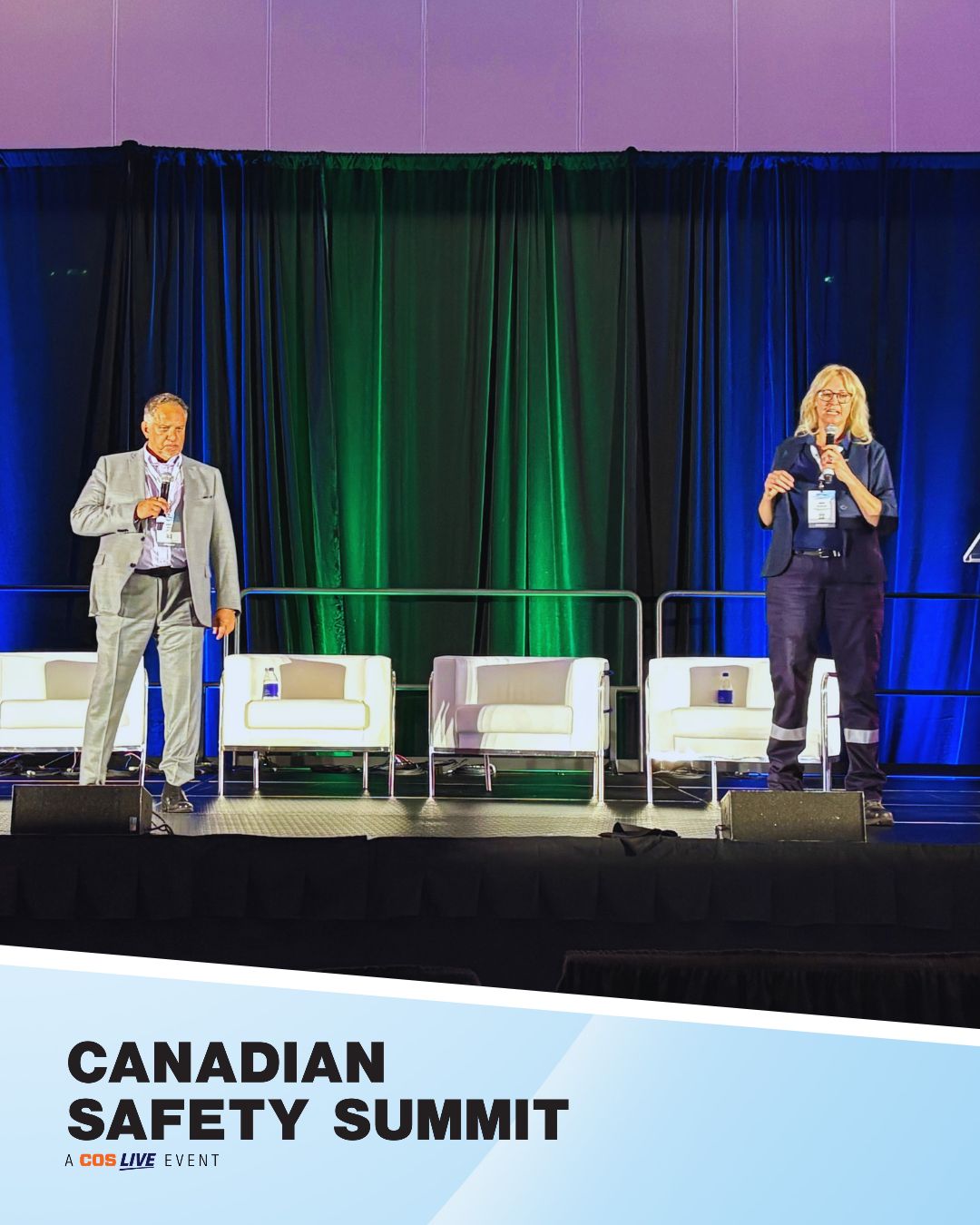
When a workplace incident happens in Canada, the safety investigation that follows is no longer a private, internal exercise. It is a legally exposed event that can determine whether an employer faces a court prosecution, a regulatory penalty, or both. That was the core message at the Canadian Safety Summit in Toronto on October 22, 2026, where Jason Lakhan, counsel at Miller Thomson, and Angie Trumpler, director of field operations, workforce and corporate social responsibility at SafetyCo, walked safety leaders through how rising penalties and new enforcement tools are reshaping incident response for employers across the country.
A due diligence system, not a binder
Lakhan and Trumpler framed the session around a three-step model: protect people, strengthen due diligence, and respond with control. The approach assigns a distinct role to every level of an organization, from workers who need clear authority to stop unsafe work, to supervisors with escalation authority, to managers who own corrective action, up to senior leaders accountable for governance and risk acceptance.
Under most provincial Occupational Health and Safety Act charges, due diligence, defined as taking every reasonable precaution in the circumstances, remains the primary legal defence available to employers. Lakhan pointed to a recurring gap in client files: a single certificate, such as for forklift operation or fall arrest, is often mistaken for proof of competency, when workplace-specific technical training is what regulators and courts actually look for. Trumpler, drawing on her 17 years as a firefighter, added that emergency response has to be built for muscle memory through drilled scenarios and structured debriefs, not improvised in the moment. Employers looking to build that documentation trail can start with this guide to conducting an internal investigation after a workplace accident, which sets out how to preserve evidence without compromising a later defence.
Fines and administrative penalties are climbing
The financial stakes have grown sharply. Ontario's maximum fine per count under the Occupational Health and Safety Act has risen from $500,000 to $2 million, and directors and officers now face fines of up to $1.5 million and as much as 12 months in jail, a penalty typically reserved for egregious or repeat offenders, according to Ontario's own guide to workplace safety offences and penalties. Several provinces have also introduced administrative monetary penalties, which bypass the court system in favour of a tribunal process with relaxed rules of evidence. Ontario's new administrative penalty regime currently extends real teeth to accredited safety management system equivalency in public-sector procurement, though Lakhan expects it to broaden to additional contravention types before long.
Criminal exposure sits above both. Bill C-45, the Westray law, allows criminal negligence charges causing death or bodily harm, a route the federal Department of Justice traces back to the 1992 Westray mine disaster. Lakhan noted that a recent British Columbia trial under the provision produced a monetary penalty with no jail time, underscoring how rarely incarceration actually follows, even when charges are laid. Limitation periods add further pressure: prosecutions must begin within two years of the triggering event, and administrative penalty notices within one year of an inspector becoming aware of a contravention, timelines Lakhan said regulators frequently use to their fullest extent before laying charges.
Protecting the internal investigation
Once an inspector is on-site, organizations can face as many as three parallel investigations: a Ministry or federal probe, an internal joint health and safety committee review, and a senior-level internal investigation, the last of which Trumpler and Lakhan identified as the most important to protect from disclosure. That protection comes from legal privilege, either solicitor-client privilege covering advice from counsel, or litigation privilege, which can cover internal communications more broadly once litigation becomes the dominant purpose behind creating them, a distinction explored in an earlier case where privilege was claimed over an employer's internal investigation. Lakhan recommended drafting a formal terms of reference for a small, management-only investigation committee and running that process through counsel, retained the same day a serious incident occurs, to strengthen any later privilege claim. Charter protections under sections 7, 8 and 10 can also come into play in serious injury cases, though Lakhan said applications to exclude evidence on Charter grounds succeed only occasionally.
For safety leaders, the takeaway from Lakhan and Trumpler was less about any single number than about timing: the decisions made in the first hours after an incident, over who is contacted, what is documented, and who controls the investigation, are what ultimately determine whether an organization's due diligence holds up months later in front of a regulator.
This article is part of our monthly spotlight series, which in October focuses on OHS law, regulations & standards.