
Incident in Frobisher Bay led to crew member overboard and cargo loss

An overloaded cargo barge operating in Frobisher Bay, Nunavut capsized during a transshipment operation in October 2023, sending a crew member and 23 containers into the water, according to a Transportation Safety Board of Canada (TSB) investigation released this week.
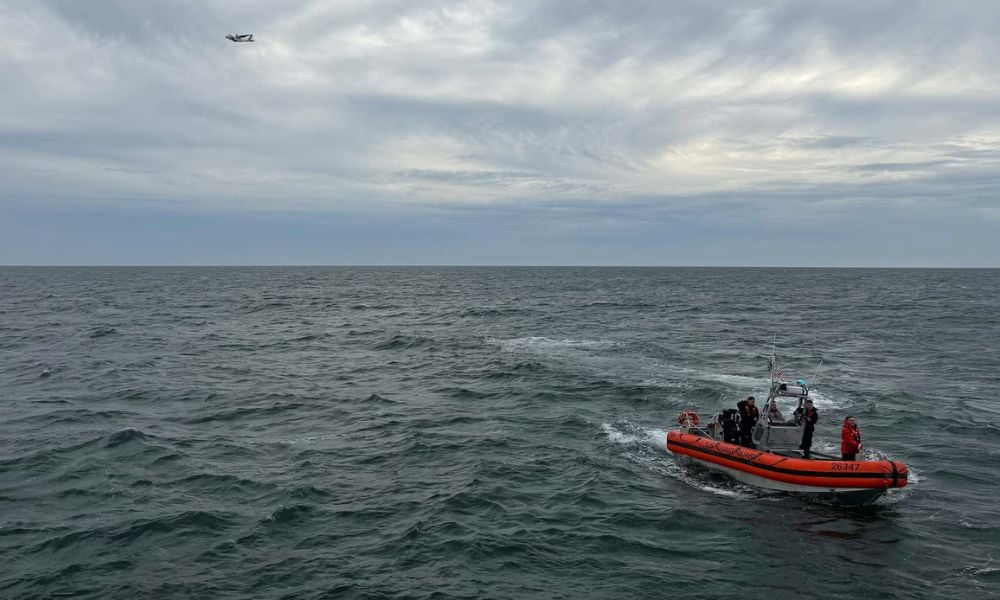
On October 27, 2023, the barge Tasijuaq, assisted by tugs, was transferring cargo from the vessel Sivumut to the port of Iqaluit. Shortly after departure, the barge began to heel and eventually capsized. One crew member was thrown into the water and was rescued eight minutes later with non-life-threatening injuries. Sixteen of the 23 containers were later recovered.
The incident was formally investigated under TSB case number M23C0305. In its findings, the Board concluded that the barge was loaded beyond its stability limits. “The barge’s stability margins were compromised, and the operation was being conducted without formal knowledge of safe loading parameters,” the report stated.
Lack of onboard stability information contributed to the incident
The investigation revealed that while a structural arrangement plan for the Tasijuaq existed and included critical data such as the maximum allowable deck load, it was not accessible to the onboard crew.
“The plan was kept onshore, and the limits were not communicated to the crew,” the TSB noted in its press release. “Without this information, the crew relied solely on previous experience to determine safe operating limits.”
This reliance on informal knowledge, combined with the absence of a formal stability assessment, played a key role in the barge’s compromised safety. The TSB performed its own post-occurrence stability analysis and found that the barge did not meet minimum criteria under applicable stability codes, including inadequate freeboard and reduced righting ability.
The incident also highlighted physical and environmental factors. As the barge encountered waves and water on deck, unsecured wood dunnage shifted, increasing the heel. This contributed to a progressive loss of balance that the vessel could not recover from.
Safety management system lacked clarity and centralization
The company’s Safety Management System (SMS) came under scrutiny for lacking clear, centralized procedures related to transshipment. Investigators found that guidance for barge loading and stability was “limited and dispersed across multiple documents,” which made it difficult for operators to apply best practices consistently.
As a result, informal operational habits developed over time. “Work practices had drifted from written procedures and had become normalized, gradually reducing safety margins,” the report stated.
The TSB emphasized the concept of “practical drift” — a term used to describe the erosion of procedural compliance in favor of informal, experience-based decision-making. This drift was evident in the way the crew approached loading, assessed freeboard, and supervised operations.
Corrective actions taken following the incident
Following the incident, the operating company undertook a number of safety improvements. These included developing third-party loading guides for all barges in their fleet, incorporating a dedicated transshipment procedures manual into the SMS, and installing recovery devices on the tugs used during operations.
The TSB noted that while the Tasijuaq was not subject to certain stability regulations due to its size and classification, these exemptions do not eliminate the need for proactive risk management. “When procedures are vague or spread out across different documents, crews may revert to informal practices that can compromise safety,” the Board stated.
The Board concluded that no single factor caused the capsize but that the interplay of incomplete procedures, insufficient oversight, and overloaded conditions created a high-risk scenario.