How the security industry prepared for the FIFA World Cup, from building lockdowns to crowd intelligence
As the FIFA World Cup transforms downtown Toronto into one of the world's most watched stages, the city's private security industry is quietly preparing for what could be its most challenging assignment in years, and one of its most visible.
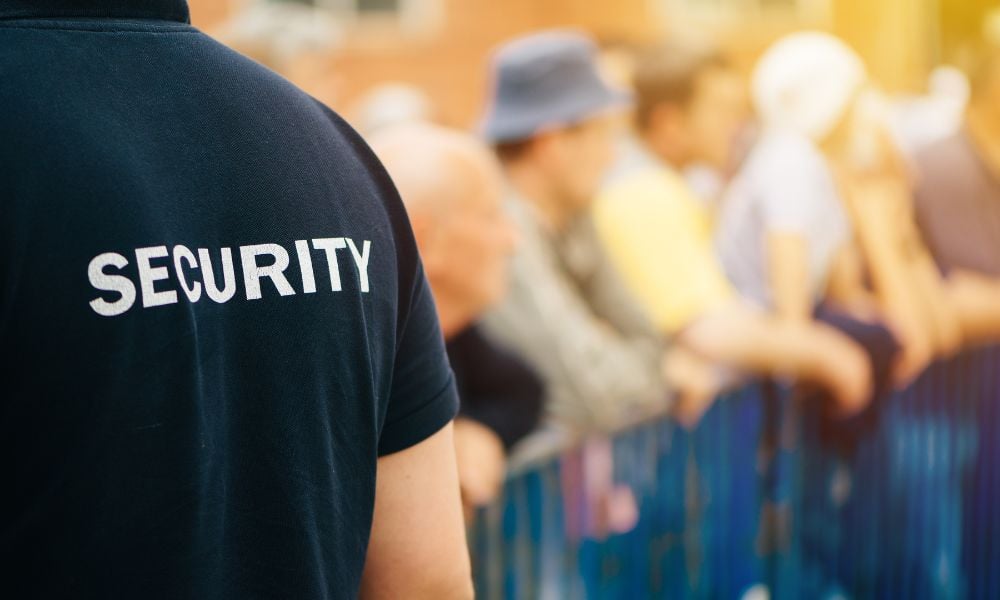
Paul Carson, chairperson of the Security Guard Association of Ontario and vice-president of Regal Security, says his guards are ready. But he is also candid about the limits of what they are trained and licensed to do, and what the World Cup demands of them.
"Our job primarily would be to identify a risk perhaps within a crowd and let somebody know about that risk," said Carson. "They typically wouldn't be called upon to interdict that risk. That's what the police are there for."
Observe, report and lock down fast
The distinction matters in a city hosting six FIFA World Cup matches between June 12 and July 2, 2026, with up to 11 international teams potentially playing in Toronto once the Round of 32 is drawn. Large crowds, concurrent events, and heightened international attention place security workers in the office towers, retail complexes, and transit corridors surrounding the stadium and the FIFA Fan Festival in Fort York in an unfamiliar environment.
For Regal Security, whose portfolio includes multiple buildings in the downtown core, preparation has focused on one core drill: lockdown speed. Carson says his guards train on building lockdowns monthly and can fully secure a building in under three minutes.
"We really impede your impact to create havoc in the downtown core when we start locking buildings," he said.
That capability took on added relevance on June 11, 2026, when Toronto police intercepted an unauthorized drone near the Fan Festival perimeter at Niagara and Tecumseth Streets. An individual was charged under the Canadian Aviation Regulations, a reminder of how quickly the threat environment can shift during a major international event.
A sector watching its workers
One of the less-discussed pressures the World Cup has placed on the private security industry is staffing stability. Carson says Regal pre-emptively issued a memorandum to its guards several weeks ago, placing a moratorium on short-term leaves of absence during the tournament.
"We sort of said that there's no in and out on this," he explained. "You're either going to work for us or you're not."
The policy mirrors restrictions Regal applies during the Christmas holidays, designed to prevent the churn large events typically generate. Few guards have left to pursue World Cup event work, which Carson attributes in part to the different nature of event security itself.
"Event-based security is heavy on active control, heavy on policy and process: rules enforcement as opposed to law enforcement," he said. "The training would be different. The requirements of them standing for long periods of time, not watching the game. They're there to watch the space, the crowds."
That difference is directly relevant to the occupational health and safety obligations employers carry for security workers; extended standing shifts in summer heat, reduced interdiction authority in high-stress crowd situations, and the psychological demands of sustained vigilance.
Co-ordination across a complex security web
Carson's guards do not operate in isolation. Through PASCOM, a downtown core security association, member companies share information on incidents across the central business district in near real time, supported by regular briefings from community policing liaison officers.
"We're regularly involved in updates from the Community Policing Initiatives Project," Carson said. "We're constantly being briefed on what is coming, what's likely to occur and things that we should be prepared to do."
That co-ordination connects to a much larger operation. Toronto's World Cup security framework involves officers from five agencies: Toronto Police Service, Peel Regional Police, York Regional Police, Ontario Provincial Police (OPP), and the Royal Canadian Mounted Police (RCMP), with all nine international teams receiving motorcade escorts. Foreign law enforcement officers are also embedded in the city, providing fan intelligence and plain-clothes support, with some stationed inside the $12.5-million Toronto Integrated Safety and Security Unit Area Command Centre.
Ontario's Inspector General of Policing, Ryan Teschner, confirmed on June 8, 2026, that "the critical elements are in place" following months of engagement with the Toronto Police Service Board and police leadership. For safety professionals overseeing event security and crowd management at this scale, the Toronto model reflects a clear division of responsibilities: private security handles observation and access control; police manage enforcement and primary threat response.
Excitement and nerves in equal measure
For the guards standing post outside towers on King Street or covering a lobby at Yonge and Dundas as tens of thousands of fans stream past, the World Cup is both a historic occasion and an occupational unknown.
"I think it's a little bit of everything," Carson said. "They're excited about it because of the amount of people that are supposed to be attending. They're nervous about it because it's an unknown. And they're excited as well because we're bringing the world to Toronto."
That mix of anticipation and anxiety is something employers have a responsibility to address through preparation, training, and support for workers placed in high-pressure environments. For the security professionals quietly working behind the scenes of the world's biggest sporting event, the job starts now.