A Calgary-based partnership puts connected gas detection on Boston Dynamics' Spot robot, keeping workers out of hazardous areas
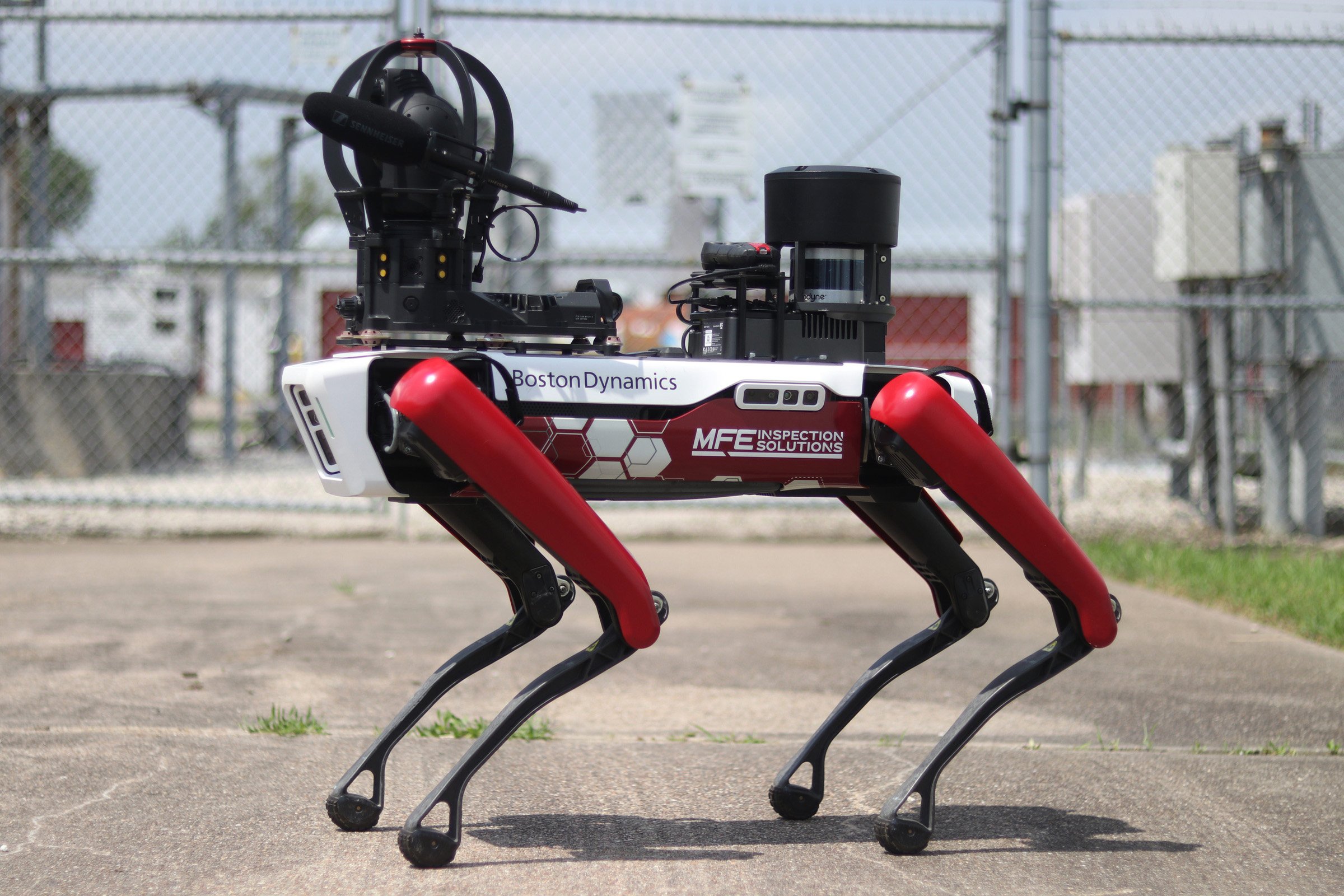
Gas detection technology mounted on a four-legged robot is now being deployed in some of Canada's most hazardous industrial environments, part of a partnership that could change how safety professionals approach atmospheric monitoring.
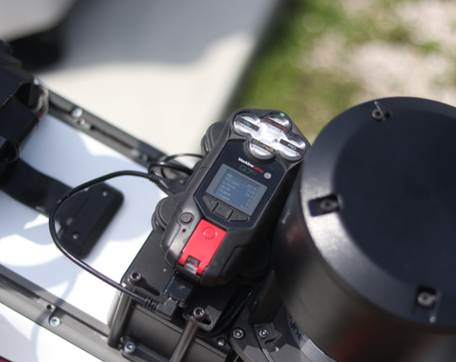
Calgary-based Blackline Safety Corp. (TSX: BLN) announced a partnership with MFE Inspection Solutions to integrate Blackline's cloud-connected portable gas detector onto Boston Dynamics' Spot robot. The solution delivers real-time gas readings, alerts, and location data to remote monitoring teams before any worker enters a potentially dangerous area.
"Instead of sending a person in, you can send in the dog," said Phil Benson, vice president of product at Blackline Safety. "And with our gas detection technology, you can be monitoring the air quality as if a person was there. So you could say, okay, this environment is actually totally fine for a person. Now we're going to remove the dog and send people in because we know the risk now is very low or manageable."
Building a robot with 'athletic intelligence'
Spot is the product of roughly three decades of robotics research at Boston Dynamics, built as a mobility platform capable of navigating any environment a person can reach, including stairs, tight spaces, and uneven terrain.
"We wanted to build a robot that could go anywhere a person can go," said Merry Frayne, senior director of product at Boston Dynamics. "We believed that the key to agile mobile robots was athletic intelligence, meaning that a robot that could understand its surroundings dynamically, navigate challenging terrains and difficult environments."
The robot's commercial applications span two primary areas: first responders seeking situational awareness in clandestine labs, collapsed structures, and fire-damaged buildings; and industrial operators working in environments that pose risk to human workers. Adding Blackline's gas sensor gives Spot an entirely new capability. "By giving it the gas sensor, we're also giving it a sense of smell, so it can start to determine whether or not there are dangerous areas for people before needing a person to be exposed to it," Frayne said.
How the system works
MFE Inspection Solutions, a specialist in non-destructive testing and remote visual inspection tools, served as the integration partner, writing what its team describes as the "digital plumbing" to connect Blackline's application programming interface (API) with Spot's command and control software.
"We were the driving integrator," said Jason Acerbi, CTO and VP of the US for MFE Inspection Solutions. "We're partners with Boston Dynamics since 2020 and we've been working in oil and gas, chemical manufacturing, power generation. There's a demand to have gas detection on autonomous robots and drones, and so we brought the parties together and did the integration ourselves."
Spot operates through pre-programmed autonomous missions. An operator manually drives the robot through an inspection route, sets points of interest, and records the mission. The robot then repeats that route autonomously, with gas readings flowing simultaneously through Spot's Orbit software and Blackline Live, Blackline's cloud-connected monitoring portal, giving safety teams real-time awareness from any location with an internet connection.
A key safety feature: if the robot detects rising levels of explosive gases, such as methane approaching the lower explosive limit (LEL), the minimum concentration at which a gas can ignite, it can autonomously return to safety or shut itself down. Blackline's gas monitor continues operating even after the robot powers down. "If it shut itself down, our gas monitor would continue to work," Benson said. "So we can monitor gas in the area even if the dog had sort of put itself to sleep."
The connected worker picture
The solution integrates into Blackline's broader connected worker platform, which aggregates data from personal monitors, area monitors, drones, and robotic systems into a single portal across an entire plant site. When Spot detects a gas hazard, every connected worker on site receives an alert. It’s part of a broader trend of connected safety platforms that are reshaping occupational health and safety in Canadian workplaces.
"The connected worker piece, merging robotics and humans working together to keep an environment safe, is definitely what working in an industrial environment will look like more and more as the years go on," said Acerbi.
Acerbi sees the direction clearly: robots and drones handling "dull, dark, dirty, repeatable" inspections, freeing safety professionals to act on data rather than collect it. "Where it's going is getting a lot more information at your fingertips to make better decisions on where to spend human resources and to get real-time notifications when there is a hazard."
Frayne echoed that longer-term vision. "What we're really doing here is building a tool to help people remove the worst aspects of their job and focus on the things that they're really good at," she said. "The robot's great at doing tasks. You can send the robot off on an autonomous mission to collect a whole bunch of data and send that data where it needs to go. That way, people can focus on the tasks that add value."
For Canadian safety professionals, the role of robotic inspection technology in protecting workers from industrial gas hazards is a growing consideration.