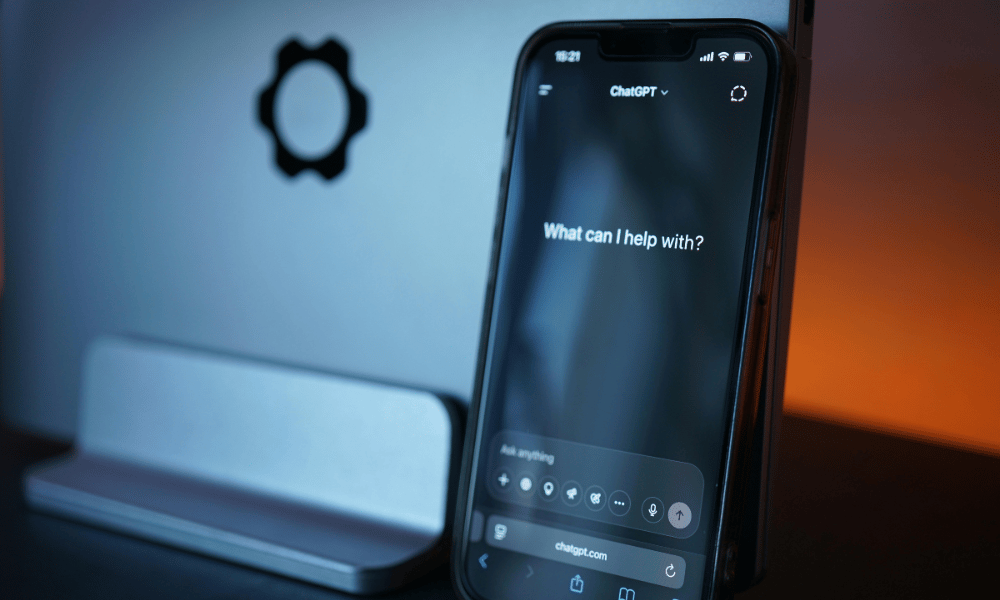
Artificial intelligence has moved quietly into the day-to-day of occupational health and safety. It's drafting policies and training content. It's summarizing incident reports, parsing certificates, and helping auditors write their findings. In some organizations the adoption is deliberate; in others, employees are pasting sensitive information into consumer chatbots without anyone in leadership or governance knowing.
The question is no longer whether the OHS industry should use AI. It's whether the industry is using it in ways that hold up to scrutiny, from regulators, from clients, from workers, and from the health & safety professionals whose names go on the documents.
Where AI genuinely helps
The strongest use cases in health & safety work are the ones that look least exciting. Pre-screening contractor documents for missing fields. Flagging expired certificates of insurance or training records. Checking coverage values against contractual requirements. Identifying inconsistencies across a submission package. Drafting structured summaries from evidence that a qualified professional has already gathered.
None of this replaces expertise, it clears the runway so expertise can be applied where it matters. For compliance teams handling thousands of contractor files, for auditors working under COR or ISO programs, for safety managers reviewing site documentation, the volume of routine verification has always competed with deeper analytical work. AI handles the routine layer faster and more consistently, without fatigue. That's a meaningful gain in a field where time is the scarcest resource.
Where AI quietly creates risk
The first risk is fabrication. Large language models are designed to produce plausible-sounding text. Asked to summarize evidence they don't have, they will often invent it convincingly, commonly referred to as hallucination. A safety document, audit summary, or contractor evaluation that contains findings the professional never actually observed is not just inaccurate, it's negligent. AI used in this work must be constrained to evidence already gathered and verified. The model proposes wording; it does not and should never introduce facts.
The second is data exposure. Public AI tools were built for open conversation, not regulated workflows. Pasting a contractor's insurance certificate, an injury report, or an audit's interview notes into a consumer chatbot may send that data to a foreign jurisdiction, retain it indefinitely, and in some cases feed it into future model training. For Canadian organizations handling sensitive worker and contractor information, that's a privacy and compliance problem hiding in plain sight, and one most leadership teams have not yet asked their staff about.
The third is diffused accountability. When tools like ChatGPT are used to draft text that ends up in a regulated deliverable, assurance document/report, or makes a screening recommendation that gets accepted without scrutiny, who is accountable? In a regulated environment, "the AI did it" is not a defence. Accountability has to sit with a named human, decided before something goes wrong, not after.
The principle that should govern AI in safety
The simplest framing is also the most useful: AI recommends; humans decide. Every AI-assisted output in a health & safety context should be reviewed and approved by a qualified professional who remains accountable for it. The AI is an assistant, not an authority. Its job is to surface, suggest, and structure, not to conclude.
Practically, organizations adopting these tools, and those whose staff are already using them, sanctioned or not, should insist on a few things. AI outputs must be traceable: a record of what was reviewed, what was flagged, what was suggested, and who decided. Data residency and retention must be appropriate to the sensitivity of the information; for most Canadian safety work, that means data that stays in Canada and isn't used to train external models. And the AI's scope must be bounded: drafting from verified evidence is reasonable; generating findings from thin air is not.
Innovation without erosion
There's a tendency, when a powerful new technology arrives, to treat adoption as binary: modernize or fall behind. In health & safety and contractor management, that framing is unhelpful. The goal isn't to use the most AI; it's to use AI where it makes qualified professionals more effective, while protecting the things that make the work trustworthy in the first place. Done well, AI gives Canadian safety professionals more time for the judgment-heavy work that protects workers. Done poorly, it quietly undermines the defensibility of the work itself. The difference comes down to guardrails, and to the discipline to keep humans firmly in the loop.
Join Ben live on June 23 for a webinar on AI-Driven Compliance: The Future in COR/ISO 45001 Auditing and Contractor Compliance
--------------------------------------------------------------------------------------------------------------------------
Ben Snyman is cofounder and CEO of AuditSoft and ContractorXchange. With 30+ years of experience in risk management and a legal background (B.Comm, LLB, MBA), he is a recognized authority in OHS compliance, committed to advancing health and safety and pioneering industry-leading solutions that strengthen due diligence and risk mitigation.