GO Transit trains avoided collision by 549 feet
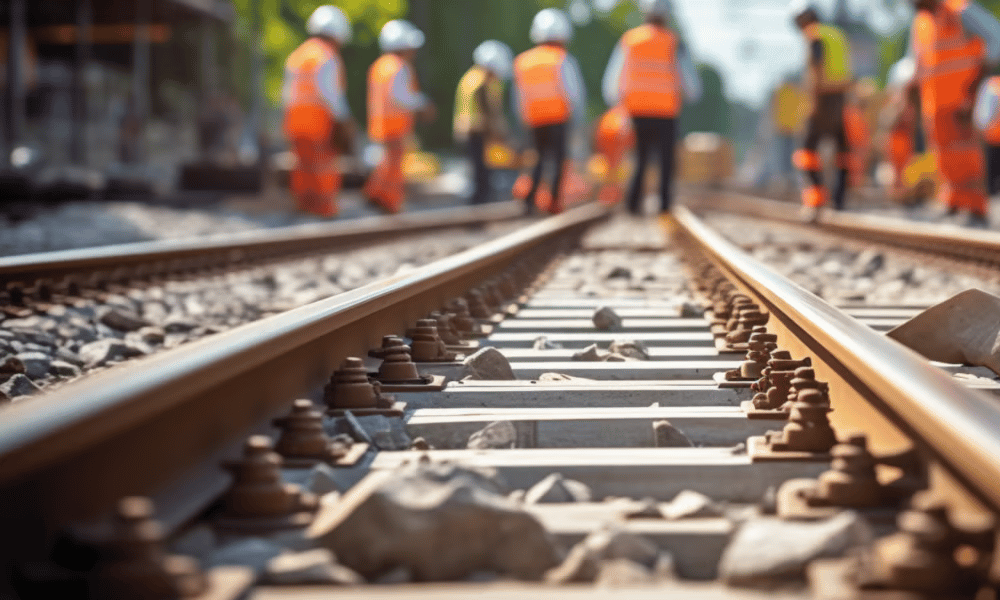
The Transportation Safety Board of Canada (TSB) is pushing Transport Canada for stronger physical safeguards after a chain of human-factors failures led an eastbound commuter train to pass a Stop signal and cause a near-miss with another train.
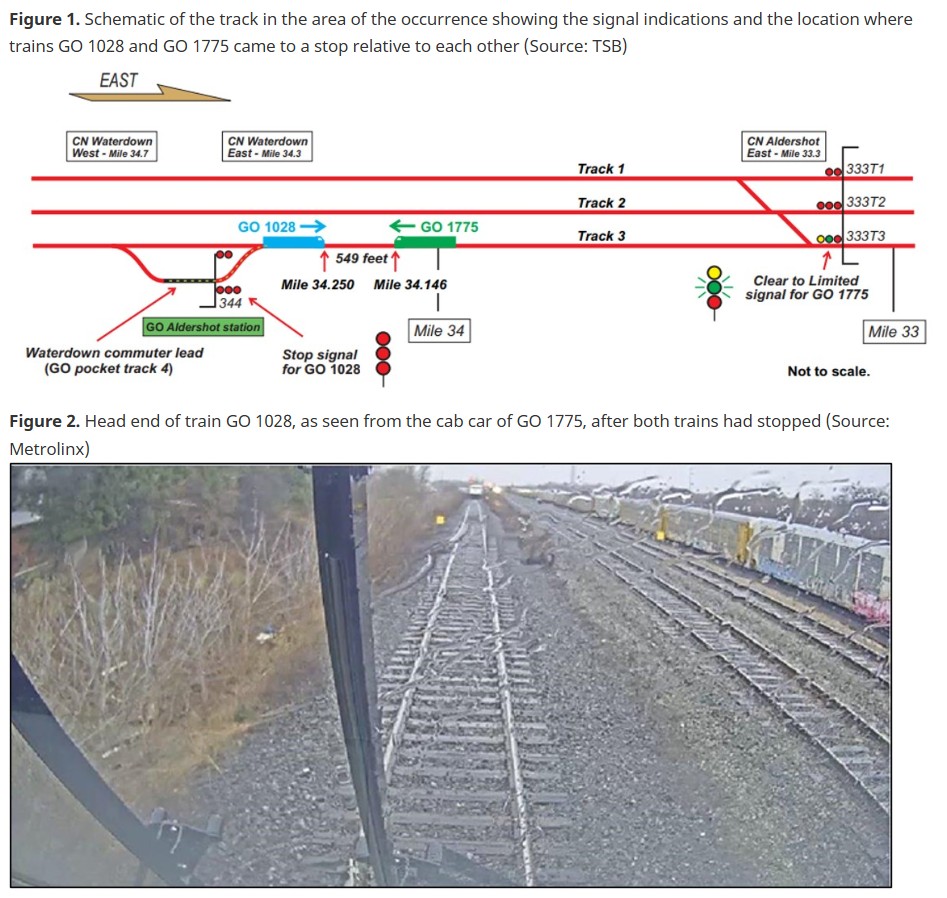
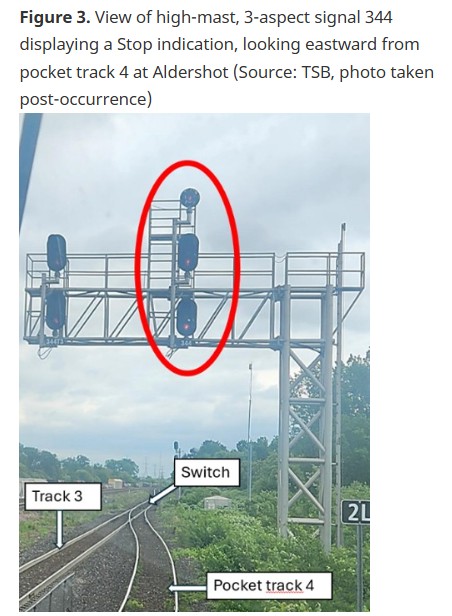
On March 14, 2024, at 1702 Eastern Daylight Time, eastbound GO Transit train 1028 was departing GO Aldershot Station in Burlington, Ontario, when it passed signal 344 displaying a Stop indication.
The train ran through a switch lined against its movement and entered track 3 of the Canadian National Railway Company Oakville Subdivision main line without authority. The crew realized the error only when they heard the switch points being forced against the stock rail, according to a TSB report.
The TSB investigation found that after entering the main line, train 1028 was directly in the path of westbound GO Transit train 1775, which was proceeding at 54 mph. Both crews brought their trains to a stop, avoiding a collision by approximately 549 feet. Together the two trains carried more than 400 passengers; there were no injuries to passengers or crew.
The trains were operated by Alstom under contract to Metrolinx. According to the TSB, the equipment, track and signalling systems were reviewed and found to be functioning as intended, and the crews were fit for duty and unaffected by fatigue.
Human-factors findings
The board attributed the event to a cluster of cognitive failures rather than wilful rule-breaking. The crew of train 1028 had worked the route daily for about a month, during which train 1775 had consistently passed Aldershot before 1028 was ready to depart. That experience, the TSB found, "contributed to their forming an inaccurate mental model that signal 344 displayed a permissive signal indication."
On the day of the occurrence, 1775 was running five minutes late, a delay the crew was not aware of and not required to know.
While making preparations to depart Aldershot, the crew of GO 1028 encountered distractions in the locomotive cab, the TSB noted.
“The conductor was looking down at his company-issued tablet to review general bulletin orders and operating restrictions. The LE removed rainwater that had leaked onto the LE's console and the conductor's table. He was also contending with windshield wipers that were not effective in clearing the windshield, and a seat that required repeated adjustments,” according to the report.
“These distractions diverted their attention from determining whether GO 1775 had passed Aldershot on track 3 on time and from perceiving that signal 344 displayed a permissive indication."
A required pre-departure job briefing took place but focused on upcoming operating restrictions and omitted the governing signal. The TSB characterized this as "a missed opportunity to reinforce their team situational awareness of the governing signal." Neither crew member verbally acknowledged the Stop indication before the train began moving.
The compliance gap
The report highlights a divergence between audited compliance and real-world behaviour that carries lessons for any safety-management system. In the five years preceding the occurrence, the locomotive engineer was tested 193 times and the conductor 37 times for rule compliance, including adherence to the signal-recognition rule. The results indicated a 100% compliance rate for both employees.
Recorder data told a different story. The investigation found that neither the crew of train 1028 nor that of train 1775 consistently called signal indications to one another during the trip. The finding echoes an earlier TSB investigation in which observed compliance of 98.1% fell to 75.2% when crews operated unsupervised in the field.
The board noted that since the Locomotive Voice and Video Recorder Regulations took effect in September 2022, it has repeatedly found signals that were not called, not called consistently, or called by one crew member but not repeated by the other. Irregularities with the recorder audio and video on both trains also limited the information available to investigators.
Broader safety concerns
The TSB frames the case as further evidence that administrative defences alone are insufficient. Crews not following signal indications has been a TSB Watchlist issue since 2012, and the board has issued three recommendations calling for physical fail-safe train controls since 2000. Canada has not implemented an advanced train control system, while the United States completed positive train control on high-risk corridors over roughly 12 years.
In September 2025 the board issued Recommendation R25-01, calling on Transport Canada to "immediately implement additional interim measures to mitigate the risks associated with train crews not complying with railway signal indications" until permanent fail-safe defences are in place. Transport Canada agreed with the recommendation and cited a multi-pronged interim action plan.
As of the board's January 2026 assessment, however, Transport Canada had not committed to specific solutions or timelines, and the TSB stated it was unable to assess the response. Publication of proposed enhanced train control regulations is now targeted for 2026 or 2027.