United Steelworkers Local 7135 links its piecework incentive system to three fatalities and mounting Ministry of Labour scrutiny
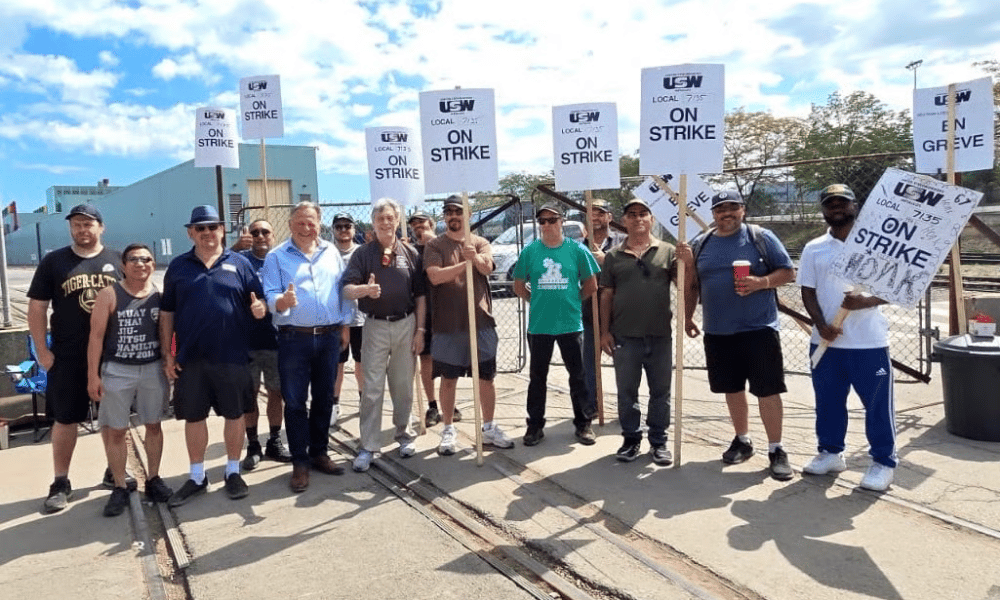
More than 1,200 workers at National Steel Car in Hamilton have been off the job since 12:01 a.m. on Aug. 12, after members of United Steelworkers Local 7135 voted by a wide margin to reject the railcar manufacturer's latest contract offer. The union says the vote saw roughly 91 per cent turnout, with about 79 per cent of members casting ballots against the deal.
Local president Frank Crowder said the strike comes down to two connected issues: wages that have not kept pace with inflation, and a piecework incentive program he says has contributed to three worker deaths at the Kenilworth Avenue North plant since 2020.
Incentive pay tied to unsafe behaviour, union says
Decades ago, workers at the plant agreed to a lower base rate of pay in exchange for an incentive program that pays an extra 25 per cent when they hit daily production quotas, whether that means 100 to 120 small parts or four to five rail cars, depending on the line. Crowder, who leads United Steelworkers (USW) Local 7135, said the company has steadily pushed those quotas higher, to the point where hitting them safely is no longer realistic.
"It has guys performing unsafe acts to work quicker, trying to get the cars done to make sure they get that additional 25 per cent pay," Crowder said. "Any raises that we now negotiate can be clawed back using this system, just by giving us a price that's not attainable."
The union's preferred fix, scrapping the program outright, is complicated by how deeply it is embedded in members' pay: Crowder said it took the union's own lawyer roughly two days just to understand how the system works. Instead, bargainers are asking to be included in setting production time studies using standard industry metrics, with the right to challenge those studies before an arbitrator. The company has refused. "The company is outright refusing, which means we have no power, no jurisdiction, we have no say," Crowder said.
Union says 2023 safety gains are being rolled back
This is the second time in three years that wages and safety have pushed Local 7135 members to the picket line. The current dispute follows a six-week strike in 2023 that ended with a three-year deal, a 13 per cent wage increase and new health and safety language the union fought hard to secure. Crowder said that progress has since eroded after a new vice-president of human resources began reinterpreting the contract's safety provisions, prompting grievances, arbitrations and a case now before the Ontario Labour Relations Board.
The current flashpoint involves the plant's Joint Health and Safety Committee, which includes six worker representatives, six management representatives and two full-time health and safety reps under Ontario's Occupational Health and Safety Act. Crowder said the company is trying to write language into the new contract limiting inspection duties to only the two full-time reps, sidelining the other four worker seats and undermining the worker engagement a joint committee is meant to provide. "You're placing something illegal into our collective agreement to try to reduce our participation in health and safety," Crowder said.
The union is preparing an unfair labour practice complaint after the company walked away from bargaining and sent its final offer directly to members rather than through the negotiating committee.
Plant's fatality history drives ministry scrutiny, Crowder says
Three workers have died at the plant since 2020: Fraser Cowan in September of that year, Collin Grayley in April 2021, and welder Quoc Le on June 6, 2022, each death resulting in a separate fine against the company under the Occupational Health and Safety Act. Crowder, who sat on the bargaining committee through all three deaths and was local president for the third, said the losses have taken a lasting psychological toll on the workforce. "We seem to have no fear of dying anymore because of what we've seen and what we've been through," he said, comparing the effect to the toll experienced by people who have been in combat.
Crowder said the union believes the Ontario Ministry of Labour, Immigration, Training and Skills Development has issued close to 1,000 orders at the plant since Le's death, far more than the two or three enforcement orders most Ontario manufacturers see in a typical year. In the weeks after Le died, the ministry issued two orders and 26 requirements tied specifically to that incident, before laying three charges against the company in May 2023. Canadian Occupational Safety asked the Ministry of Labour to provide the exact number of orders issued to National Steel Car in that timeframe, but the Ministry did not respond to multiple requests.
Bargaining stalled with no talks scheduled
Crowder said the company walked away from the bargaining table after refusing to negotiate the incentive-pay language before moving to monetary issues, even after a Ministry of Labour conciliator was brought in. The union says it has offered to return to bargaining, and as of the strike's seventh day, the company had not responded.
Canadian Occupational Safety requested comment from National Steel Car, but did not receive any response.
This article is part of our Monthly Spotlight series, which in August focuses on Facility Safety, Signage & Ergonomics.