Dr. Nayab Sultan now working with UBC on AI-enabled early detection tools for tuberculosis

Dr. Nayab Sultan has spent 35 years in health and safety, but one neighbour on a quiet UK street helped crystallize what would become his life’s work.
The man, of Afghani origin, would slowly descend three steps outside his home, clinging to an oxygen tank and gasping for breath. He believed his illness stemmed from poor housing, smoking and poverty. He never considered that his work blasting rock on the Karakoram Highway between Afghanistan and Pakistan might be to blame.
Sultan did. Trained as a health and safety professional, he started asking questions. The neighbour had rushed into blast zones before dust settled, wearing only a handkerchief over his mouth. He had never been told about silicosis, or how silica dust can predispose workers to tuberculosis and is often misdiagnosed as TB itself. Further tests revealed silicotic lung and silicotuberculosis – an occupational disease that had gone unrecognised for years.
“That was the ‘aha’ moment,” Sultan says. “It showed me misdiagnosis was real, and that people were getting sick and dying without anyone joining the dots to work.”
Decades of work, global recognition
Today, that journey has culminated in one of the world’s most respected accolades in occupational health. In December, Vancouver-based Sultan received the Outstanding Contribution to the Global Development of Occupational Health 2025 award from the Society of Occupational Medicine in London, U.K., in recognition of his decades-long work on silicosis, silicotuberculosis and tuberculosis among mineworkers.
The honour follows a previous research prize for global contribution to occupational health and marks what Sultan calls “a step above” in terms of peer recognition.
Alongside his day job in industry as a health and safety consultant, Sultan has built a parallel career in development, academia and research, much of it pro bono. In sub-Saharan Africa, he serves as senior adviser on occupational and environmental diseases to the Southern African Miners Association (SAMA), which represents 10 countries and more than two million ex-mineworkers and their dependants.
Research drawing on international literature and local data has highlighted high prevalence rates of silicosis and other lung diseases – including COPD, emphysema, fibrosis and lung cancer – particularly among gold miners. Yet Sultan says misdiagnosis of occupational disease has been common “for several decades, maybe even a century,” often fuelled by a lack of awareness among physicians, industry and even health and safety professionals.
“The work is not done,” he says. “The award just gave us an opportunity to showcase that there is an issue, there is a concern, and the work is only just starting.”
Linking a global crisis to Canadian workplaces
The recognition comes as renewed attention is being paid to respirable silica exposure in construction, mining, tunnelling and engineered-stone fabrication – both globally and in Canada. WorkSafeBC has described silica dust as “one of the most serious occupational health hazards of our time,” reflecting the severity of the issue for current and future workers.
Sultan says one of the core problems is that safety hazards are easier to see and therefore easier for workplaces to act on, while occupational health hazards are often invisible, slow-moving and misunderstood.
“You see a hazard, you deal with it,” he says. “But when it comes to occupational health, the hazards may not be understood by everybody… and there tends to be a little bit of a blasé attitude.”
Statistically, workers are “eight times more likely” to suffer from or die of an occupational illness or disease than from a traumatic accident, he adds – a gap that should force a rethink of prevention priorities.
AI, early detection and a Canadian research partnership
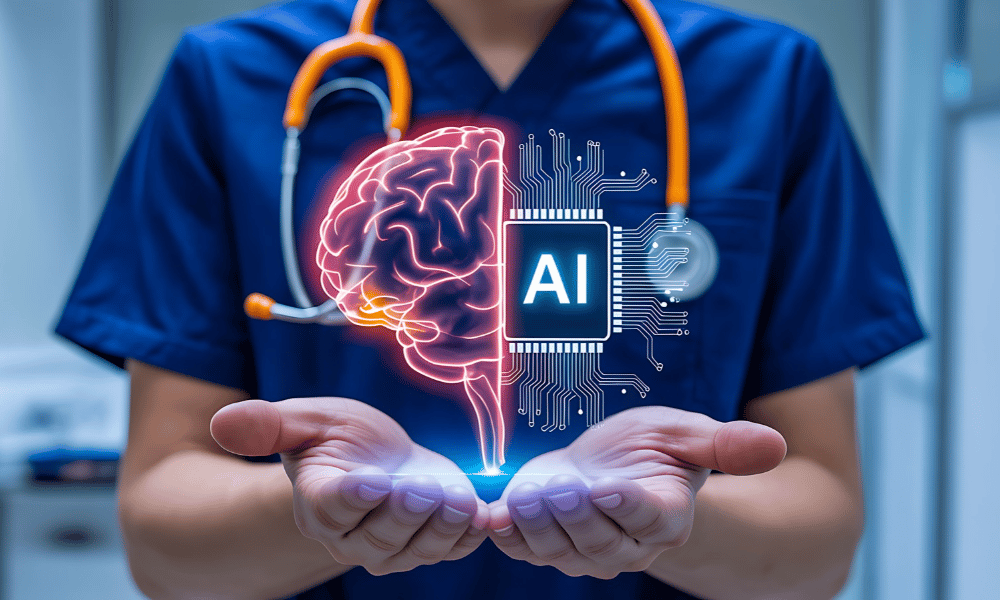
Sultan’s work is now intersecting with artificial intelligence in a project that could have major implications for early detection of lung disease.
As a research collaborator with the University of British Columbia (UBC), he helped secure a $600,000 grant from the Canadian Institutes of Health Research to pilot AI-enabled early-detection tools for tuberculosis, with an explicit push to include silicosis.
Using software modules that integrate with X-ray systems, the project aims to flag early changes in the lung far faster than traditional approaches – reducing what might be a one- or two-day diagnostic process for silicosis to under an hour in many cases. Each image further trains the algorithm, improving accuracy and speed over time.
Crucially, Sultan says, the technology could help address the persistent problem of silicosis being misdiagnosed as tuberculosis, while also compensating for the shortage of specialists trained as ILO readers to interpret complex chest films.
Field trials are under way or planned in countries including Malawi, South Africa and Eswatini, with the SAMA cohort providing a large and diverse sample.
Lessons for Canadian health and safety leaders
For Canadian occupational health and safety professionals, Sultan’s message is clear: AI and advanced diagnostics are important, but they are “usually when we have got it wrong” – after exposure has already occurred.
“There are a lot of substances that have silica or respirable crystalline silica contained within them, whether it is bricks, tiles, sandstone, artificial countertops, even in manufacturing of glass and plastics,” he says. “If we get it wrong as health and safety professionals, we set off a chain of events which can then lead to somebody getting ill and also exposes an organization to potential risk and liability as well.”
He urges safety leaders to return to fundamentals: robust risk assessments, proper exposure control plans, elimination of silica at the source wherever possible, and strict adherence to the hierarchy of controls before defaulting to personal protective equipment.
“What we tend to find is that when it comes to industry, we tend to jump quite quickly just to issue somebody with a dust mask,” he says. “It leads to a false sense of security… We are really the gatekeepers for protecting our colleagues in the field. We need to up our game.”