

Board plans to invest hundreds of millions in prevention research over the coming years
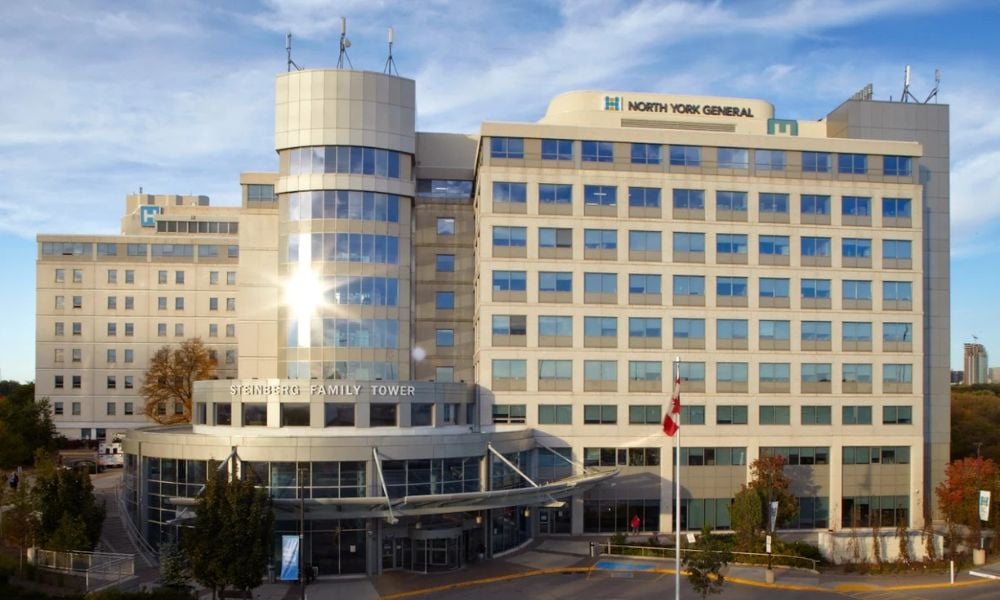
The Workplace Safety and Insurance Board (WSIB) has committed $63.2 million to establish a new Institute for Workplace Health at North York General (NYG) Hospital in Toronto, marking the largest investment ever made to the hospital and the WSIB's largest-ever commitment to preventive workplace injury research.
The announcement marks a defining moment in a sweeping new prevention-first philosophy at the WSIB, one that has seen the agency's annual research spending jump from roughly $5 million two years ago to $205 million last year, with hundreds of millions more planned in the years ahead.
"It's really a transformational investment, and it's historic in a number of ways," said Jeff Lang, president and CEO of the WSIB. "We believe this will really help us predict how injuries happen before they happen."
A new model for worker health
The Institute for Workplace Health will be the Greater Toronto Area's first dedicated research and innovation centre applying artificial intelligence, real-time predictive modelling, and health data infrastructure to workplace injury prevention and recovery. Three endowed Research Chairs and one Term Chair will drive clinical research across those areas.
At the centre of the institute's work will be musculoskeletal injuries, which account for 80 per cent of all claims submitted to the WSIB. New equipment funded through the investment, including a CT scanner and AI-powered X-ray machines, will improve predictive modelling and care pathways for the fractures and injuries most common in Ontario workplaces.
The investment also funds "KeepWell," a digital knowledge hub designed to support injury prevention, recovery, and learning for healthcare providers and patients, with a long-term vision of expanding across Canada.
Dr. Everton Gooden, President and CEO of North York General, said the institute's goal is straightforward: "Figure out the best ways to protect workers, save tens of thousands of lost productivity hours and free up health care capacity."
From reaction to prevention
Lang said the announcement reflects a fundamental shift in how the WSIB sees its role in Ontario's workplaces.
"We're not going to do it by doing it the way we did in the past, waiting for injuries to come to us," he said. "We need to find out better ways to avoid injuries, better ways to treat injuries, better ways to produce better outcomes for those that need our help."
The numbers behind that shift are striking. The WSIB received approximately 235,000 claims for work-related injuries and illnesses last year, according to provincial statistics, including more than 72,000 requiring time away from work (Workplace Safety and Insurance Board, 2025 Annual Claims Data). Against that backdrop, the agency is now achieving what Lang described as its best injury durations and outcomes in over 15 years, with fewer claims and shorter recovery times driving improved economic performance.
"The organization is performing very, very well right now," Lang said. "We have the lowest premium rates in over 50 years. And between reduced premium rates and surplus distributions, we've contributed $21.5 billion back into the Ontario economy."
That financial strength, he said, is precisely what makes large-scale prevention investments possible and necessary. "For us to keep this momentum going, we have to pay it forward."
A growing portfolio of research investments
The North York General commitment is the latest in a series of WSIB research announcements that together signal a long-term strategic shift. Lang outlined the arc of that investment strategy: an early commitment to augmented virtual reality training for first responders at Fanshawe College in London to address growing post-traumatic stress injuries; funding for the Lawson Research Institute at St. Joseph's Health Care London for a positron emission tomography MRI machine, the first of its kind in Canada, capable of analyzing brain composition to identify where mental stress injuries occur and study pain; and now the NYG institute, which builds on over a decade of specialized worker care through AXIA Health already operating within the hospital.
"Pain is what keeps people from work," Lang said, describing the importance of the Lawson investment. "Our ability to study that and treat pain and the physical injury are going to be very beneficial."
Safety professionals looking for more context on how the WSIB's claims landscape is evolving across Ontario's industries will find the breadth of this investment portfolio telling: the agency is no longer simply processing claims. It is funding the science of prevention across physical, neurological, and psychological injury types.
What comes next
Lang was unequivocal when asked whether more announcements are coming: "Absolutely. Our intent is to invest a similar amount over the next several years."
That trajectory, if sustained, puts cumulative WSIB research investment somewhere between $500 million and $1 billion over the coming years: a figure that would represent a generational commitment to occupational health research in Canada.
"These types of investments will save lives," Lang said. "And that's critically important."
For organizations tracking the practical implications of this investment, particularly how expanded predictive modelling and AI-assisted diagnostics could eventually affect return-to-work programs and occupational health protocols, the Institute for Workplace Health is worth watching closely. Funding is approved and available to North York General, with milestones and expected results established in a formal funding agreement. Implementation is expected to begin as soon as the hospital is ready to proceed.
The investment was made in partnership with the WorkSafe Ontario Fund (WSOF). Joshua Workman, President and CEO of the WorkSafe Ontario Fund, called it "the direct result of incredible collaboration" that "will ensure workers across the province have access to the highest standard of care and innovation."