Why many safety systems fall short and miss the first control in the hierarchy

Too often, workplace risk management starts and ends with procedures, training and personal protective equipment.
A hazard is identified. A procedure is written. Workers are trained. PPE is issued. A form is completed. The organization moves on.
All of these controls matter. They are part of a functioning occupational health and safety system. But they also raise a more important question that is not asked often enough:
Why does this hazard exist in the work in the first place?
This is where many safety systems fall short. They manage a hazard after it has already been accepted into the work, rather than asking whether the task, process, layout, equipment, schedule or method should be redesigned.
The hierarchy is a sequence, not a checklist
Risk management should follow the hierarchy of controls. The order matters: elimination, substitution, engineering controls, administrative controls and PPE.
Administrative controls and PPE have a place, but they are not meant to be the first or only answer. If every risk assessment produces another policy, another training session, another form or another reminder to “be careful,” the organization may not be reducing the risk. It may simply be accepting the risk and documenting that acceptance.
That is not true risk mitigation. It is compliance management.
Compliance matters. Documentation matters. Training matters. Procedures matter. But if the long-term source of the risk remains unchanged, the organization may continue spending time, money and effort managing the same hazard over and over again.
Ask why before deciding how
In many workplaces, safety is brought in after major operational decisions have already been made.
A process is designed. Equipment is purchased. Staffing levels are set. Deadlines are established. The layout is approved. Then safety professionals are asked to make the work safer through training, supervision, inspections, procedures and PPE.
Those controls may help, but they often compensate for poor work design.
If workers are repeatedly lifting heavy or awkward materials, the answer may not be another lifting safety reminder. The better answer may be changing the task, using different equipment, redesigning the layout or improving the material handling process.
If workers are always rushing, the answer may not be another toolbox talk about slowing down. The better answer may be reviewing staffing, scheduling, workload, supervision or production pressure.
If a procedure is repeatedly ignored, the issue may not be worker attitude. The procedure may not reflect how the job is actually done.
Before deciding how to control a risk, organizations should first understand why the risk exists.
The cost of accepting risk
Risk management should also consider the cost of accepting a hazard into the work.
That cost is not only the possible injury. It can include downtime, training time, supervision, specialized PPE, inspections, maintenance, corrective actions, claims, investigations, lost productivity, employee fatigue and the ongoing administrative burden of controlling a task that may not need to be done that way.
A proper risk discussion should ask:
- Can this hazard be eliminated?
- Can the process be simplified or done differently?
- Can equipment or technology reduce the hazard?
- Can the work environment be changed?
- What is the cost of redesigning the work compared to the cost of not redesigning it?
- What are we continuing to spend because we have accepted this hazard as normal?
These questions move safety from paper compliance to operational decision-making.
A practical example
Consider a medium-sized trucking company that transported tanks of powder products. The tanks had to be cleaned at regular intervals. One of the highest-risk tasks in the company involved workers entering the tanks to clean them.
The company had procedures, training, PPE and specialized equipment. Workers followed detailed steps. On paper, the risk was being managed. In reality, the task remained one of the most hazardous activities in the operation.
The better question was not, “How do we make this task safer?”
The better question was, “Should the company be doing this task at all?”
When the company reviewed the cost, risk, equipment needs, worker exposure and available alternatives, it became clear that a specialized service provider could complete the work more safely and efficiently. The provider had trained workers, dedicated systems, specialized equipment, cameras and remote tools designed for that task.
The result was not simply a better procedure. It was a better decision about how the work should be performed.
That is the difference between controlling a hazard and reducing the need for the hazard to exist in the first place.
Worker engagement must be part of the solution
Work redesign cannot happen only in a boardroom.
Worker engagement is different from worker involvement. Worker involvement can sometimes mean asking for agreement after a decision has already been made. Worker engagement means listening early enough that the work can actually be improved.
Workers closest to the task often know where the system fails. They know where tools do not fit, where delays create pressure, where instructions are unclear, where shortcuts happen and where controls look good on paper but do not work in practice.
If workers are not engaged, organizations redesign work based on assumptions.
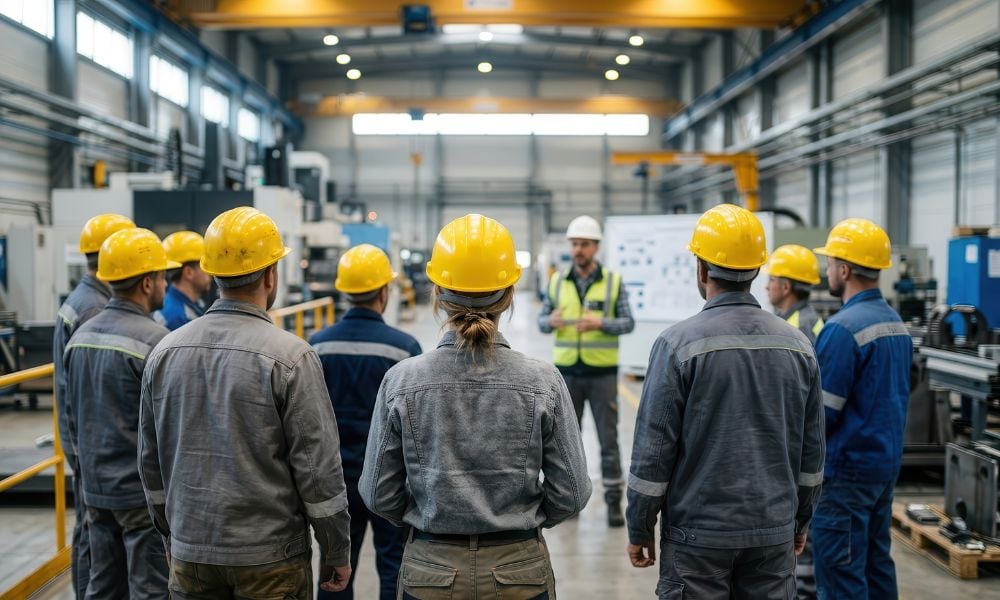
A strong safety system should include worker engagement in hazard assessments, pre-task planning, inspections, incident investigations, corrective action reviews and management system reviews.
When workers are engaged early, controls become more practical. Procedures become more usable. Training becomes more relevant. Accountability becomes easier because the system better reflects real work.
The next stage of safety maturity
The future of safety is not about abandoning risk management. It is about conducting risk management in the right sequence.
Policies, forms, training records, inspections and PPE will always have a role. Employers must meet legal requirements, maintain documentation and demonstrate due diligence.
But mature organizations do not stop there.
They ask whether recurring hazards are signs of poor work design. They look carefully at elimination and engineering controls. They examine the cost of accepting risk. They engage workers in understanding how the work is actually performed. They connect safety decisions to operational planning.
The goal is not to manage more paperwork around the same hazards. The goal is to reduce the number of hazards workers are asked to manage in the first place.
True risk management does not start and end at procedures and PPE. It starts by redesigning the work to reduce risk at the source.