Two Canadian Safety Summit panelists explain why the compliance versus risk-based debate misses the point
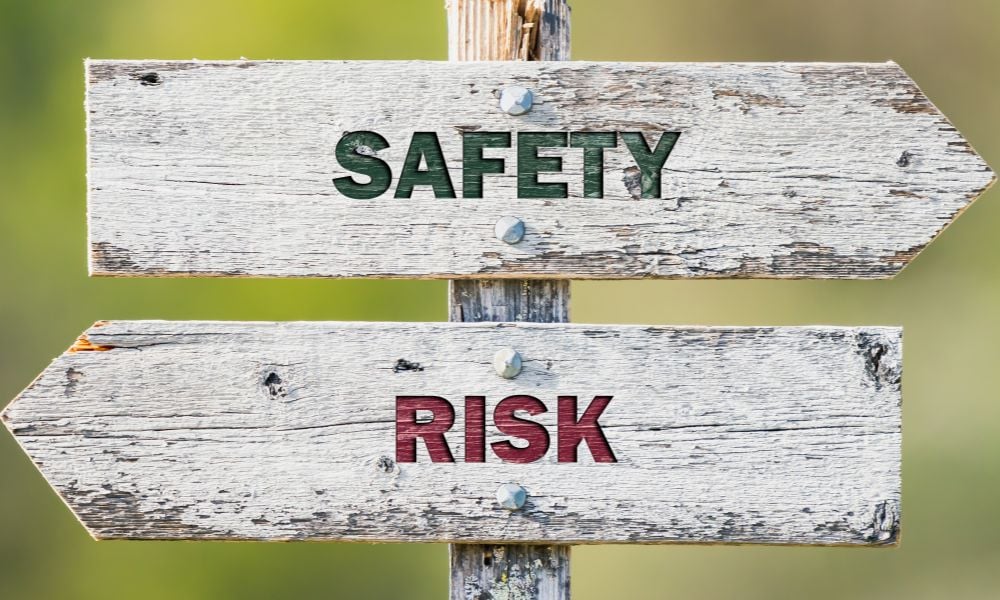
Compliance and risk-based safety are often framed as opposites, one reactive, one proactive. But according to two speakers preparing for the Canadian Safety Summit's opening panel this October, that framing misses the point entirely.
"Are We Safe or Just Compliant? The Urgent Shift to Risk-Based Intervention" opens the Canadian Safety Summit on October 22 at the Automotive Building, Exhibition Place, Toronto, part of COS Live 2026. The panel brings together Tim McAuliffe of Green Infrastructure Partners, Virginie Tremblay of Canada Post, Nick Sampath of Ingram Micro Canada, and Shilo Neveu of Valard, four leaders who have spent careers wrestling with where regulatory minimums end and real protection begins.
Compliance is the basement, not the ceiling
Shilo Neveu, executive vice-president of health, safety, environment and quality at Valard, pushed back on the idea that compliance and risk management sit on opposite ends of a spectrum.
"I don't see that big divide whether you're going to be safe or you're going to be compliant," Neveu said. "That's the basement, not the ceiling. We're still working towards safety, but you've got to consider that's the minimum standard."
Neveu pointed to due diligence law as proof the tick-box model has never held up on its own. "Due diligence has been very clear for decades now that you can't just do a tick box to receive your compliance," he said. "If that's the only thing you do, well, you are going to be held accountable under that compliance model for not doing enough."
At Valard, that thinking shows up in what Neveu calls the capacity model, a framework built inside parent company Quanta that weighs hazards by energy release rather than treating every incident the same. A live electrical fault gets far more attention than a paper cut, he said, because the consequences aren't remotely comparable. Neveu didn't dismiss legacy metrics like Total Recordable Incident Rate (TRIR) outright, arguing they still have value inside their proper limits, but said the industry's shift toward proactive, energy-based approaches, including frameworks like Matthew Hallowell's High-Energy Control Activities model, reflects a healthier way of looking forward instead of only backward.
Engagement, not paperwork, drove the numbers down
Nick Sampath, senior manager of environmental health and safety strategy at Ingram Micro Canada, described the same divide in more operational terms. "Compliance is just doing the minimum required by law and regulations," he said. "When we're looking at enterprise risk, ultimately you got to look at how do we really protect our people."
For Sampath, that meant turning safety observations from what he called "a pencil-whip exercise into a meaningful exercise," built around leadership walking the floor daily and frontline associates engaged through hazard reporting and recognition. The results, he said, were measurable: injury counts across Ingram Micro Canada's workplace injury reduction program dropped from roughly 40 to 50 a month to fewer than 20 total, with most remaining incidents minor.
Sampath doesn't believe the profession has fully made the shift. "Are we there yet? As a safety professional, I would say no," he said, though he called the direction critical. "When you really flip to risk-based intervention, that's when I think you really start preventing those critical injuries," he said, adding plainly that the goal is preventing funerals, not just fines.
Both panellists framed the summit itself as part of the work. Neveu, a longtime attendee, said the value lies less in the sessions than in the exchange around them. "You never know the gift someone has to give until you invite them to the table," he said, borrowing the line from his father.
The Canadian Safety Summit runs alongside the Women in Safety Summit Canada program on October 21 and leads into that evening's Canada's Safest Employers Awards ceremony, both part of COS Live 2026 at the same Toronto venue.