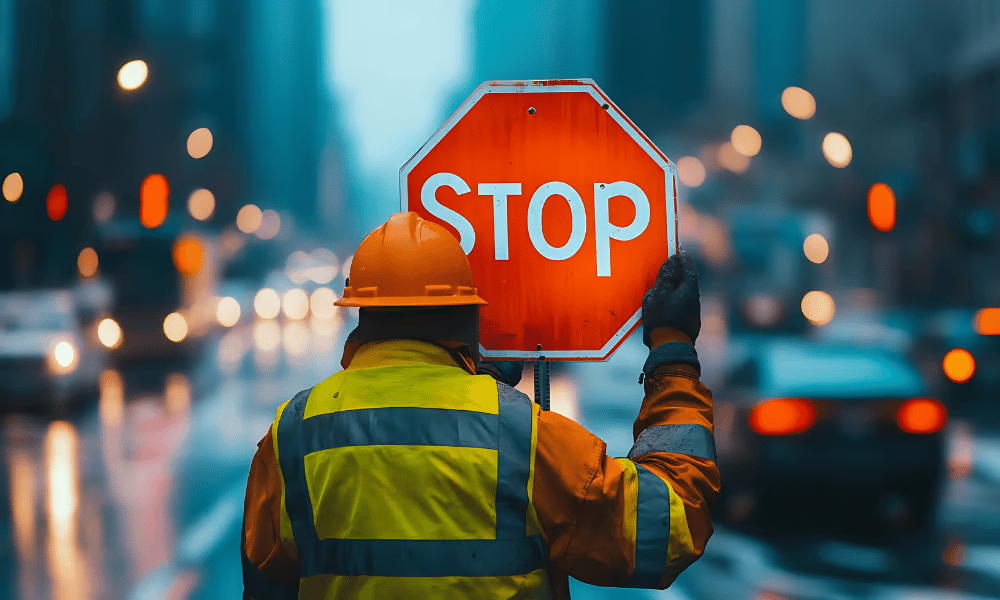

A growing imperative for local governments


Canadian municipalities occupy a uniquely complex space in the public sector. They maintain the roads we drive on, manage the water we drink, keep parks and recreation facilities open, operate transit, collect waste, and respond to emergencies, often all within the same organizational structure. With such wide-ranging responsibilities, it is no surprise that their Occupational Health and Safety (OHS) obligations are equally diverse and demanding.
Yet across the country, municipal OHS systems often lag behind the realities of modern public service delivery. The need for improvement is not simply best practice, it is an urgent call to action driven by three defining features of municipal work: diverse workforces, an absence of traditional construction-industry roots, and continuous public scrutiny.
A workforce unlike any other
Unlike private-sector employers who typically focus on one set of trades or a single industry, municipalities employ everyone from office administrators to water/sewer technicians, heavy equipment operators, arena staff, parks and forestry crews, road workers, paramedics, and more. Each role brings a different hazard profile.
The risk of a slip-and-fall for an administrative assistant is worlds apart from the confined-space hazards facing a wastewater operator or the traffic-control/motor vehicle hazards confronting a road crew.
This diversity makes one thing clear: a generic safety program is not enough. Municipalities require layered, adaptable OHS systems that address varying training needs, PPE requirements, and specific risk matrices developed for each department. When millions of Canadians rely daily on these services, the health and safety of municipal workers becomes a matter of community well-being.
Municipalities aren’t construction companies, but they manage construction every day
Municipalities oversee an enormous volume of infrastructure work, yet most are not, at their core, construction organizations. They frequently outsource major projects to private contractors.
This creates a dangerous misconception: that hiring a capable contractor is the same as transferring responsibility for safety.
In reality, without internal construction and OHS expertise, oversight gaps can emerge. Municipal staff may lack the technical grounding to assess jobsite risks, verify compliance, or effectively monitor contractor performance. And when that happens, municipalities remain exposed not only to safety failures, but to legal consequences.
Public-facing work, public-facing risk
Municipal operations happen in full view of the community. Whether repairing a water main on a busy street or operating heavy equipment in a neighbourhood, municipal work routinely places staff and members of the public in close proximity to high-risk activities.
Any incident, minor or major, can quickly escalate into media headlines, political pressure, regulatory scrutiny, and community outrage. A single operational misstep can damage public trust for years.
This heightened visibility means municipalities must meet an equally heightened OHS standard. It’s not only about worker protection, but also about the safety of every resident who walks, drives, or lives near municipal work.
The Sudbury case: A wake-up call for every municipality
The City of Greater Sudbury’s long-running legal battle demonstrates just how far a municipality’s obligations extend.
When a pedestrian was struck and killed in 2015 near a contracted road repair project, both the contractor and the City were drawn into OHS litigation. Despite not performing the construction themselves, Sudbury was deemed an “employer” under the Occupational Health and Safety Act.
Only through extensive evidence of due diligence, contractor pre-qualification, safety expectations, inspections, training requirements, and public protection measures was the city ultimately acquitted.
The lesson is unmistakable: municipalities cannot outsource risk. Even when contractors are doing the work, municipalities remain legally and morally accountable for safety outcomes.
A call for municipalities to modernize their OHS systems
The path forward is clear. To meet their obligations and protect their communities, municipalities must:
• Build strong internal OHS capacity - Robust safety programs must reflect the full breadth of municipal work, from administration to utilities, parks, transit, and public works.
• Strengthen contractor oversight - Modern contractor management systems, clear pre-qualification standards, and active monitoring are essential.
• Ensure transparent documentation and public accountability - Well-documented policies, inspections, and risk controls protect not only workers and the public, but also the municipality’s legal standing and reputation.
The Sudbury case underscores an unavoidable truth: municipalities are expected to demonstrate due diligence equal to, or exceeding, that of the contractors they hire.
The bottom line: Safety is not optional
Municipalities can no longer rely on the assumption that contracting out work shields them from liability. It doesn’t. Public expectations are higher than ever, and so are regulatory standards.
Worker safety, public safety, and community trust all depend on municipalities embracing OHS as a core element of good governance, not a box to check, and not a responsibility to download to others.
In a sector where the consequences of failure can be immediate and devastating, diligence is not just the best defence, it is the only one.