

Worker died after fuel vapours in the boat's hold combined with an unknown ignition source
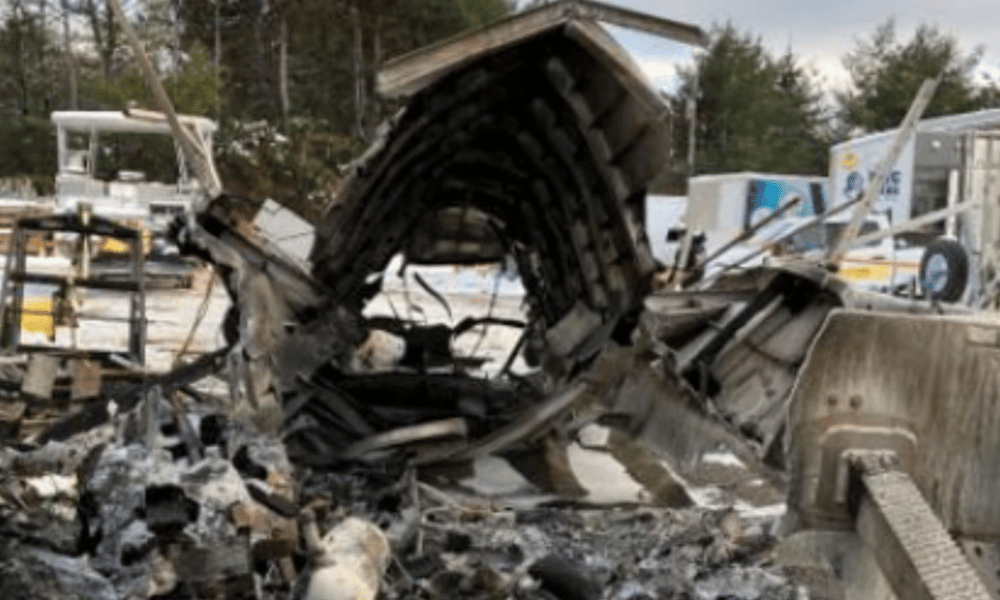
Petrol vapours trapped inside a boat's hold ignited and killed a worker in Trois-Rivières, Que., in an incident regulators say points to gaps in confined-space controls that OHS professionals overseeing marine and dry-dock repair work should note, according to a report from The Canadian Press (CP).
The worker died Dec. 1 after fuel vapours in the boat's hold combined with an unknown ignition source, causing an explosion and fire, Quebec's workplace safety board, the CNESST, concluded in a report published Wednesday, according to CP.
The worker was repairing a sensor on the vessel, then in dry dock, for the company MVC Océan, The Canadian Press reported.
The repair was taking place inside the hold, an enclosed compartment that also contained a petrol tank.
That combination — confined space, flammable-vapour exposure, and active repair work — is one OHS practitioners typically flag for atmospheric monitoring, ventilation, and strict control of ignition sources before any work begins.
Investigation findings
Damage from the explosion and subsequent fire was extensive enough that CNESST investigators could not conclusively identify the ignition source, CP reported.
Despite that, the inspector noted the worker had likely been using a battery-powered electric tool at the time of the blast — equipment capable of producing sparks or static electricity in a space where vapours may have reached hazardous concentrations.
The report did not indicate whether the tool was rated for use in hazardous or explosive atmospheres, nor did it detail any prior hazard assessment conducted before the repair began.
Regulatory conclusion
CNESST's central finding was that the method used to carry out the work inside the hold was inadequate, given the enclosed space and the presence of a petrol tank, according to The Canadian Press.
For OHS professionals, the finding reinforces a familiar lesson: vapours from fuel systems can accumulate in enclosed compartments even when a vessel sits idle, and ordinary power tools not rated for hazardous locations can become ignition sources under those conditions.
The board, which has ordered corrective measures after a separate fatal workplace fall, did not indicate in this report whether directives have been issued against MVC Océan.