As senior safety professionals retire, certification pathways help employers transfer expertise to the next generation
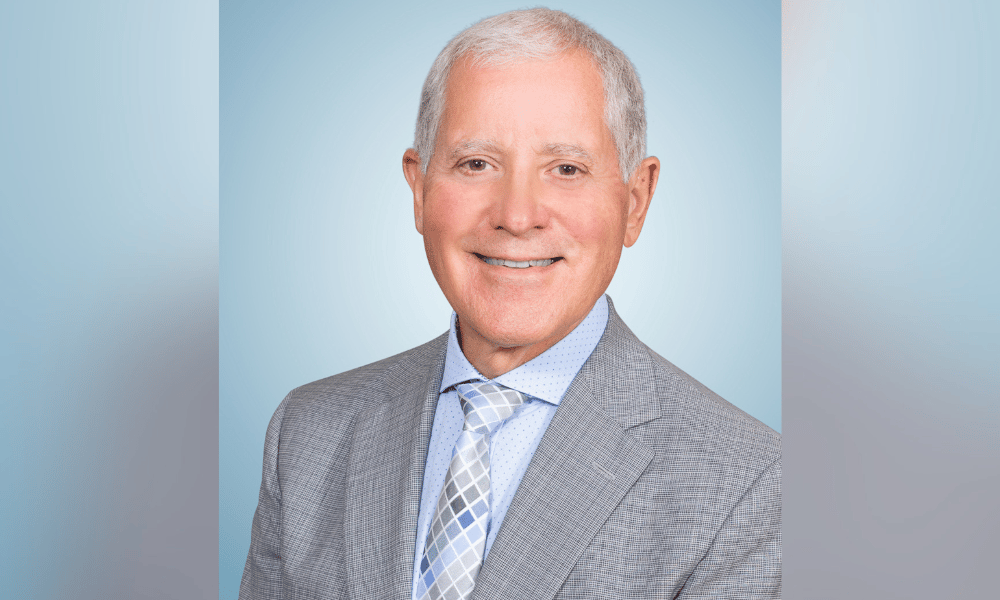
Canada's occupational health and safety profession is approaching what one of its most senior leaders calls a demographic "crest," as a generation of experienced practitioners moves toward retirement, taking decades of institutional knowledge with them.
Larry Masotti, MA, BEd, CRSP, chair of the Board of Canadian Registered Safety Professionals (BCRSP), says the trend is already visible across the profession. "One of the realities is when you look at Statistics Canada, 1957 is the peak year of the baby boom," Masotti said in an interview. "So we're hitting that crest where many professionals are choosing to retire or choosing to basically slow their careers down."
A retirement wave meets a widening skills gap
Masotti said younger practitioners are entering the field, but their arrival hasn't offset the departure of seasoned professionals from larger organizations. "You're still seeing growth where younger people are moving in, but nonetheless senior people or seasoned people are moving on to other things or part time type involvement," he said. "But they're leaving some of the larger organizations, which creates a bit of a challenge and a gap for employers."
That gap is what BCRSP frames as the central succession question facing Canadian workplaces: if the most experienced safety professional in a building retired tomorrow, what knowledge would leave with them, and who is positioned to carry it forward? BCRSP argues that its two designations, the Canadian Registered Safety Professional (CRSP) and the Canadian Registered Safety Technician (CRST), are built to answer that question by turning informal, individually held expertise into a documented, transferable standard. Employers weighing whether their team qualifies can review BCRSP's eligibility requirements for CRSP certification directly.
How certification creates a structured pathway for succession
Masotti described the CRSP and CRST as complementary tools that formalize mentorship rather than leaving it to chance. "The idea of experience and the two designations allow for a structured pathway for someone who might be senior to help a new person or a younger person move along to these designations," he said. "Basically what you're talking about is a pathway that allows for mentoring, continuity, learning, discipline, and ongoing development."
He also pointed to complacency as a persistent risk in the profession, one that ongoing certification requirements are designed to counter. "As much as we talk about risks and hazards and probability and that type of language in occupational health and safety, one of the greatest challenges is always complacency," he said. "The idea that someone thinks they've arrived and know everything they need to know." Both designations require continuous professional development monitored by BCRSP, along with the ISO 17024 international standard governing personnel certification bodies, which Masotti said gives the credentials added legitimacy with employers.
For organizations, he added, supporting staff through certification carries its own return. "From an employer perspective, the idea of helping people move on and move into roles, it demonstrates due diligence," Masotti said. "From a legal, moral and economic perspective, it certainly helps their recruitment and retention strategies, because no one is a greater ambassador to an employer than a happy or engaged employee." That case for how the CRSP certification sets safety professionals up for career success has become a recurring theme as BCRSP works to grow its ranks of certificants nationally.
Candidates have to seek mentors out themselves
Knowledge transfer, Masotti said, doesn't happen automatically once someone enrolls in the certification process. "You do have to seek them out, but there are a number of individuals, schools and professional organizations that assist with preparation, mentoring and instruction," he said. BCRSP itself stays out of the training side of the equation. "Because the Board of Canadian Registered Safety Professionals is a certification body who administers the exam and administers the designations, they do not get involved in the preparatory phase," he said, describing a deliberate "firewall" meant to keep the certifier independent of training providers such as Health and Safety Professionals Canada, universities and colleges. Employers and candidates can follow BCRSP's own step-by-step certification application process to see exactly where that firewall sits.
Even so, informal mentorship remains common among practitioners who have already earned the designation. "There are current CRSPs that would be happy to help anyone get through the process," Masotti said. "It is a community of health and safety professionals. Sometimes it is based on technical expertise, sometimes practical, but often it is that emotional support. Not everyone is comfortable writing exams."
A profession growing faster than its workforce
Asked how urgent the need for new safety professionals is, Masotti didn't hedge. "I would say that it is urgent, because I don't know that in Canada we have everyone that we need today, let alone given that there's a transition occurring," he said. He pointed to the field's expanding scope as a compounding factor: "Health and safety today in Canada embraces mental health, psychological safety, inclusion, diversity, equity, accessibility, sustainability, governance. It's become more complex, more of a larger field." Emerging technology adds another layer, a theme Masotti also raised at BCRSP's 50th anniversary conference on the emerging risks reshaping the profession earlier this year.
For anyone weighing whether to pursue a CRSP or CRST, Masotti, who continues to work in health and safety after retiring from a full-time role, said the profession remains one of the most rewarding available. "It is one of the most fulfilling professions that there is, because of the balance of human centric variables and the technical aspects," he said. "You're able to take organizations and individuals from a compliance mindset to a conformance and ultimately to a culture based mindset. We effect change not only in companies, but in our society as a whole."
BCRSP has said growing the number of certified professionals is a strategic priority for the organization going forward, and Masotti's comments suggest the retirement wave now underway makes that goal more pressing than a routine membership target.
This article was produced in partnership with the Board of Canadian Registered Safety Professionals (BCRSP).