Sister of victim says past six years a 'soul suck' as watchdog calls investigation 'grossly inadequate and unreasonable'
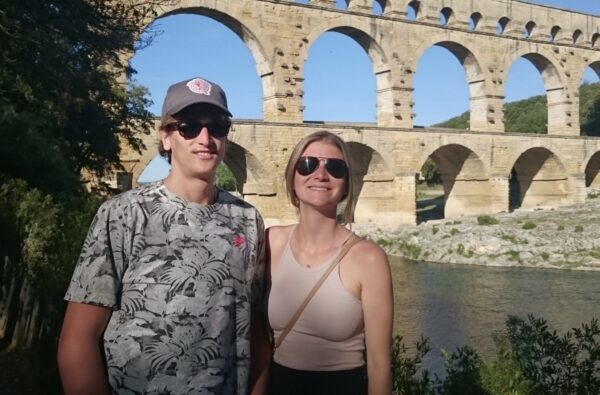
Andrew Gnazdowsky, a 26-year-old engineer with Brunswick Engineering and Consulting, drowned on October 16, 2020 while working at a Nova Scotia Power hydroelectric site in Sheet Harbour, Nova Scotia. Canada's federal police watchdog found the Royal Canadian Mounted Police (RCMP) never investigated his death for potential criminal negligence, calling the force's handling of the case “grossly inadequate and unreasonable” in a final report dated October 14, 2026.
RCMP Commissioner Mike Duheme has formally accepted the finding, even as he declined to reopen the case. The Civilian Review and Complaints Commission for the RCMP (CRCC), an independent federal oversight body, found Constable Ashton Barter of the Sheet Harbour detachment never assessed whether the drowning involved potential violations of the Westray law and improperly handed control of the scene to Nova Scotia Power, one of the companies that could have faced criminal liability. Gnazdowsky’s sister, Nicole Gnazdowsky, who filed the complaint that led to those findings, described the past six years as a “soul suck.”

(Andrew Gnazdowsky at a wedding in 2019. Submitted by Nicole Gnazdowsky)
A completely contaminated crime scene
Gnazdowsky had been retrieving a remotely operated survey vehicle from open water when he drowned. His body was recovered the following day.
Nova Scotia's Department of Labour, Skills and Immigration later charged three companies, Brunswick Engineering and Consulting, Nova Scotia Power and Gemtec Consulting Engineers and Scientists, with violations under the provincial Occupational Health and Safety Act. All three were convicted and fined in 2025, a prosecution Gnazdowsky spent years pushing for.
Gnazdowsky, a trained journalist, researched the Westray law's criminal provisions by the time she reached the site to identify her brother's body. “When I got to the site, I was already aware of that criminal element that exists,” she said. “And when we arrived there, the site was just covered in Nova Scotia Power people. It was a completely contaminated crime scene.”
The case was handed to the Department of Labour within weeks, she said, despite a provincial memorandum of understanding she says requires the RCMP to co-investigate the criminal side. When she called the Sheet Harbour detachment to ask why officers released the scene to Nova Scotia Power overnight, she said the response was blunt: “Because that's what we do in work sites. We don't investigate those.” She recorded the call and submitted it to the commission.
Two different stories under oath
Gnazdowsky said the clearest problem in the RCMP's original dismissal of her complaint was a contradiction in Constable Barter's own account. He told the force's internal review that he released the scene after learning her brother had used cannabis two hours before his shift, she said, but the toxicology report was not returned for roughly a month, well after the scene was released.
He also gave two different answers about who received the scene, she said: at trial, Nova Scotia Power; in his undocumented review interview, the Department of Labour. “Either they were lying to me in their entire review process, or their officer had gotten up on the stand in a courtroom and lied,” she said.
What the Westray law review uncovered
The commission's investigation concluded that Constable Barter's file showed no evidence he ever assessed whether the drowning involved potential criminal negligence under section 217.1 of the Criminal Code – the provision Parliament added after the 1992 Westray mine disaster, which killed 26 miners in Pictou County, to make it easier to hold employers and senior decision-makers criminally responsible for workplace deaths. The commission also found Barter failed to secure the scene, instead leaving overnight control of the area to Nova Scotia Power.
Sergeant Kelly-Ann Plamondon, who supervised the file, failed to ensure any criminal assessment was conducted, the report found. A 2021 internal RCMP referral that correctly flagged the case as a potential Westray law matter was dismissed by the force's own criminal investigations division as “non-criminal in nature.”
In his September 2026 response, Commissioner Duheme agreed with all four of the commission's findings and supported six remedial recommendations, including a formal written apology to Gnazdowsky and new divisional policy for Nova Scotia detachments.
Grossly unreasonable and inadequate
Gnazdowsky learned the commission had sided with her before she had even seen its report, when Superintendent Don Mosher, one of the RCMP's most senior officers in the Halifax area, called out of the blue. “He starts telling me, oh, I'm calling you to apologize,” she said. “I have no idea what for.”
When the report arrived days later, its language was unambiguous, she said: “Grossly unreasonable and inadequate. There was not even the most basic attempt to do an investigation.” Having an outside body confirm what she had argued for years, she said, felt less like vindication than relief: “I'm really just bitter about the whole thing. But it is nice to have that. Like someone actually have my back.”
Commissioner Duheme ultimately declined to direct a new criminal investigation, citing the time elapsed and a high threshold for criminal culpability after consulting Crown counsel.
Gnazdowsky is similarly unconvinced a new investigator-level Westray training course set to be released through the Canadian Police Knowledge Network in December will change outcomes. “If that law exists and they can't follow the law, then I'm never going to be optimistic that they're going to voluntarily follow recommendations. But maybe they'll surprise me for once.”
An echo of Nova Scotia's last mining disaster
Vernon Theriault survived the Westray coal mine explosion that killed 26 miners in Pictou County, Nova Scotia in 1992, and later became a workplace safety advocate with the United Steelworkers, whose lobbying helped secure the 2004 Criminal Code amendments at the centre of the Gnazdowsky case. He said the CRCC's findings regarding Andrew Gnazdowsky's death left him shaken. “That really pisses me off,” he said. “There should have been somebody accountable there.”
Of the RCMP's decision not to reopen the case even after confirming its own investigation had failed, Theriault was blunt: “I just find there's too much cover-up.” He is also unconvinced the new training course marks real progress, noting police training on this exact gap was already being discussed at a 2019 United Steelworkers conference. “That's seven years later,” he said. “Why does it take so long?”
What she wants other families to know
Gnazdowsky's advice to other families facing similar circumstances is don't wait. Civil claims in Nova Scotia face a two-year limitation period, she noted, which she believes gives investigators an incentive to delay.
“Stay on top of it,” she said. “I knew that facts can disappear very quickly.” Asked what single change she would make, she pointed to the commission's own finding that officers fundamentally misunderstand their duties: “Just because somebody didn't get stabbed doesn't mean there's nothing wrong here," she said. While criminal negligence charges under the Westray act have been filed in Nova Scotia, there has never been a conviction that province.
“Westray happened in 1992. That was the year that I was born. So none of this, none of the work that anybody has done my entire life or my brother's entire life was able to keep him safe. And people have worked very, very hard on this for a very long time. So there's really no excuse.”