A shattered rim on a pre-2003 railcar wheel derailed 14 CN hopper cars near Emo, Ont. — the TSB says no retirement strategy exists for these aging wheels
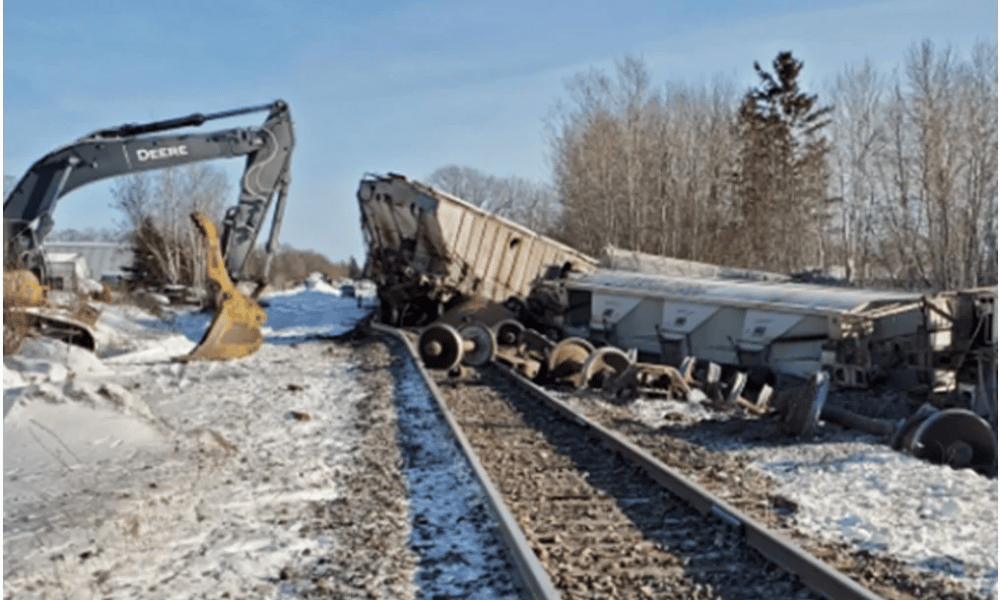
The Transportation Safety Board of Canada (TSB) has released investigation report R25W0010 on November 17, 2026, into a shattered rim (SR) failure that derailed 14 loaded hopper cars from a Canadian National Railway Company (CN) freight train near Emo, Ontario, on February 4, 2025.
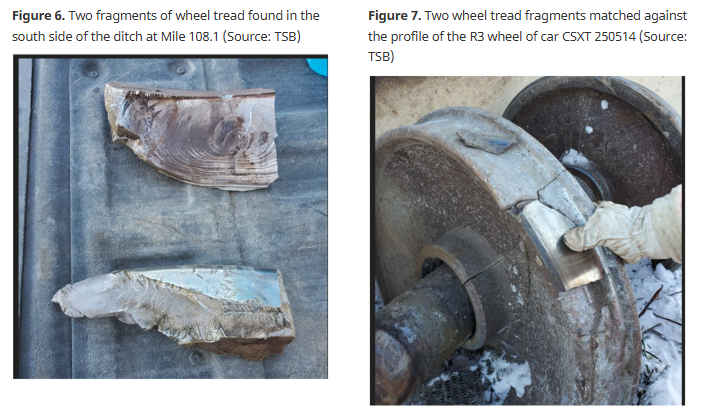
The board attributed the derailment to subsurface imperfections in a wheel manufactured in 1992 — before the Association of American Railroads (AAR) introduced its steel cleanliness standard in 2003. No dangerous goods were involved and no injuries were reported.
A TSB metallurgical analysis found that subsurface imperfections in the failed wheel exceeded the allowable limits in the current AAR standard. The derailment released approximately 1,689 tons of fertilizer — no environmental threat, the TSB confirmed — and destroyed a spur switch in Emo. The train, crew, and track all met regulatory requirements; the failure was within the wheel.
The board's findings as to risk are unambiguous: "Given that wheels manufactured before the introduction of the AAR steel cleanliness standards in 2003 may contain internal material imperfections that leave them more vulnerable to wheel-rim failures, the absence of a mitigation strategy increases the likelihood that such wheels will fail in service."
Inspection systems failed to catch the defect
The failed wheel passed ultrasonic testing (UT) at manufacture in 1992 and again at reprofiling in 2008. While UT can detect macro-sized cracks above its size threshold, it cannot detect the sub-millimetre inclusions in pre-2003 wheels that seed catastrophic fractures over time. A CN wayside wheel profile detector captured an image of the cracked wheel the day before the derailment — approximately 265 miles from Emo — but wheel profile detectors measure geometric wear, not crack-related defects, and no alert was generated. Visual roll-by inspections after the train left Chicago reported nothing unusual.
The TSB found that "despite compliance with existing wheel inspection requirements, the wheel failed in service, demonstrating that current practices may not reliably identify wheels approaching catastrophic rim failure."
For safety professionals, it is a layered-defence failure: every control in place was followed, yet none caught the hazard — a pattern COS has documented in its coverage of CN derailment investigations and rail infrastructure safety risks in Canada.
A known risk with no retirement plan
The Emo report reinforces a safety concern the TSB issued weeks earlier. On September 24, 2026, the board published RSC26-02 alongside its Uncas, Alberta report, concluding that reprofiling pre-2003 wheels and returning them to service leaves a residual risk of sudden in-service rim failure. In remarks on that earlier investigation, TSB chair Yoan Marier said: "Advanced analysis of data that is already collected can help identify wheel condition issues early. By better leveraging this data, Transport Canada and the rail industry have an opportunity to help prevent future derailments." (The Canadian Press, September 25, 2026)
As of the report's authorisation in August 2026, the total number of pre-2003 wheels still operating in North America was unknown and no proactive retirement strategy existed. Transport Canada spokesperson Flavio Nienow, responding to the Uncas investigation, confirmed the department would formally respond to the TSB.
The board also cited a letter of non-compliance issued to CN on February 28, 2025, for failing to document a pre-entry freight car inspection under the Railway Freight Car Inspection and Safety Rules. COS has covered related systemic risks in its reporting on rail safety advisories and track condition failures and its latest annual guide on incident prevention, analytics and AI.