From AI at the operational edge to the legal realities of OHS, here is your guide to Canadian Safety Summit 2026
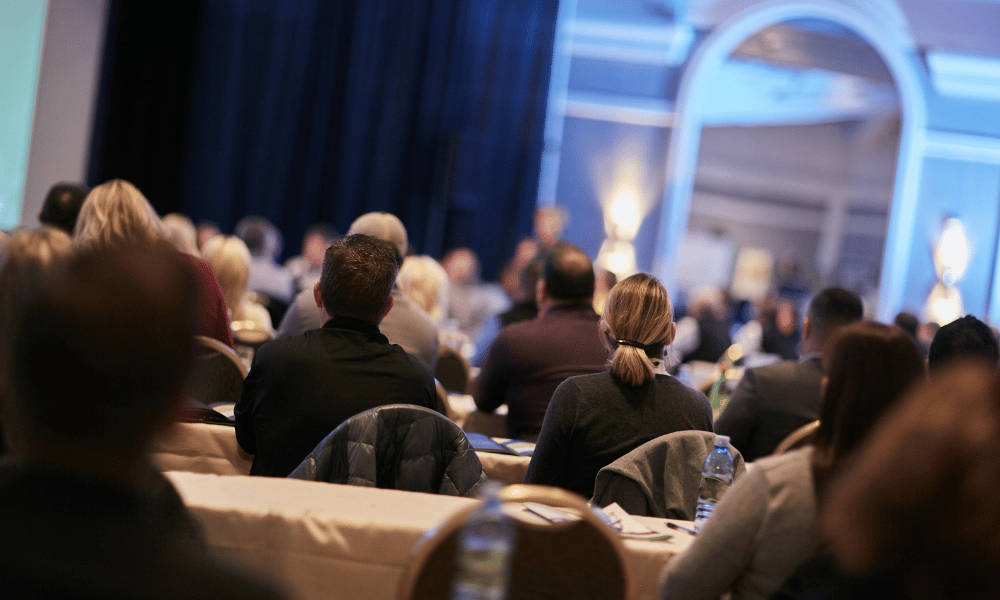
The Canadian Safety Summit 2026 is set to bring the country's leading occupational health and safety voices to Toronto for a full day of sessions designed to challenge how safety professionals think, plan, and lead. Taking place on October 22 at the Automotive Building as part of COS Live 2026, the event will tackle some of the most pressing questions in the Canadian OHS landscape, including the shift from compliance to risk-based safety, artificial intelligence on the front line, and the evolving legal obligations facing every employer in the country.
Whether you are attending for the first time or returning to sharpen your practice, here is a breakdown of what to expect.
A day built around four critical themes
The summit opens with a keynote from Dr. Kaleb Dahlgren, a health and mental wellness advocate and best-selling author of Crossroads. Dahlgren is a survivor of the 2018 Humboldt Broncos bus crash, which killed 16 people and injured 13 others, and his journey through recovery and purpose has shaped a powerful perspective on resilience that extends well beyond sport. His session runs from 9:00 to 9:30 am and offers safety leaders a rare, grounded account of what empathy and lived experience bring to safety culture.
From there, the morning shifts into one of the day's most direct challenges: the debate over compliance versus genuine risk management. The opening panel, titled "Are We Safe or Just Compliant? The Urgent Shift to Risk-Based Intervention," will feature Tim McAuliffe of Green Infrastructure Partners, Virginie Tremblay of Canada Post, Nick Sampath of Ingram Micro Inc., and Shilo Neveu of Valard. Together, they will examine how relying on trailing indicators and minimum regulatory standards creates a false sense of security, and what it looks like to build a risk-based safety culture that actually moves the needle on the front line.
Morning breakouts: legal scrutiny, demographics, and HOP
The 10:35 am breakout block offers two parallel streams. The first, "Under the Microscope: The New Legal Realities of Safety Investigations," walks through how the regulatory landscape is shifting the burden of proof onto organizations, and what that means for how investigations are conducted and documented. This session is particularly relevant for safety managers navigating due diligence obligations under provincial occupational health and safety legislation.
Readers interested in how Canadian workplaces are adapting safety protocols for diverse workforces will find the second breakout, "The Inclusive Front Line," equally valuable. The panel, led by Maria Robibero of Ledcor, Kirwin Lalla of Sysco Canada Inc., and Maria Pontes of Empire Homes, addresses the real-world challenges of integrating a diversifying workforce into high-risk environments.
The 11:20 am sessions continue the morning's momentum with two more focused conversations: one on managing workplace violence as a core operational hazard, and another that puts Human and Organizational Performance (HOP) directly up against traditional safety management systems. Dylan Short of Redlands Group and Iqbal Brar of IQ Safety Solutions will lead that debate, which is already generating conversation among safety professionals wondering whether HOP is a paradigm shift or simply the next acronym to cycle through the industry.
Afternoon: AI, near-miss intelligence, and the ROI conversation
The afternoon sessions open with the summit's most forward-looking panel: "AI at the Operational Edge: Proactive Safety in Action." Moderated by Jimmy Vassilopoulos of Purolator, the discussion will feature Roshan Varghese of 4Refuel and Chamath Harischandra of Powerfleet, exploring how predictive tools and wearable technology are changing hazard identification and fatigue management in real operations. For safety professionals trying to build the business case for technology investment in OHS programs, this panel offers both practical frameworks and honest assessments of where rushed AI adoption has created problems rather than solved them.
The 1:45 pm breakout block delivers two sessions with strong practical value. "Beyond the Paperwork: Turning Near Misses into Predictive Risk Intelligence," led by Vicki Chow of Sanofi and Sean Tarnowsky of Top Grade Energy Services, addresses why so many near-miss reporting systems produce little actionable data and how to redesign them. Running alongside it, Scott DeBow of Avetta leads "The Business of Safety," helping attendees translate risk-based safety interventions into the financial language executives respond to.
Closing sessions: legal updates and the future of the safety profession
The late afternoon brings two sessions that will likely carry the strongest relevance for safety lawyers and senior OHS leaders. The legal update, led by Jeremy Warning of Mathews, Dinsdale and Clark LLP, breaks down the continuing fallout from the Greater Sudbury Supreme Court decision and what current enforcement trends mean for due diligence expectations in 2026. Readers tracking recent OHS legal developments across Canadian jurisdictions will want to bring their questions to this one; it is structured for open discussion.
The summit closes with a panel on the future of the safety profession itself, moderated by Peter Sturm of STURM Consulting and featuring Larry Masotti, chair of the Board of Canadian Registered Safety Professionals (BCRSP). The session asks a direct question: should Canada move toward a more formally regulated safety discipline, and what is the cost of not acting?
Register before the supersaver deadline
Early-bird pricing ends July 19. The Canadian Safety Summit takes place October 22, 2026, at the Automotive Building, Exhibition Place, Toronto, as part of COS Live 2026.