Thunder Bay event seeks workers from a 2002-2004 Dryden mill project as missing WSIB claim records complicate a decades-old case
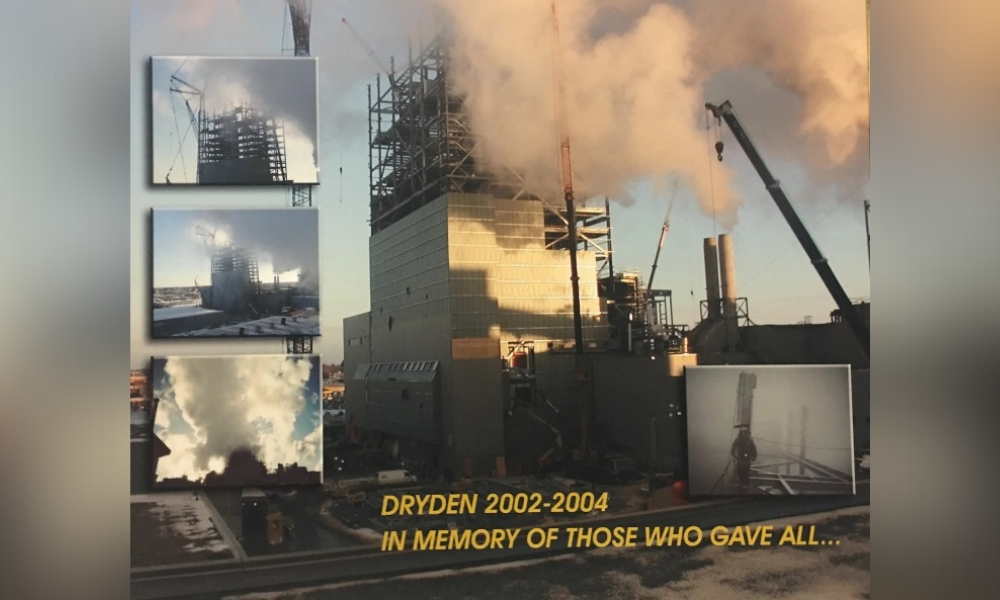
A community outreach event in Thunder Bay on October 8 is the latest step in a reopened investigation into toxic fume exposures that sickened hundreds of construction workers at a Dryden, Ontario paper mill between 2002 and 2004, after the organization leading the inquiry discovered that records of the original compensation claims appear to be missing from the provincial insurance board.
The clinic leading the reopened inquiry is re-engaging with roughly 400 tradespeople who worked on a recovery boiler replacement project at the mill, where workers were exposed to raw, untreated mill effluent while stationed on scaffolding outside a dismantled flume.
What happened at the Dryden mill
"There was a lot of concerns around exposure to toxic fumes," says Andrew Zarnke, executive director of special projects and occupational disease investigations at the Occupational Health Clinics for Ontario Workers (OHCOW). "People were experiencing severe health concerns and fainting and going to the hospital."
The Ministry of Labour was called in at the time, and OHCOW ran an intake clinic, developing an exposure questionnaire with its occupational hygienist that more than 400 workers completed. An OHCOW physician found many of the reported symptoms consistent with chronic toxic encephalopathy and helped workers submit 134 Form 8 occupational disease claims to the Workplace Safety and Insurance Board (WSIB) in 2004. Wind direction played a major role in exposure severity, Zarnke says, with controls such as wind monitoring and shift scheduling only introduced near the end of the project.
OHCOW previously documented the same exposures in a 2022 investigation into the Dryden mill cluster, which reported that scores of workers in the group had already died.
Missing records complicate the case
When the Thunder Bay Injured Worker Support Group reconnected OHCOW with the worker group in 2021, the clinic requested copies of workers' Workplace Safety and Insurance Board claim files as a first step in reopening the investigation. "We went to go and try and get those claims from the WSIB, and they just said that there was no record of them," Zarnke says. "So that was a huge issue with this group of workers."
Claim files typically contain medical records, work history, and exposure information that support appeals or new submissions, Zarnke says, making their apparent absence a significant setback for workers trying to establish a link between the Dryden project and their current health. OHCOW has since helped affected workers resubmit claims and filed a freedom of information request with the Ontario Ministry of Environment, seeking sampling data and correspondence that could fill gaps in understanding the exact composition of the plume workers were breathing.
OHCOW has compiled a follow-up list of about 100 workers, with roughly 30 health and exposure interviews completed so far. The clinic stresses that attending Thursday's event is not a requirement for workers or their families to register for the project; anyone from the Dryden job can contact OHCOW directly at any point to take part.
Why this matters for Canadian employers
For safety professionals navigating Ontario's occupational disease claims process, the Dryden case is a reminder that exposure documentation gaps can surface decades after a project ends, long after site records, employer rosters, and even the companies involved may have changed hands. Ontario's recent move toward a provincial registry for tracking workers' hazardous substance exposure reflects growing recognition of the same problem: without a durable record of who was exposed to what, and when, both workers and employers are left to reconstruct history years later.
Zarnke is clear that OHCOW's role stops short of assigning fault. "Our role is to document what the workers experienced," he says. "We're here to listen and document what they experienced and what their health status is, and then assist them in either getting that recognized as an occupational injury or disease." The clinic looks at a worker's entire occupational history rather than only their time at Dryden, and maintains relationships with unions involved with affected workers to support outreach.
The Thursday event itself is primarily an awareness exercise rather than a one-time registration window, Zarnke says. "We've done a bunch of these, and sometimes people are like, oh, can I still get involved if I can't show up? And it's like, yes, absolutely." Speaking with media, he adds, is a deliberate part of that outreach: "If we can get some coverage, hopefully it reaches ears or minds of anybody that might not have already heard about it."
Dryden workers and family members who want to take part in the project can contact OHCOW directly, with or without attending Thursday's event.