
Program provides teachers with lesson plans designed to help children understand wildfires
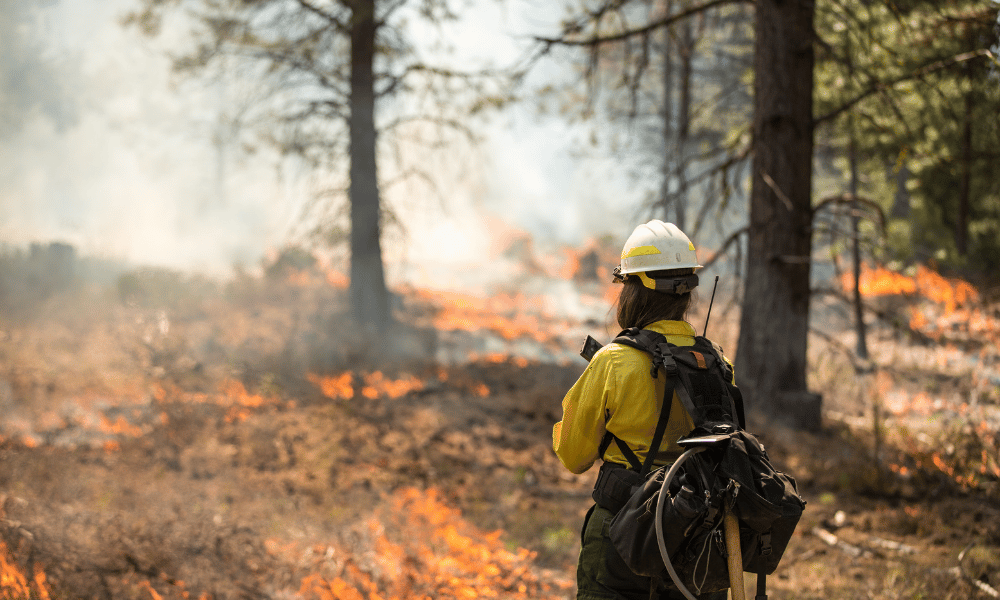
As wildfire risk intensifies across British Columbia, FireSmart BC introduces a province-wide education initiative to equip students with practical wildfire safety skills. The new program, launched this fall, provides teachers with free, ready-to-use lesson plans designed to help children understand how wildfires start, how to prevent them, and what steps can make homes and communities more resilient.
Empowering students with practical skills
Lucy Grainger, FireSmart education officer, says the program fills a critical gap in wildfire education. “We had a lot of programming for adults and we didn’t have much for kids,” she explains. The curriculum, which spans kindergarten to grade 12, is designed by teachers for teachers and is available online at no cost. Lessons address fire science, safety, mitigation, and prevention, and become more advanced for older students.
The program aims to counter the sense of helplessness that often surrounds wildfire discussions. Grainger emphasizes that there is a lot families can do to prepare for wildfire season. “When we actually break it down and look at how homes burn down and what is needed in order to set the conditions for a home to burn down, there’s lots of things that we can do to help that,” she says.
Supporting teachers and regional adaptation
Lesson plans also promote responsible fire use, including safe campfire practices. Grainger believes it is responsible to teach children how to safely interact with fire, as it builds both knowledge and confidence. “All of these pieces can pull together and really help kids to build the knowledge base and also the confidence in order to interact in a healthy way with fire and with wildfire,” she notes.
Teacher engagement varies by region. In areas more frequently exposed to wildfire, teachers are generally more comfortable with the material. In coastal regions, lessons often focus on Indigenous land stewardship and cultural fire practices. Grainger encourages educators in other provinces to adopt a similar approach, stressing that teachers do not need to have all the answers. “It really is an exploration and a discussion back and forth with the students,” she says.
Resources for families and health & safety professionals
For parents, FireSmart BC offers “Ember’s Den,” an online hub with resources such as comics, coloring books, and a simplified home assessment tool. These materials help families evaluate their homes for wildfire risk and identify potential improvements. Grainger points out that the home assessment is a quick way for families to “take a look and see where you sit, like how at risk your home might be during a wildfire.”
The program also includes a library initiative featuring vetted picture books about wildfire for young children, making the topic approachable and engaging even in areas less affected by wildfires.
Health and safety professionals recognize that early education is a powerful tool for prevention. By fostering wildfire awareness and practical skills in children, FireSmart BC’s initiative aims to build a culture of preparedness that extends from the classroom to the broader community.