Investigators trace a fatal Lillooet aerodrome crash to an undersized fuel header tank and unapproved amateur-built modifications
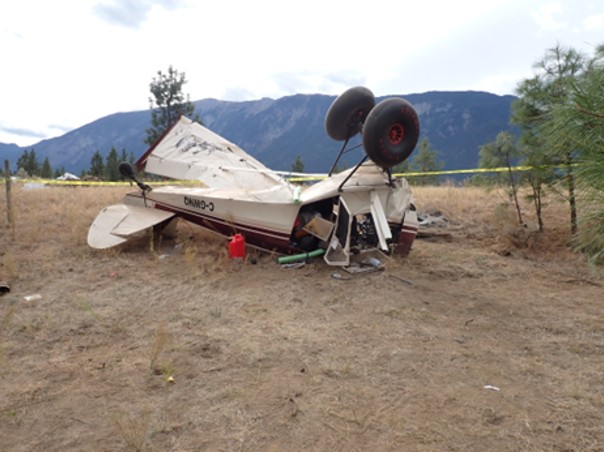
A fatal crash at Lillooet Aerodrome in British Columbia has been traced to fuel starvation on an amateur-built aircraft that had been extensively modified by its owner without the inspections required under federal aviation rules, the Transportation Safety Board of Canada (TSB) has found.
The board released its investigation report into the occurrence on 07 July 2026. The amateur-built Bushmaster Super 22, on a visual flight rules (VFR) recreational flight to Chilliwack, lost engine power shortly after takeoff on 24 September 2025 and struck trees during an attempted turnback to the runway. The pilot, who was the aircraft's registered owner and only occupant, was fatally injured.
What the investigation found
"Insufficient venting and the incorrect size of the header tank likely resulted in the fuel pumps ingesting air and possibly becoming vapour locked, with resulting pressure losses," the TSB report states. Investigators determined that the custom fuel header tank held about 3 U.S. gallons, below the minimum 5 U.S. gallons specified by the fuel system manufacturer, and that a shutoff valve not included in the manufacturer's design was found closed in the tank's vent line after the crash.
The aircraft had a documented history of trouble. From 17 to 23 September 2025, it experienced five major fuel-pressure drops at the start of take-off rolls, some accompanied by notable reductions in engine speed, yet the flights continued. No related defects were recorded in the journey log, whose last entry dated to 01 August 2025, a gap that speaks to the value of reporting equipment faults before they escalate.
Laboratory testing showed the backup fuel pump was drawing close to 10 amperes, far more than a properly functioning pump. "It is probable that this condition caused the backup pump circuit breaker to trip during the occurrence flight, leading to fuel starvation and the subsequent engine power loss," the report states.
Modifications made without required oversight
During the first six months of 2025, the owner fitted the aircraft with a new propeller, electronic fuel injection and ignition, a water and methanol injection system, a custom turbocharger, and an autopilot. The TSB found that some of these changes "likely affected the aircraft's performance, power plant operation, and flight characteristics," but that "there was no record of these modifications being inspected by a Transport Canada representative or reported to the Minister before flight." The case raises familiar questions about the risks of relying on self-inspection in safety-critical work.
Owners of amateur-built aircraft are permitted to maintain and modify their own machines under the Canadian Aviation Regulations, but design changes affecting structural strength, performance or flight characteristics must be reported and may require inspection by a Transport Canada representative.
The safety lessons for operators
The aircraft had no flight manual and none was required, so no emergency procedures were available when the engine failed. After levelling off at about 400 feet above ground level (AGL), the pilot attempted a 180-degree turn back toward the aerodrome, a split-second choice that highlights the difficulty of making sound decisions during on-the-job emergencies. The aircraft lost height and struck trees at roughly 35 feet AGL. Surveillance footage confirmed it did not stall.
The board noted that turnbacks after takeoff are a recurring hazard: since 2012, TSB records show 34 Canadian accidents involving a power loss on takeoff where a turn back towards the runway was attempted, destroying 13 aircraft and causing fatal or serious injuries to 12 people.
In its safety messages, the TSB reminded operators that "modifying aircraft without following acceptable data may jeopardize the safety of the aircraft," and that "knowingly operating an aircraft with defects affecting airworthiness is hazardous and can result in serious injury, fatalities, and damage to aircraft and property." On the crash sequence itself, the board advised: "When the aircraft is at a low height, landing in a field or other area directly ahead is usually safer than attempting to force a return to the runway."