CEO of the Year winner Wayne Arondus explains how free and low-cost safety support is driving gains for BC manufacturers
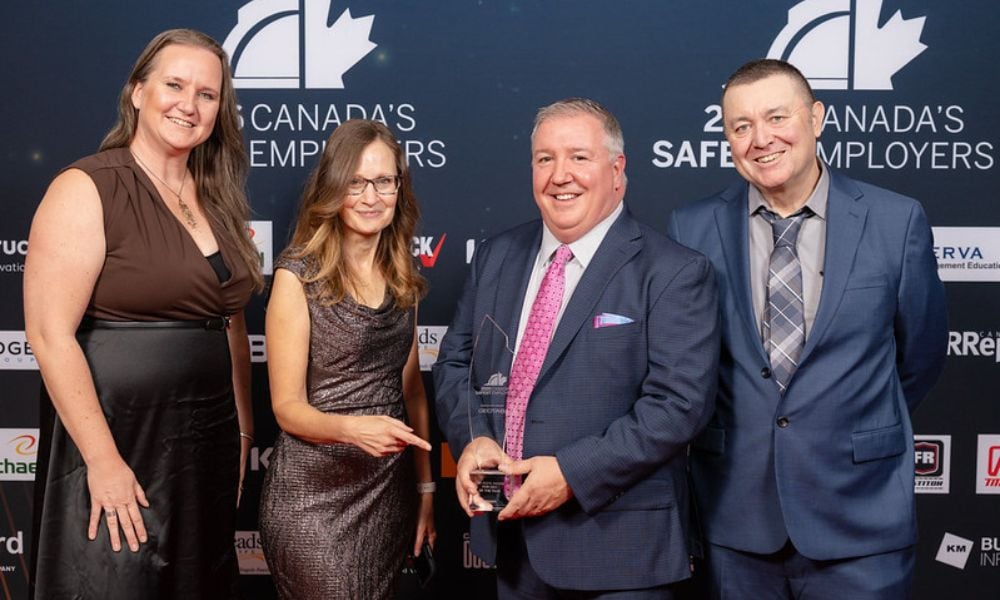
The Manufacturing Safety Alliance of BC has built what its chief executive officer calls a “fractional safety” model, deploying specialists such as ergonomists and confined-space experts on demand to manufacturers that cannot justify a full-time hire, often at no cost to smaller, cash-strapped members. Wayne Arondus, who has led the alliance as CEO for roughly three years, credits the approach for measurable injury and incident reduction among the organization’s members. The strategy also underpinned his recent win of the WSPS Award for CEO of the Year, part of this year’s full list of Canada’s Safest Employers Awards winners announced in October.
A new strategic plan replaced a 17-year legacy
Arondus stepped into the CEO role after serving as chief operating officer, taking over from a founder who had led the organization for about 17 years. The transition meant building a new strategic plan largely from scratch.
“To step into that role, come up with a new strategic plan, and rally the entire team around the work we wanted to accomplish – honestly, it was about getting my board on side, getting my team to understand clearly what we were going to do and how, and guiding them through it,” Arondus said. “There was such great buy-in from my entire organization and my board on the vision and the strategy.”
That shift pushed the alliance toward specialized hires in ergonomics, confined spaces, and mental health, alongside upgraded training and onsite support. “This was really supporting members at the core of the deficiencies they had on site as an organization,” Arondus said.
Free support for small manufacturers, not just large ones
With members ranging from large manufacturers to small, family-owned operations, Arondus said flexibility is the point of the fractional model. “Because we have the flexibility, in a lot of cases we were giving complete free services to those small companies that maybe aren’t as flush with cash. We were able to give them a lot of support for free, point them in the right direction, and give them the onsite support they were looking for,” he said. He added that barely a week goes by without a personal call or site visit to a member’s owner or vice-president.
Tariffs and a skilled worker shortage test the sector
Arondus pointed to ongoing tariff pressure as a distraction for high-hazard industries supplying the US, alongside a persistent gap in qualified safety professionals that mirrors the skilled labour shortage reshaping safety staffing in other sectors. “That is still a challenge even for ourselves, to find safety people. It’s not easy. These are skills that are in demand,” he said.
He also described psychological health and safety as newly urgent after 25 years in manufacturing where it barely came up. “Psych health and safety wasn’t a discussion – it was never really a discussion,” he said. “And now it is a discussion.”
Presence over compliance defines his leadership style
Asked what separates a CEO who treats safety as culture rather than obligation, Arondus pointed to presence. “Those leaders are very physically present in their buildings and plants. They have a genuine interest in all the workers, regardless of who they are,” he said. “I’ve been in some organizations where safety was kind of like a line item on the P&L statement, and while we said the right things, our actions didn’t speak as loud.”
His advice for future leaders centred on trust over control. “A good people leader is a person that empowers people but doesn’t try to overpower people,” he said. “We hire people because they have talent. I don’t need to be the smartest person in the room.”