Thirteen incidents revealed a design flaw in direct-ignition gas boilers common in BC homes, schools and care facilities
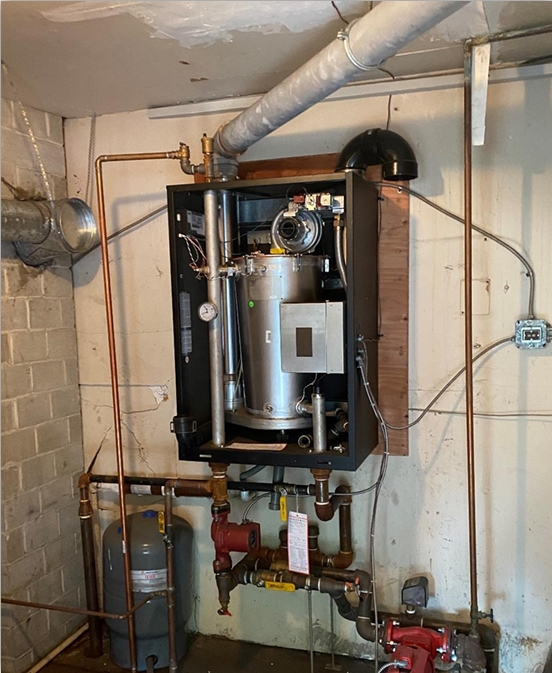
Technical Safety BC has issued a safety order covering direct-ignition gas boilers after an investigation into 13 incidents dating back to 2021 found the appliances can release carbon monoxide indoors even when properly installed and serviced. The order, which requires building owners to hire licensed contractors for inspection and to install carbon monoxide alarms, follows years of individual investigations that only revealed a category-wide risk once examined together.
“We investigated a series of about 13 incidents involving this particular type of boiler,” said Ryan Hazlett, leader of incident investigations at Technical Safety BC. “At first, we started identifying individual issues with installation and servicing or things like that. But when we started identifying a trend and realized that there was quite a few of these incidents, we put together that in fact, this particular category of boiler seems to be at high risk regardless of installation or servicing.”
How the failure happens
According to Hazlett, the boilers experience a delayed ignition – still within their typical ignition window – that releases too much gas before combustion occurs, triggering what he described as a mini explosion inside the unit. That blast damages the vent responsible for carrying carbon monoxide and flue gases outside, allowing them to enter occupied space instead.
“What we identified after that is that these boilers don’t recognize that,” Hazlett said. “There’s no safety mechanism required for that, and so they continue to operate releasing that carbon monoxide indoors.”
The affected boilers resemble wall-mounted instantaneous hot water heaters but are used exclusively for space heating. Hazlett said they have become a popular choice in larger single-family homes and can be linked together for use in apartment buildings, schools, and at least one seniors’ care home.
Why it took years to connect
Hazlett said each incident carried its own apparent explanation early on, which obscured the broader pattern. “Especially early on, we never had an incident where we had a perfectly installed and serviced boiler that had one of these incidents,” he said. “It wasn’t until we started getting a higher number of them and looking at all of the incidents kind of as a whole that we could start piecing together the commonality that maybe it’s not the installation issues and the servicing issues that are really the ultimate issue. Those are increasing the risk, but fundamentally, the standard that these are certified to isn’t resulting in the level of safety that we want for use in our province.”
The safety order now places two requirements on building owners: hiring a licensed contractor to service the boiler and verify the vent and ignition systems are operating properly, and installing carbon monoxide alarms per the BC Building Code in both the mechanical room and near sleeping quarters. The requirement echoes findings in Technical Safety BC’s report on cost-cutting jeopardizing public safety, which flagged owners skipping licensed contractors as a driver of carbon monoxide incidents.
A long-term fix sits with manufacturers
Hazlett said a lasting solution depends on the certification standard and the manufacturers themselves, who operate well beyond BC’s jurisdiction. Technical Safety BC has written to the Standards Committee recommending updates to the applicable standard, a recommendation also included in its published report, and is engaging directly with boiler manufacturers internationally. “In the meantime, the safety order is intended to lower the risk to an acceptable level while these long-term fixes are implemented by manufacturers and the standard,” he said.
Asked what the case reveals about how BC’s safety system identifies risk, Hazlett pointed to the absence of fatalities or major injuries tied to the boilers in the province. “I do think that although the identification of this risk did take some time, this is the safety system working,” he said. “I do think the fact that a gap existed, that’s never good. But we also know the safety system is not perfect. And I think the most important, or one of the most important parts of the role of the regulator is to identify those gaps and make sure they get closed as quickly as possible.”
The investigation adds carbon monoxide exposure to a list of hazards Technical Safety BC tracks in its annual State of Safety report, which has repeatedly named carbon monoxide the province’s top technical safety risk. Building owners and contractors can also find practical prevention steps in COS’s earlier piece on why employers need to promote carbon monoxide awareness.