JCAP’s Shin Imai says voluntary standards and a gutted watchdog let fatal mine incidents go unpunished
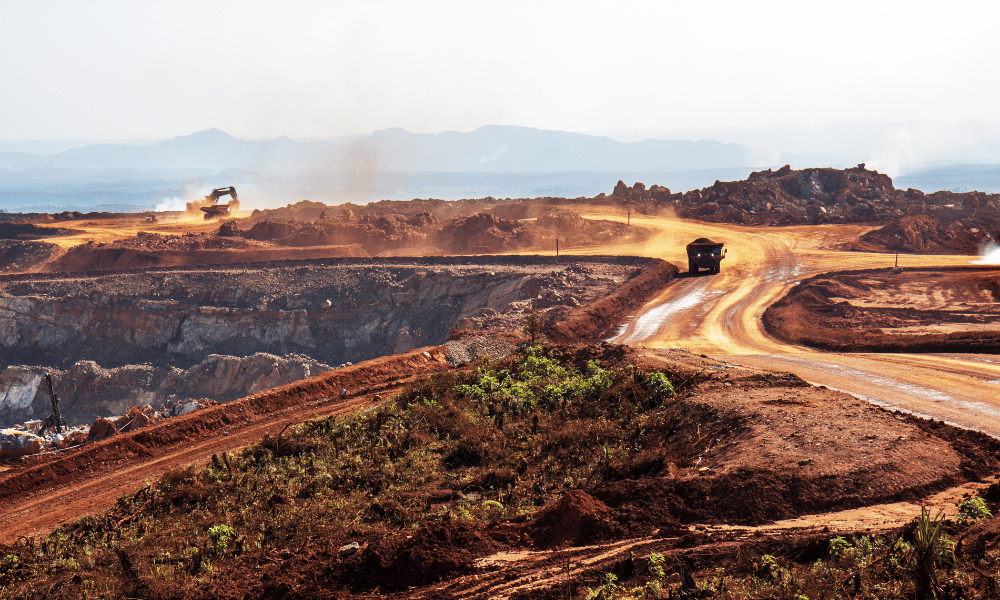
A new report from the Justice and Corporate Accountability Project (JCAP) is renewing scrutiny of how Canadian mining companies handle worker safety abroad, with its author arguing that self-reported compliance and a gutted federal watchdog leave fatal incidents largely unpunished. Shin Imai, professor emeritus at Osgoode Hall Law School at York University and co-founder of JCAP, discussed the report’s findings in an interview this week, covering 30 years of Canadian mining operations in Africa measured against standards set by the International Labour Organization (ILO) and the Organisation for Economic Co-operation and Development (OECD).
“What we’ve done is looked at accidents, looked at labour conditions, problems that have occurred in those mines, and compared them to these international standards,” Imai said.
Fatal accident exposes a light-touch justice system
The report documents forced labour used by contractors at Nevsun Resources Ltd.’s mine in Eritrea, a case Imai called “like slavery,” which the company allegedly knew about and ignored before it was sued in Canada and settled a class proceeding before trial.
He also pointed to a 2022 flood at Trevali Mining Corp.’s Perkoa mine in Burkina Faso that killed eight workers. “It took a long time to try to get them out because the company didn’t have the proper equipment. They hadn’t prepared for the flood,” Imai said, adding the risk was foreseeable: “There were expert opinions saying that there was flooding danger” at that type of mine well before the incident.
Two Trevali executives were later convicted and received six-month suspended sentences and fines of roughly $1,500, a result Imai said exposes the limits of host-country justice. “There was no lawsuit. They weren’t sued, which they would have been here, in Canada, for negligence,” he said. “It was a very minor, almost laughable process.”
Self-reported safety scores aren’t enough, Imai says
Imai also raised First Quantum Minerals Ltd.’s response to JCAP’s questions about worker fatalities at its Zambian operations, where the company pointed to its external ESG safety scores rather than addressing individual incidents. Asked how investors and regulators should weigh that kind of self-reporting, Imai reached for a driving analogy: “If our whole system of safety on the 401 was dependent on drivers self-reporting that they were driving within the speed limit, I think that would be problematic, because obviously there’s some drivers that won’t. That’s why we have a legal system, and enforcement and investigating. And that’s what’s missing here.”
Canada, he said, carries outsized responsibility here. “Canadian mining companies are huge: throughout the world we dominate the industry. We have 1,500 mining companies in Canada that are registered on our stock exchanges,” he said, adding that international standards are explicit that following local law isn’t sufficient on its own.
Why Canada’s watchdogs can’t bite
Imai traced the accountability gap to two federal mechanisms, both of which he described as toothless. Canada’s National Contact Point for Responsible Business Conduct can field complaints about OECD standard violations, but its findings carry no binding force. In one case involving Banro Corporation’s operations, “the National Contact Point found that they were very unhappy with the company. The company promised to do stuff, and then in the follow-up report, the National Contact Point says, well, you didn’t do it. But that’s it. Nothing happened. It’s not even a slap on the wrist; it’s kind of an observation.”
The other mechanism, the Canadian Ombudsperson for Responsible Enterprise (CORE), was eliminated by Prime Minister Mark Carney’s government in June 2026. Imai said it was undermined from the start: the original proposal would have let the ombudsperson subpoena company executives and compel records, “which is a power that any enforcement mechanism has,” but heavy lobbying from the mining industry stripped that power before the office launched. “So all the ombudsperson could do was say, will you please talk to me and give me some information. And of course, most companies just blew them off.”
He cited China Gold International Resources Corp., headquartered in Vancouver, as the government’s go-to example of the system working, and why it doesn’t. After a fatal landslide at the company’s mine in Tibet, the National Contact Point’s only sanction was withdrawing Trade Commissioner services. “China Gold is never going to come to the Canadian embassy and say, will you help us negotiate with the government of China,” Imai said, since the company is state-owned.
Asked what single reform would change the landscape, Imai didn’t hesitate: an investigative body with real subpoena power, equivalent to standard law enforcement authority. He added a complication. Some companies incorporated in Canada “aren’t really Canadian companies. They’re just using us as a flag of convenience,” muddying the jurisdictional basis for holding them to account.
The findings follow a pattern Canadian safety professionals have seen before. Two workers died at a Canadian company’s gold mine in Ghana in a separate incident that drew similar criticism of overseas “zero harm” claims falling short in practice. The accountability gap also extends well beyond mine sites: new federal legislation means Bill C-35’s forced labour import ban now reshapes supply chain safety duties for Canadian companies and importers more broadly. Domestically, the contrast in penalties is stark too: a diamond mine contractor was fined $200,000 over a worker’s death at a Canadian mine, more than a hundred times the Trevali fine, for a single fatality rather than eight.