Stacia Gunn of MacKinnon and Olding on the worker-led safety culture that helped her win Canada’s top individual honour
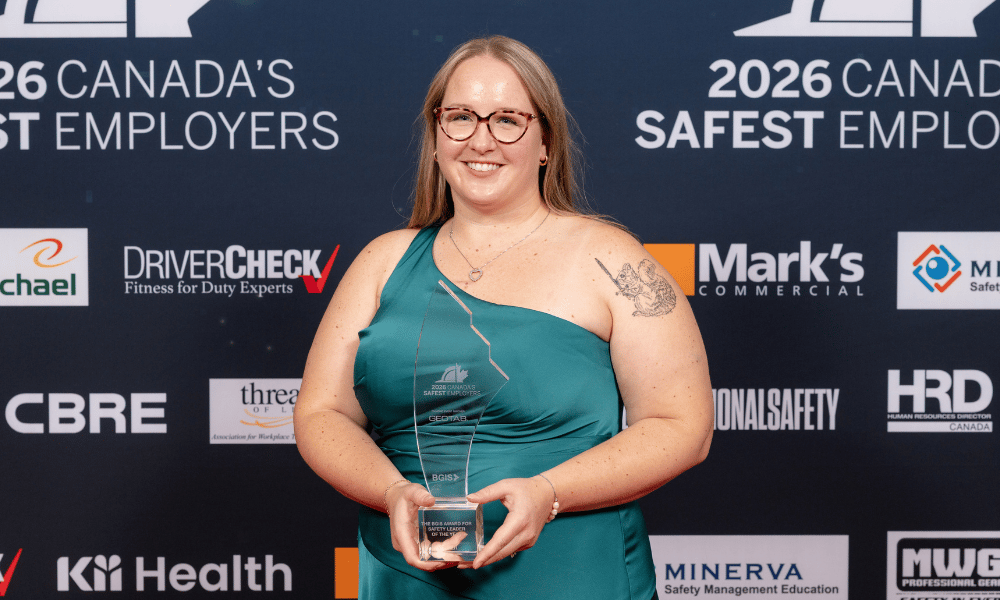
Stacia Gunn, Health, Safety, Environment and Quality (HSEQ) Manager at MacKinnon and Olding Ltd. in Dartmouth, Nova Scotia, was named Safety Leader of the Year at Canada’s Safest Employers Awards gala in Toronto on October 22, 2026. For someone who says she “stumbled into” safety on an oil and gas site in Abu Dhabi more than a decade ago, the honour marks the latest milestone in a career that has taken her from desert heat to near-Arctic cold to the cramped corridors of Royal Canadian Navy and Canadian Coast Guard vessels.
“I don’t think it has settled in. I don’t think it will ever really settle in,” Gunn said. “It’s such a big honour, and there’s been some incredible folks that have won it in the past, so I feel like I have big shoes to fill.”
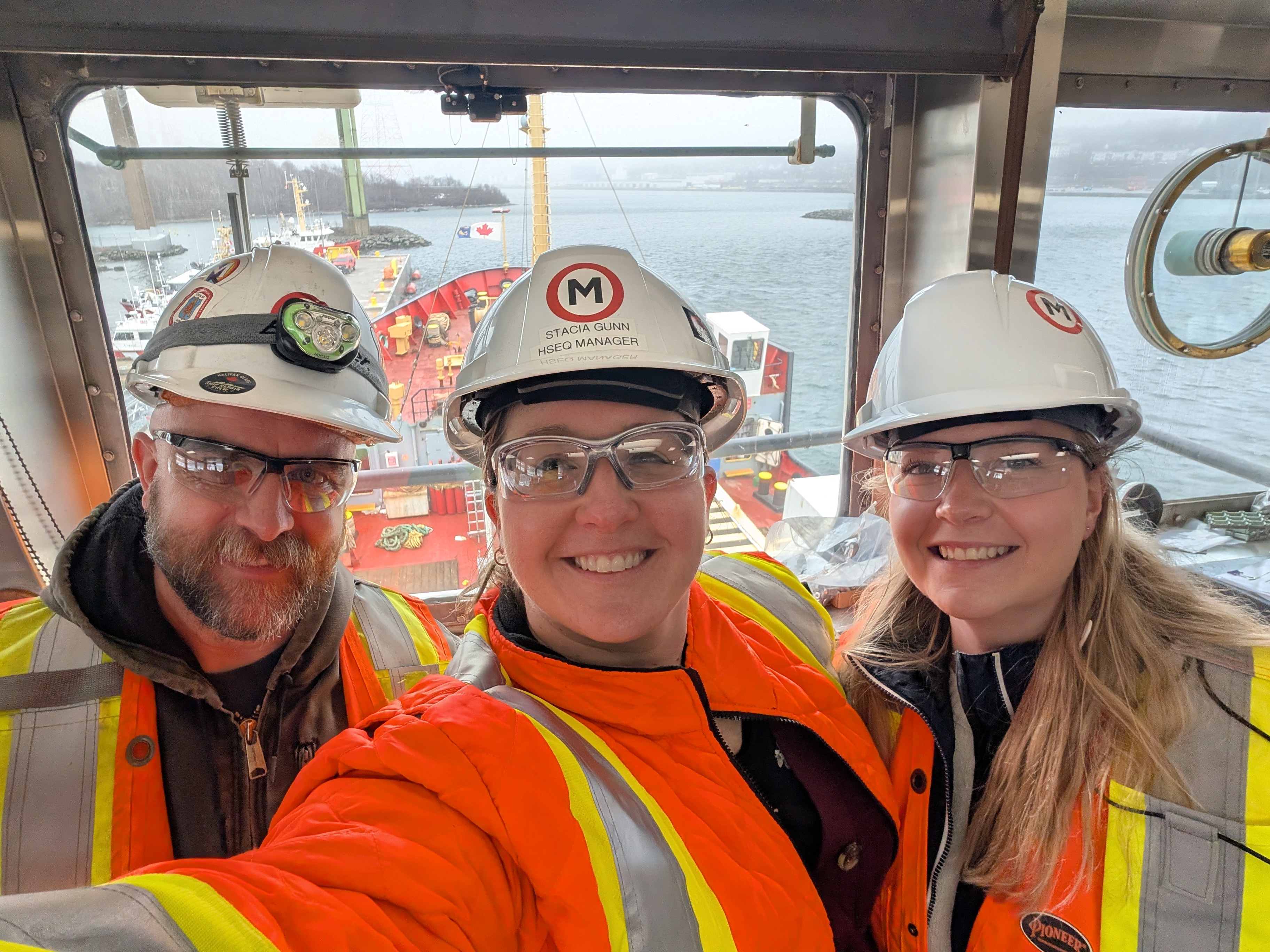
(Stacia Gunn, HSEQ manager at MacKinnon and Olding, on a marine vessel with colleagues.)
From the desert to the oil sands
Gunn’s career began as a field engineer on an oil and gas project in Abu Dhabi, United Arab Emirates, straight out of university. “It was a big job. It was really challenging,” she said. Working in extreme heat with little safety presence on site, she began noticing gaps she couldn’t yet name, workers wearing harnesses without tying off, rules on paper that didn’t hold up in the field. “I kept seeing things that weren’t quite right, but I didn’t really understand why it wasn’t right,” she said.

(Gunn in the desert during her early career as a field engineer in Abu Dhabi, UAE.)
After returning to Nova Scotia and working in an import-export rotation program, the same unanswered questions kept surfacing. She completed a Diploma of Occupational Health and Safety online while working, and a New Brunswick employer, led at the time by a female safety director and safety manager, gave her a first break into the field despite her having no formal OHS experience. That same employer later sent her to Fort McMurray, Alberta, a posting she describes as foundational to her understanding of safety.
“Probably my biggest lesson is that nothing’s for sure, that things are constantly changing, and nothing is certain,” she said of her time there. “You think you’ve got a take on what’s happening, and then you gain some new knowledge, you involve the workers, you get subject matter experts in, and you’re just fully challenged. You have to set the ego aside and learn and pivot.”
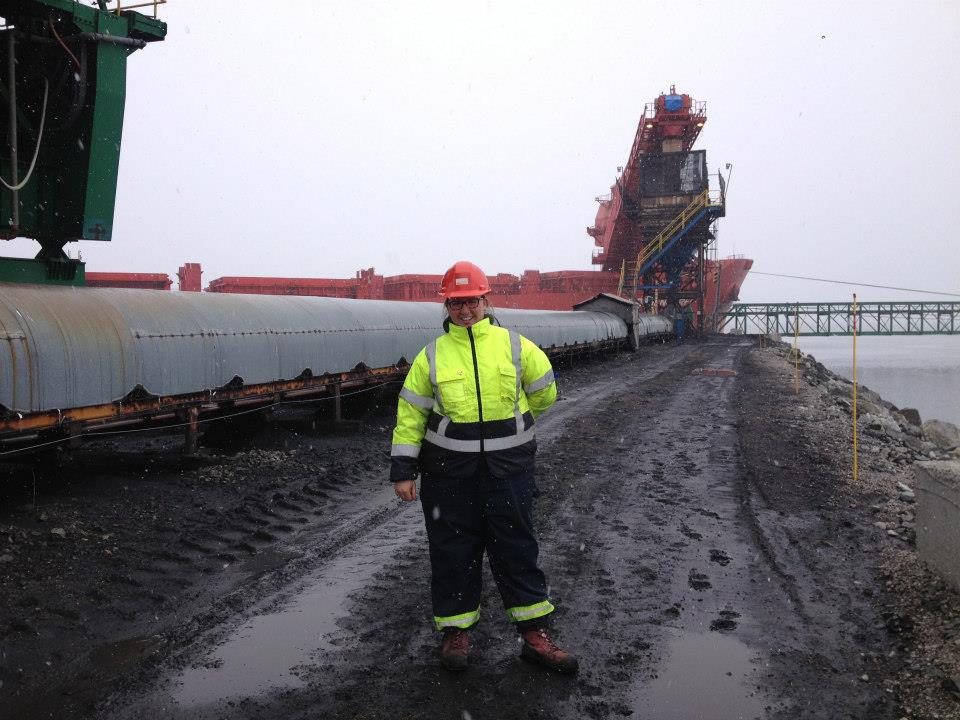
(Gunn in cold-weather personal protective equipment at an industrial site.)
Before joining MacKinnon and Olding, Gunn worked at Construction Safety Nova Scotia, auditing and coaching companies across industries. There, she served as project lead on an app built with the Canadian Centre for Occupational Health and Safety (CCOHS) to translate Nova Scotia’s construction legislation into plain language. The provincial government has since expanded and relaunched it as NovaSafe. Gunn was careful to clarify her role in it: “I wasn’t a developer for NovaSafe. It was Construction Safety’s app, but then they pivoted to it... there was a bunch of government people involved with that as well.”
A worker-led philosophy at MacKinnon and Olding
MacKinnon and Olding, founded in 1985 and based in Dartmouth, works primarily on Royal Canadian Navy and Canadian Coast Guard vessels, providing scaffolding, surface preparation, painting and insulation in tight shipboard environments. Gunn joined nearly six years ago, shortly after the company’s 2017 partnership with Crosbie, when its safety program was still in a foundational state. She has since grown the safety team from three people to seven coordinators working across Canada.
“Our big motto here is really doing the work with the people, not for the people,” Gunn said. “You might look at your glove and think nothing of it, but you should know that there was a lot of people involved in picking that glove... every piece of PPE, every piece of equipment that we operate, it’s in place for a reason, and it was decided upon by the workers that are actually doing the work.”
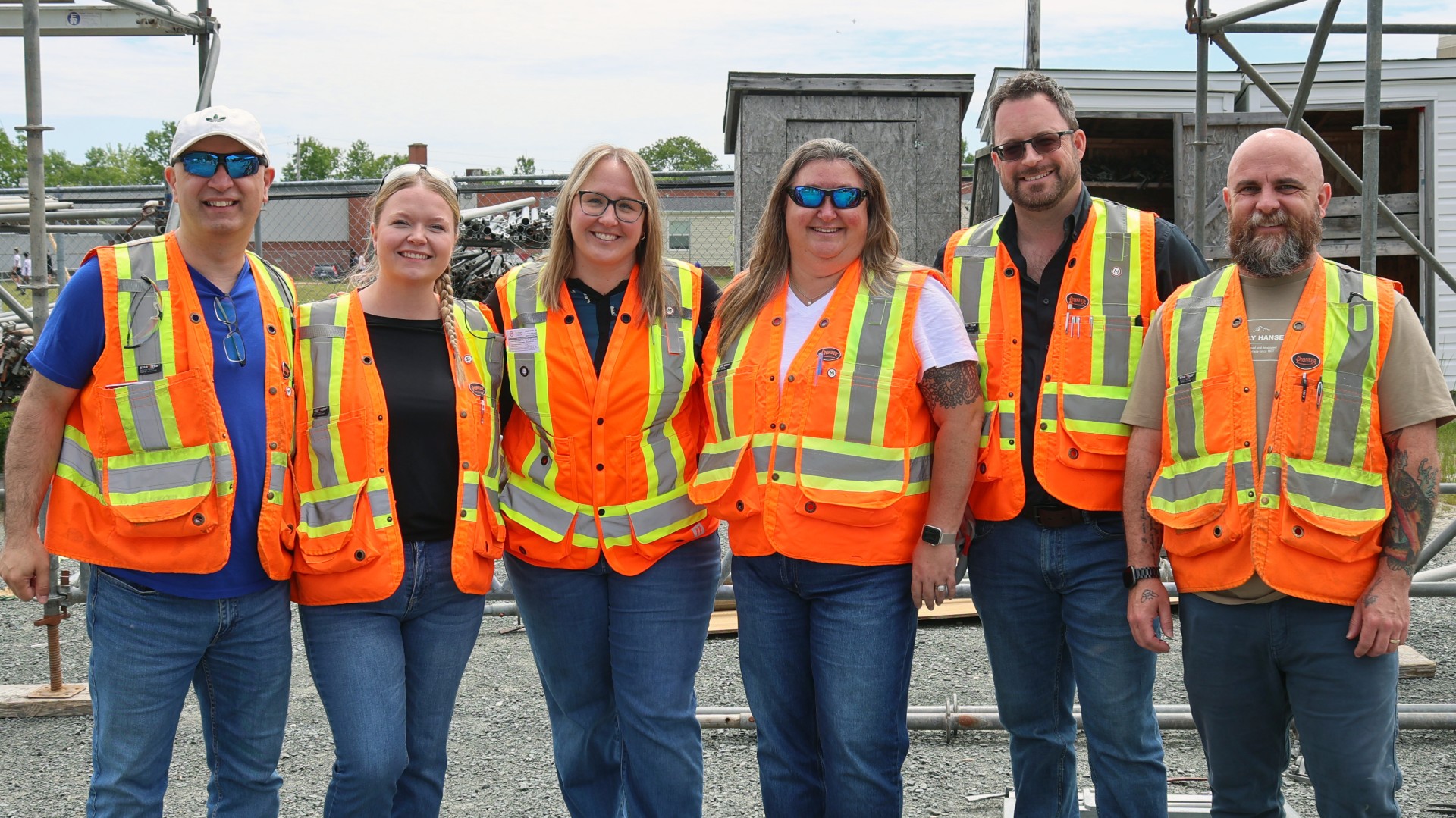
(Gunn and a safety team in high-visibility vests and hard hats at an industrial yard.)
Implementation is the hardest part
Asked about her biggest challenge, Gunn didn’t point to hazards or budgets but to scale. “A lot of the stuff is easier said than done,” she said. “You involve people doing the work, but you can’t involve everybody. We have a company of over 400 people. 400 people can’t make the decision on the glove. It’s really about that implementation and that rollout.” The second challenge, she said, is ownership: her team can support, guide and facilitate, but “the supervisors and the workers really need to be the ones that own it... safety might be in my title, but it’s part of everybody’s job.”
Advice for future Safety Leader of the Year nominees
Gunn’s win was one of 23 handed out at the gala, alongside organizations spanning sectors from mining to manufacturing. Reflecting on the win moments after accepting it, Gunn offered a different kind of advice than a checklist. “You need to do something that sets you apart. You need to do something that’s true to you,” she said. “It’s not about collecting accolades. It’s not about anything more than making sure people go home safe at the end of the day.”
She also pointed to a shift in her own approach, echoing other voices on mentorship’s role in advancing women in safety: “I’ve always worked very hard, I’ve always pushed myself and pushed my team, but I haven’t been vocal about it,” she said. “It’s important that we are sharing the positives with each other and that we are celebrating our wins, no matter how small or how big.”
Gunn, who holds a Professional Engineer (P.Eng.) designation and Canadian Registered Safety Professional (CRSP) certification, also sits as the employer representative on the Workers’ Compensation Board of Nova Scotia’s board of directors.
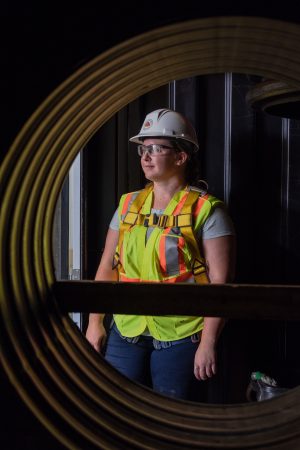
(Gunn, Safety Leader of the Year, framed by industrial pipe and cable reels.)