Province’s Coroners Service, OHS division conducting probe

An employee at a business southwest of Saskatoon died on the job in the early-morning hours of Oct. 26, prompting immediate responses from two provincial bodies responsible for workplace safety and sudden-death oversight.
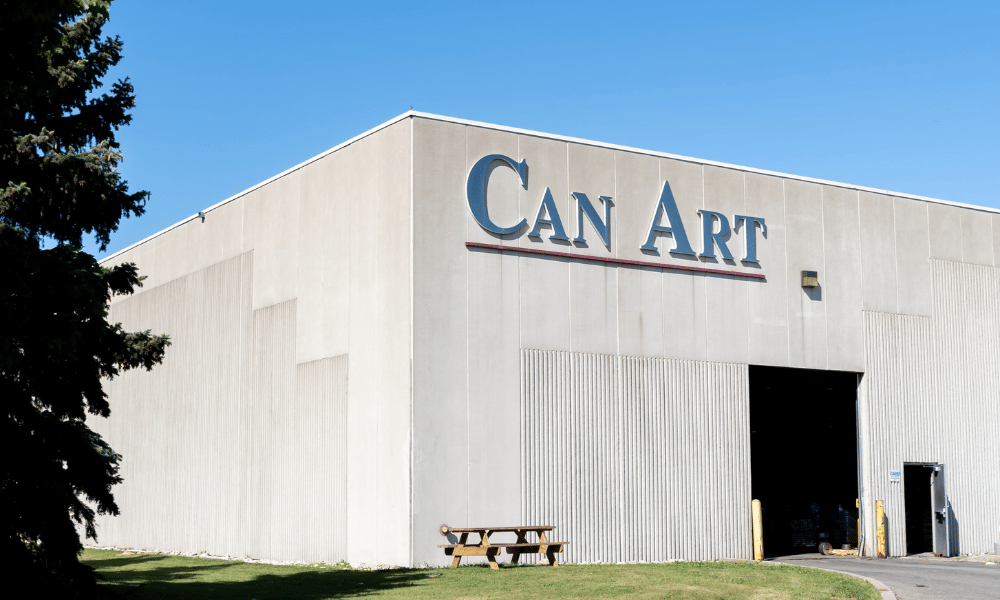
Warman RCMP received a report of an injured man at a business near Vanscoy, Sask., at approximately 3:15 a.m. Emergency medical services pronounced him dead at the scene, CTV News reported. Police have not released the worker’s identity or any details about the circumstances surrounding the fatality, citing the active investigation and the privacy of those involved.
Both the Saskatchewan Coroners Service and the province’s Occupational Health and Safety (OHS) division — a branch of the Ministry of Labour Relations and Workplace Safety — have launched investigations.
Under provincial legislation, OHS inspectors must be notified immediately when a workplace fatality occurs and are required to attend the scene. The ministry had not responded to a request for comment by press time. No charges, orders, or findings have been disclosed.
Saskatchewan fatality rate among Canada’s highest despite progress
The death arrives as Saskatchewan continues to record gains in workplace safety but remains among the most dangerous provinces for traumatic fatalities. As COS reported, Saskatchewan’s total injury rate dropped to 3.68 per 100 workers in 2025 — a 5.9% decrease from the previous year — yet the province still recorded 27 workplace fatalities, the same number as 2024, underscoring how fragile that progress remains.
Based on the most recently available national data — covering 2020 to 2024 — Saskatchewan’s five-year average injury fatality rate ranked highest among large Canadian provinces at 4.1 deaths per 100,000 workers, ahead of Alberta at 3.8 and Newfoundland and Labrador at 3.3, according to the 2026 Report on Work Fatality and Injury Rates in Canada, prepared for the Association of Workers’ Compensation Boards of Canada by researchers Sean Tucker and Anya Keefe.
Those figures align with what the Saskatchewan provincial auditor flagged over the province’s highest workplace death rate in Canada — a report that called for closer scrutiny of safety association funding and prevention outcomes.
“While these record-low rates demonstrate real progress, any workplace injury or fatality is one too many,” said Ken Cheveldayoff, Saskatchewan’s Minister of Labour Relations and Workplace Safety, in April 2026. “Our government remains focused on prevention, strong enforcement and collaboration to ensure every worker goes home safely at the end of the day.”
A regulatory gap
Saskatchewan law assigns primary responsibility for investigating a fatal workplace accident to the employer — a structural conflict of interest that drew sharp criticism following the December 2025 death of a worker at the Mosaic K3 Potash Mine.
Unifor raised concerns that this arrangement, combined with the absence of rigorous third-party oversight, means companies can shield investigation findings from broader scrutiny and absolve themselves of wrongdoing.
The union called on the Ministry of Labour Relations and Workplace Safety to implement legislative or policy changes requiring independent oversight of workplace fatality investigations. The ministry had not publicly responded to those recommendations by press time.
As COS has reported, Saskatchewan OHS prosecution timelines routinely extend well beyond the date of injury, meaning accountability — when it arrives — often comes years after the incident.
Approximately 2,500 Saskatchewan workers suffer serious injuries each year, according to WorkSafe Saskatchewan’s May 2026 strategic framework release.
WorkSafe Saskatchewan’s 2023–2028 Fatalities and Serious Injuries Strategy targets health care, transportation, and construction as the province’s highest-risk sectors, with serious injuries accounting for more than 80% of the costs to the provincial compensation system.
The investigation near Vanscoy remains active.