Firm cited outdated code provisions to justify balcony work without fall protection
Alberta’s OHS Appeal Body dismisses a roof inspection company’s challenge to a stop work order on October 28, 2026, Vice-Chair Ian Smith ruling.
The company appealed a Stop Work Order issued by an Occupational Health and Safety Officer on July 28, 2025, in Goodwin Roof Inspections & Consulting v Occupational Health and Safety, 2026 ABOHSAB 20, Board File No. OHS-00166. The Alberta Labour Relations Board, sitting as the Appeal Body under the Occupational Health and Safety Act, summarily dismissed the appeal, finding it had no chance of success.
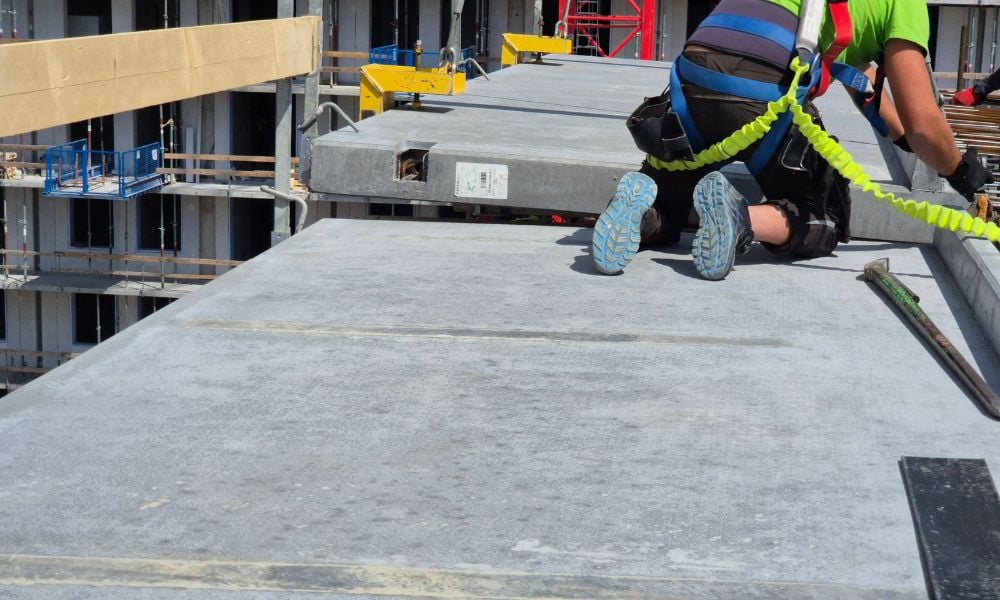
An OHS Officer had conducted an inspection at a construction site and found two of the company’s employees performing inspection work on a fifth floor balcony. No guardrails were installed and the employees were not using fall protection. The Officer determined the workers were at risk of falling more than three metres, contrary to Section 139 of the Occupational Health and Safety Code. The Stop Work Order was issued verbally and lifted 20 minutes later after the company prepared a fall protection plan.
Outdated code, outdated argument
The company argued that section 159 of the OHS Code allowed employers to use procedural controls instead of fall protection equipment in certain situations. It contended that installing guardrails would have been possible but “not reasonable given the logistics and the fast nature of the task” and that “the task was so brief and controlled that personal fall protection was not deemed necessary.”
In making its case, the company relied on guidance issued by OHS in 2006 and cited a version of section 159 that was no longer in force. The Appeal Body noted the OHS Code had been repealed, replaced, and amended several times over the years, and that the current version of section 159 differed from the provision cited in the company’s fall protection plan.
Under the current OHS Code, section 159 sets out two preconditions for using procedures in place of fall protection: it must not be reasonably practicable to use fall protection equipment, and the work must fall within specific listed scenarios, including roof inspection, emergency repairs, or the installation and removal of fall protection equipment.
Neither precondition met
The Appeal Body found the company failed on both counts. Its Notice of Appeal did not suggest that using fall protection was not reasonably practicable. Instead, it argued fall protection was unnecessary given the short duration of the work. The Appeal Body held that “necessity is not the standard outlined in section 159(1)(a).”
On the second precondition, the record indicated the workers were not engaged in roof inspection but were instead taking pictures of balcony windows for quality control. While roof inspections are among the exceptions listed in section 159, window and balcony inspections are not. The company asserted it was in fact engaged in roof inspection at the time, but there was no evidence on the record to support that claim.
The company had not applied to introduce evidence outside the record despite ample opportunity. Even if it had, the Appeal Body found it difficult to see how such an application could have succeeded, since the company could have been aware of the current fall protection requirements by exercising ordinary diligence.
Business impact does not override safety
The company further argued it takes its safety obligations seriously and that the Stop Work Order on its record would affect its ability to generate business. The Appeal Body ruled that “these claims cannot undermine the reasonableness of the Officer’s conclusion that working from heights without fall protection was, in the circumstances, an unsafe work activity that warranted a stop work order.”
OHS Officers hold wide discretion under the Act to issue stop work orders in response to unsafe working conditions. The Appeal Body does not interfere with an Officer’s discretionary decision unless it is unreasonable in light of the legislation and the material before the Officer.
The appeal was summarily dismissed.