Crews recovered part of the cockpit and the voice recorder from the Oct. 3 Nantucket crash that killed four air ambulance employees
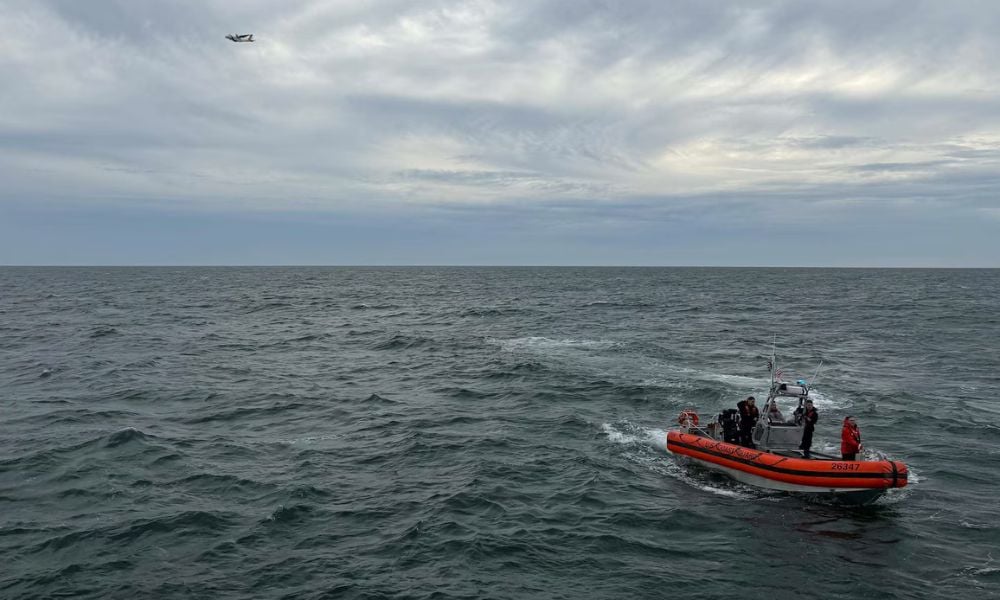
The Transportation Safety Board of Canada (TSB) said it has recovered the cockpit voice recorder, along with the upper third of the cockpit, from the Latitude Air Ambulance aircraft that crashed into the Atlantic Ocean off Nantucket, Massachusetts, on Oct. 3, killing four employees of the Hamilton, Ontario, company.
In a statement, the TSB said it worked in coordination with the Royal Canadian Mounted Police and the Canadian Coast Guard to retrieve the wreckage. Both the cockpit section and the recorder are being sent to the TSB’s engineering laboratory in Ottawa for examination.
What happened to the flight
The Gulfstream G100, operating as Heartbeat 104, departed St. George, Bermuda, carrying two pilots, two medical crew, a patient and the patient’s family escort. As it approached the Boston area, the crew reported electrical difficulties before the aircraft descended rapidly and lost contact with air traffic control south of Nantucket. All six people on board, including the four Canadian crew members, are presumed dead.
The crew members were identified by Latitude Air Ambulance as Captain Philip Childerhose, First Officer Thomas Farquhar, flight nurse Sarah Paton and respiratory therapist Jolene Weir. “This is an unimaginable loss for our Latitude family and for everyone who loved the six people aboard Heartbeat 104,” said Peter Byl, president of Latitude Air Ambulance, in a statement.
Why the cockpit voice recorder matters
A cockpit voice recorder typically captures crew communications and cockpit sounds in the period before an occurrence, which investigators use alongside flight data to reconstruct the sequence of events. The TSB has not yet said when it expects to extract or publish any information from the device, and investigators have not determined a cause.
For safety professionals, the case is a reminder that a fatal transportation occurrence involving employees on the job can trigger the same dual-track investigation process that follows a workplace death on the ground, even when a federal safety board rather than a provincial regulator holds primary jurisdiction. Because the aircraft was Canadian-registered, the TSB is leading the inquiry under international agreement, assisted by the U.S. National Transportation Safety Board (NTSB) as an accredited representative. The full investigation is consistent with how long complex fatality investigations typically take to move from scene examination to final findings, and could take up to two years.
A longstanding watchlist issue
Flight crew fatigue and electrical or mechanical system failures are not new concerns for Canadian aviation. The TSB’s most recent transportation safety watchlist has repeatedly flagged safety management and regulatory oversight as persistent, multi-modal risks, a pattern employers in aviation and air medical services may want to revisit as this investigation unfolds.