A $122,000 fine shows how unlicensed electrical work can hide behind a licensed contractor’s own safety permits
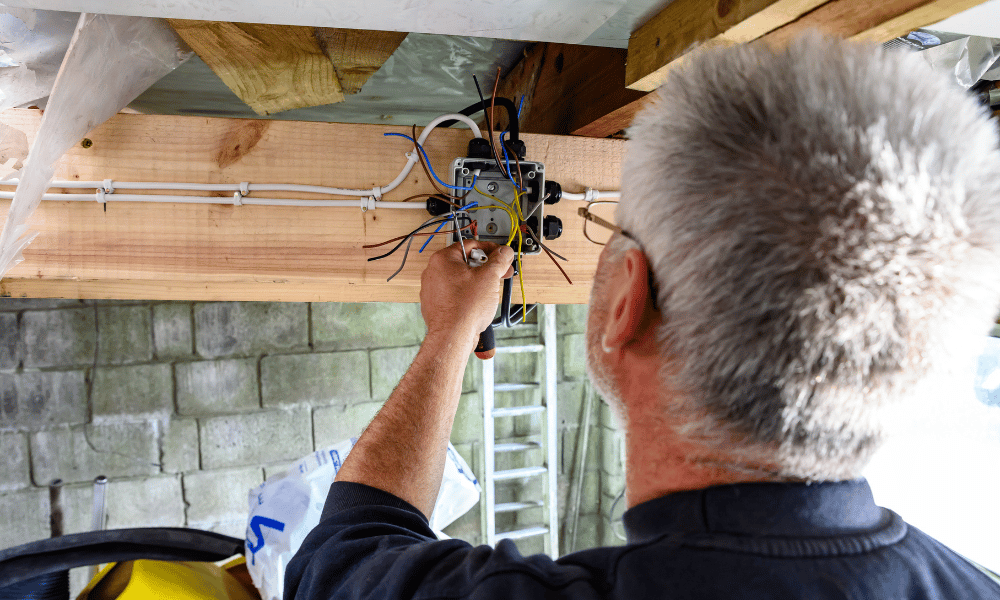
A licensed Ontario electrical contractor’s decision to sell access to his own licence has cost him and his company a combined $122,000 in fines, and prompted a warning from the province’s electrical regulator about a licence-contracting scheme it says is becoming more common.
Aya Electric Inc. and its owner, Razi Khan, were fined a combined $122,000 under the Electricity Act, 1998, according to an Electrical Safety Authority (ESA) statement released October 21, 2026. ESA’s investigation found Khan had been pulling permits for electrical work at homes in Clarington, Brantford, Milton and Markham that he had neither performed nor supervised. The Ontario Court of Justice handed down the fines after Aya Electric and Khan pleaded guilty in September 2026, with Khan also placed on probation.
“What he was doing was allowing unlicensed parties to seem that they were licensed, to purport to their customers that they were licensed by using his licence,” said Emily Larose, Vice President, Regulatory and General Counsel at the Electrical Safety Authority, in an interview. “We call it contracting out his licence. He was taking out notifications for work that he wasn’t doing and that he had no supervision or involvement in.”
How the scheme worked
The arrangement let an unlicensed worker appear credentialed to homeowners while bypassing the inspection system entirely, Larose said. “The entire core of the safety system in Ontario is that businesses and individuals who hire a licensed electrical contractor should be entitled to expect that work is going to be done safely and compliantly,” she said. “When you’re hiring somebody who’s not licensed, you are hiring somebody who likely doesn’t have the insurance, has not established that they have the training or qualifications to do that work, and you’re hiring somebody who’s doing that work outside of the regulatory safety oversight system that we have.”
Larose said inspectors are believed to have caught the scheme when the work at one property couldn’t be traced back to the person who had pulled the permit for it. Finding those arrangements, she said, takes persistence: the ESA relies on a mix of public and industry complaints, a dedicated inspector network, and a partnership with the classified ad site Kijiji to spot unlicensed operators advertising their services. “It’s a little bit of creativity and a lot of persistence and diligence to find these players,” she said.
Why compliant contractors are being undercut
Larose stressed that licence-contracting is not the norm. “The vast majority of our licensed electrical contractors and master electricians do great, safe, compliant work and don’t participate in the underground economy,” she said. “That said, it is a trend that we are seeing.” Ontario led all provinces in underground economic activity in 2021, according to Statistics Canada, with the residential construction sector a major contributor to that figure nationally.
She pointed to an unexpected driver behind that trend: the ESA’s own success teaching consumers to ask for proof of licensing. “Consumers are increasingly aware that they should be asking the electrical workers doing electrical work for them for certificates from the Electrical Safety Authority, which puts those unlicensed parties in a difficult situation,” she said. “This trend of contracting out of licences is, we think, to a certain extent, an expression of that education, that increased consumer awareness.”
Enforcement, she added, is also about fairness to contractors who have invested in becoming licensed. “We don’t want the people who are compliant to be disadvantaged because they’ve made that investment by competing against people who aren’t following the process,” she said, pointing to free digital tools, training resources and a podcast, Toolbox Talks, that the ESA offers to help contractors stay compliant without added cost.
What homeowners can still do
A Léger survey commissioned by the ESA previously found that 40 per cent of Ontario homeowners had not confirmed whether proper permits were obtained before electrical work was done in their homes. Larose said updated figures weren’t immediately available, but that consumer education remains an ongoing effort spanning social media, radio and renovation-focused influencer partnerships.
Homeowners can verify a contractor by asking for their seven-digit ECRA/ESA licence number and checking it against the ESA’s online contractor look-up tool before work begins, rather than relying on paperwork alone. A general contractor who subcontracts electrical work should confirm the electrician actually on site, not just the company named on the permit, holds a current licence.
The Aya Electric case follows a steady run of ESA enforcement stories, including another Ontario case of unlicensed electrical work drawing fines in Ottawa. It also comes as Larose weighs in elsewhere on regulatory consistency: at a recent Canadian Safety Summit panel, she pointed to the Canadian Electrical Code’s hundred-year history of provincial alignment as a model for how national safety standards can come together.
For now, Larose said the ESA’s approach pairs visible deterrence with ongoing outreach. “When we find examples that really illustrate the problem, we try to get the message out so that consumers are aware, and those who are thinking about getting involved in it realize that there are serious consequences in terms of fines and prosecutions.”