Research tied to a fatal Suncor tailings pond death is shaping new Start Work Checks for oil sands and mining
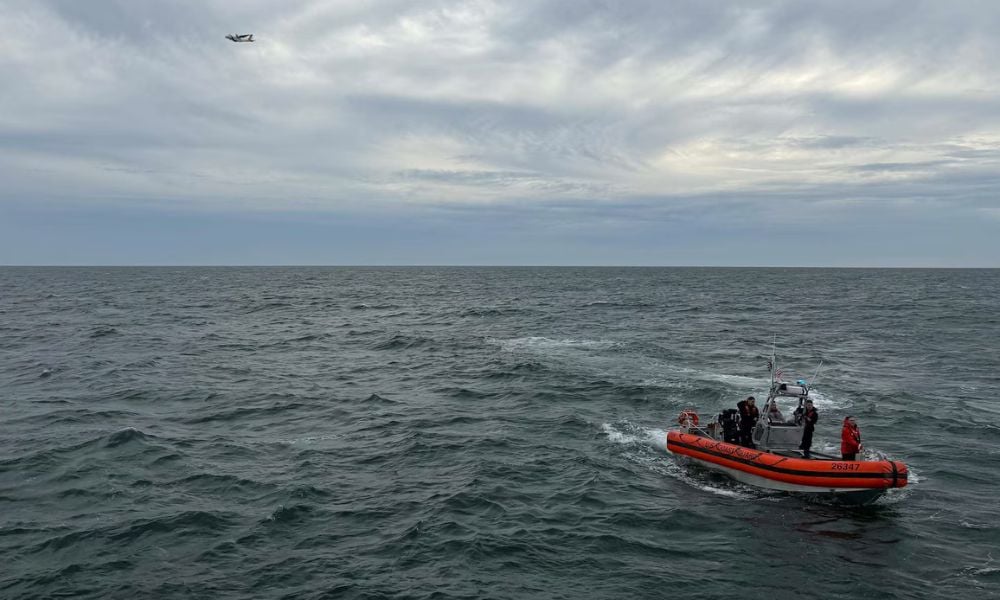
On January 13, 2021, contractor Patrick Poitras was operating a bulldozer on a frozen tailings pond at Suncor Energy Inc.’s base mine near Fort McMurray, Alberta, when the ice gave way and he drowned. Suncor and the contracting company, Christina River Construction, each pleaded guilty to a count under Alberta’s Occupational Health and Safety (OHS) Act. As part of a joint sentencing submission, the companies asked that the resulting penalties be redirected into safety research rather than general government revenue – a mechanism known as a creative sentence.
That case is the root of a research program now shaping how oil sands and mining companies manage one of the industry’s hardest hazards to see coming: working on and around water, ice and unstable ground. It’s also, almost five years later, the same hazard category behind a worker’s death at Suncor’s Fort Hills site, whose body was recovered nine months after his mulcher broke through muskeg in January. Dr. Lianne Lefsrud, associate dean of research in the Faculty of Engineering at the University of Alberta in Edmonton, where she holds the Risk Innovation Sustainability Chair at the David and Joan Lynch School of Engineering Safety and Risk Management, wasn’t involved in that recovery effort. But her work addresses exactly the conditions that made it so difficult.
Why the ground itself becomes the hazard
“Tailings ponds ice doesn’t actually work or function like regular ice, because it’s not water, really – it’s got a whole bunch of contaminants, volatile organic compounds, hydrocarbons,” Lefsrud said. “So its strength is really quite unpredictable, even when you have the thickness.”
Snow cover compounds the problem. “You might have driven onto a water body or a wetland and not even known that if it was covered in snow,” she said. “You are uncertain as to the kind of ground that you’re on.” Muskeg adds a further complication for emergency response: workers are often operating alone, far from cell coverage, in terrain that “can just swallow whole pieces of equipment” depending on depth.
From a single fatality to a national research program
Lefsrud’s team has worked on several creative sentences for oil sands operators, surveying and interviewing thousands of workers to understand how they perceive hazards and whether existing controls hold up. A related 2025 final report from her research group analyzed 822 potential and actual serious incidents and fatalities (SIFs) from 2018 to 2023 against more than 86,000 critical control assurance questions, finding that working with or near energized equipment accounted for 60 per cent of SIF incidents in mining and tailings operations – but just 8 per cent of inspection questions addressed it. Separately, of 4,662 workers and contractors surveyed across the industry, roughly one in 14 said they’re routinely exposed to water and ice hazards, while about one in two believed adequate controls were in place.
Turning research into a checklist workers actually use
The resulting tool, a Start Work Check, builds on a framework the International Association of Oil & Gas Producers (IOGP) designed for oil and gas, which Lefsrud’s team adapted for mining’s water, ice and muskeg exposures. Each check is paired with a bowtie diagram – a visual safety tool that maps the causes and consequences branching off a central loss-of-control event, with critical controls marked where they directly intervene on the hazard. “It’s not just a checklist,” Lefsrud said. “There’s a diagram associated with the Start Work Check so that people can visualize what this means to them in their worksite.”
Canadian Natural Resources Ltd. has used the checks for about a year and a half, Chevron Corporation for a similar period, and Suncor is now in the process of adopting them, according to Lefsrud. Versions also exist for confined space entry, excavations, working at heights and mobile equipment.
A free app version is weeks away
Lefsrud’s team has also built GroundSafe, a digital version of the water-and-ice check aimed at contractors and subcontractors who may not use paper-based systems. It’s roughly 90 per cent complete, currently in demonstrations with municipalities and mining companies, with a target completion of late November. Planned features include live Environment Canada weather data and a utility-locate request function. “We’re going to make it freely available,” Lefsrud said, “so that people can have it and use it.”
For Lefsrud, the goal of the work goes beyond any single site. “Fatalities are absolutely heartbreaking, and they’re a great tragedy,” she said. “But the greater tragedy is not learning from them, such that we can prevent future incidents. And that’s exactly what we’re trying to do here.”