When migrant farm workers can’t report hazards without losing their permit, employers carry the risk — and so do their safety programs
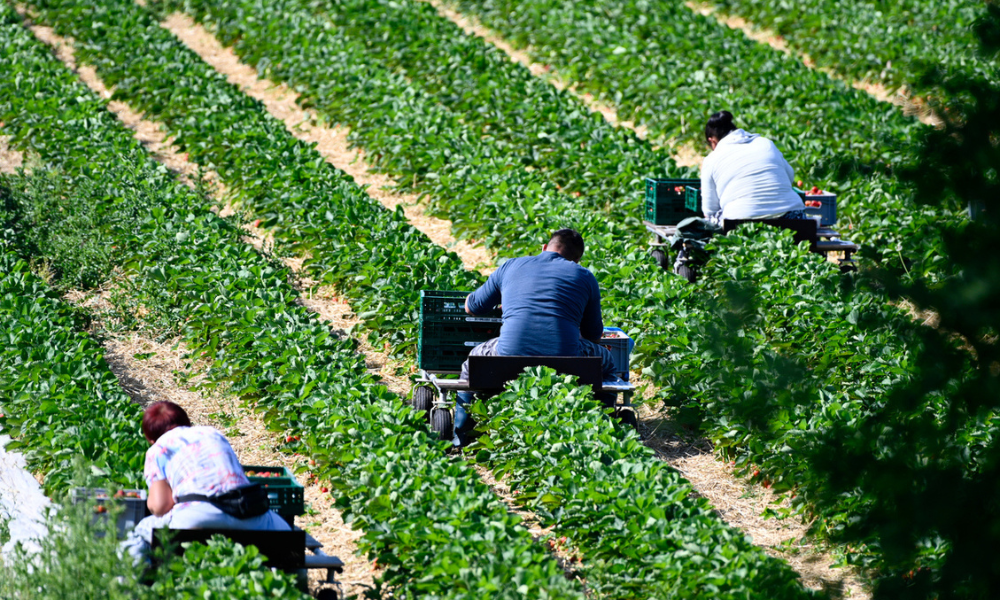
Seven migrant farm workers have been killed or seriously injured at five locations across Ontario’s Niagara Region and St. Catharines since 2019, according to the Migrant Workers Alliance for Change (MWAC).
Workers under the Seasonal Agricultural Worker Program (SAWP) stay silent about unsafe conditions because speaking up can cost them everything. That silence has direct consequences for agricultural employers. Hazard identification depends on worker reporting. When that reporting is suppressed by job insecurity, safety programs built on it are compromised from the ground up.
The most recent death involved Sinhue Garcia, 39, a father of two from Mexico. He was struck and killed in a hit-and-run in Niagara-on-the-Lake in June 2026 while cycling home from his shift.
What does the law actually guarantee migrant farm workers in Canada?
Canada’s Seasonal Agricultural Worker Program has operated for six decades. Over 74,000 migrant farm workers arrive in Canada each year, according to Statistics Canada. Employment and Social Development Canada states that temporary foreign workers hold the same workplace rights as citizens and permanent residents.
Advocates say the program’s structure undermines that guarantee. Syed Hussan, co-executive director of MWAC, said workers typically lack vehicle access and viable transit options. Hussan said workers are left navigating rural roads that were never designed to accommodate cyclists or pedestrians. Workers who raise concerns risk losing their job, their housing, and their right to work elsewhere in Canada — all at once.
What infrastructure changes are being demanded
MWAC unveiled oversized reflective warning signs at five accident locations in October 2026. Additional signs were placed outside the municipal offices of Niagara-on-the-Lake, St. Catharines, and Lincoln.
The group is calling for bike lanes, improved lighting, safer crossings, and lower speed limits on rural roads. More than half of municipal election candidates across the three communities have signed a pledge to advance migrant worker road safety plans. MWAC organiser Kit Andres confirmed the figure to CBC News.
Niagara-on-the-Lake confirmed it had invested in road safety this council term, including speed limit reductions. It had not received MWAC’s formal petition at the time of the unveiling.
St. Catharines’ decision to formally consult migrant workers on city initiatives has been cited by advocates as one concrete model for closing that accountability gap.
The broader reform agenda for migrant farm workers
On the legislative front, advocates are calling on Ontario to amend the Coroners Act to make inquests mandatory for agricultural workplace deaths. The same requirement already applies in construction and mining.
Ceto Reid, a Jamaican worker seriously injured while cycling home from a laundromat in St. Catharines in 2022, issued a statement at the unveiling. “People need to respect farm workers more and what we’re doing for the community. We are the ones feeding the people, so look out for us.”