From a harassment panel to an executive case study, Women in Safety Summit sessions kept landing on the same idea: policy sets the floor
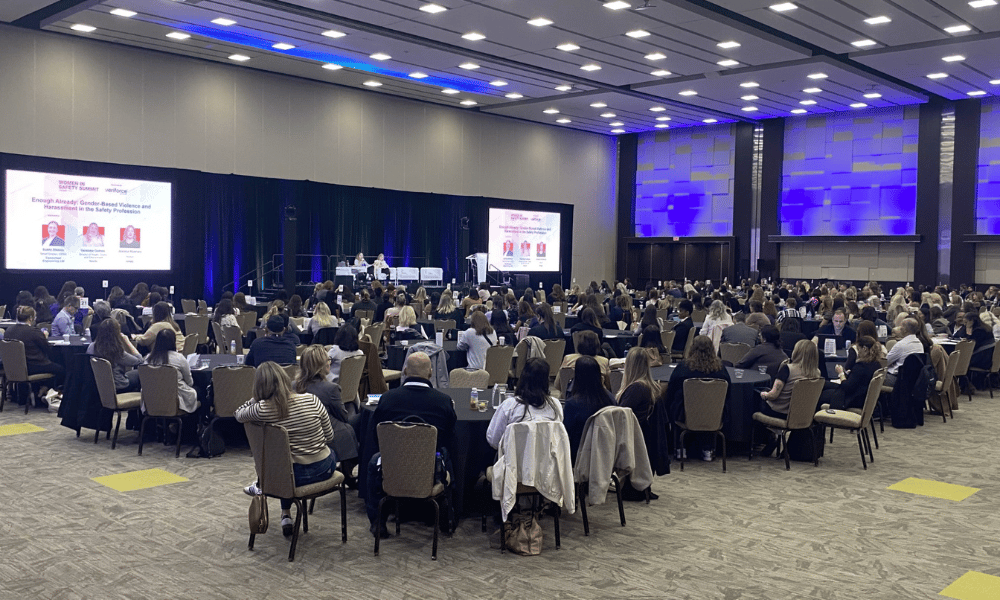
TORONTO — At the Women in Safety Summit on October 21, 2026, six very different sessions arrived at the same conclusion without appearing to coordinate: in Canadian occupational health and safety (OHS), meeting the legal minimum is not the same as building a safety culture.
The thread ran from a keynote on leadership to a panel on gender-based violence to a Fortune-adjacent executive’s case study on boardroom influence. Each speaker, independently, drew a line between what the law or a policy document requires and what actually changes behaviour on the ground.
Culture has to outrun the policy
The point was made most directly on the “Enough Already” panel on gender-based violence and harassment in the safety profession. Jessica Kearsey, partner at KPMG, traced Canadian protections from Ontario’s 2010 amendments recognizing workplace harassment as an OHS issue through to the federal Work Place Harassment and Violence Prevention Regulations, introduced in 2020 under the Canada Labour Code. Nearly half of women in Canada, 47 per cent, have experienced harassment or sexual assault in the workplace, according to Statistics Canada’s Gender Results Framework data.
“A policy on the wall is not enough if it’s not lived and embodied in the values of your leadership,” Kearsey told the room, arguing that culture is set by what organizations tolerate from their top performers, not by what’s written down. Vanessa Gomes, director of health, safety and environment at Nestlé, connected underreporting of harassment to the same dynamics that drive underreporting of physical safety incidents: fear of the unknown, not just fear of retaliation. Moderator Sukhi Dhillon, senior director of EHSQ at Carmichael Engineering Ltd., closed the session with the line that summed up the panel: “A policy on the wall is not going to prevent workplace harassment. It’s the culture.”
The same idea showed up, almost verbatim, three hours later and on an entirely different topic. On “The Hidden Hazards in Your Workplace,” which focused on psychological health and safety, Kayla O’Hearn, founder and CEO of Kore Training, argued for flipping the usual order of operations: “Instead of the policy driving the workplace, let the workplace drive the policy.” Ardis McDonald, director of health, safety, wellness and absence management at The Salvation Army Canada, pointed attendees toward practical measurement tools, including Guarding Minds at Work and the 13 psychosocial factors in the CSA Group’s national standard for psychological health and safety, as a way to ground policy in what employees are actually experiencing rather than the reverse.
Speaking the decision-maker’s language
Two sessions reframed the same problem from the executive side: policy and compliance language don’t move the people with the power to act. On “Getting a Seat at the Table,” Jody Young, president and CEO of Workplace Safety and Prevention Services, described her operating principle this way: “I adapt my approach but not the objective. The objective is always first and foremost building understanding, building trust, and ultimately some type of commitment to an action.” Dr. Lianne Lefsrud, associate dean of the Faculty of Engineering at the University of Alberta, offered a blunter tool for surfacing real objections from stakeholders: simply asking “what’s dumb about this?”
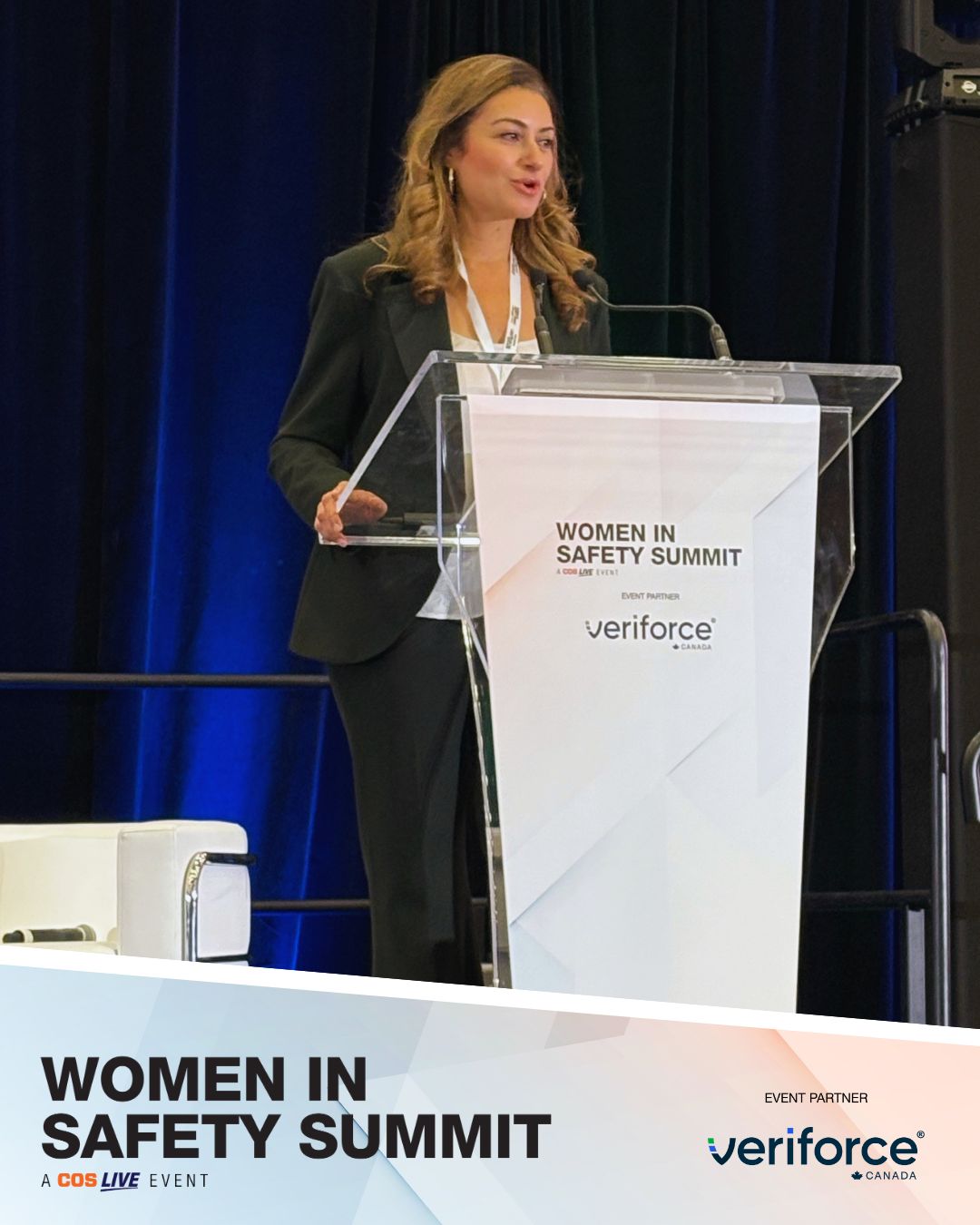
(Henriette Bichai speaks at the Women in Safety Summit in Toronto on October 21, 2026)
Henriette Bichai, president of Veriforce Canada, pushed that argument furthest in her solo session on leading under pressure. She described a mine-site incident where the people measuring risk were counting it in dollars per minute, not safety metrics, and argued safety leaders need to translate their case into that language before a crisis hits, not during one. “Under pressure, we all, without exception, fall to the level of our training,” she said, adding that credibility itself is a function of consistency: “You are credible when you are the same in every room.” Bichai also described resisting pressure to automate her compliance team out with AI, arguing that removing human judgment from a verification process built on “extreme ownership” would cost her organization its actual differentiator.
The same idea, one career at a time
The summit’s two career-focused sessions applied the identical logic to individuals rather than organizations. In the opening keynote, Stephanie Benay, principal at Benay Leadership & Safety Advisory, argued that meeting every formal requirement for promotion isn’t enough on its own; advancement runs on an informal currency most women are never taught. “The work is good, it just doesn’t always have a microphone,” she said, distinguishing visibility from vanity and sponsorship from mentorship: “A mentor talks to you; a sponsor talks about you.” She closed with a reframe of boundaries as “promises that we make to ourselves,” not confrontations.
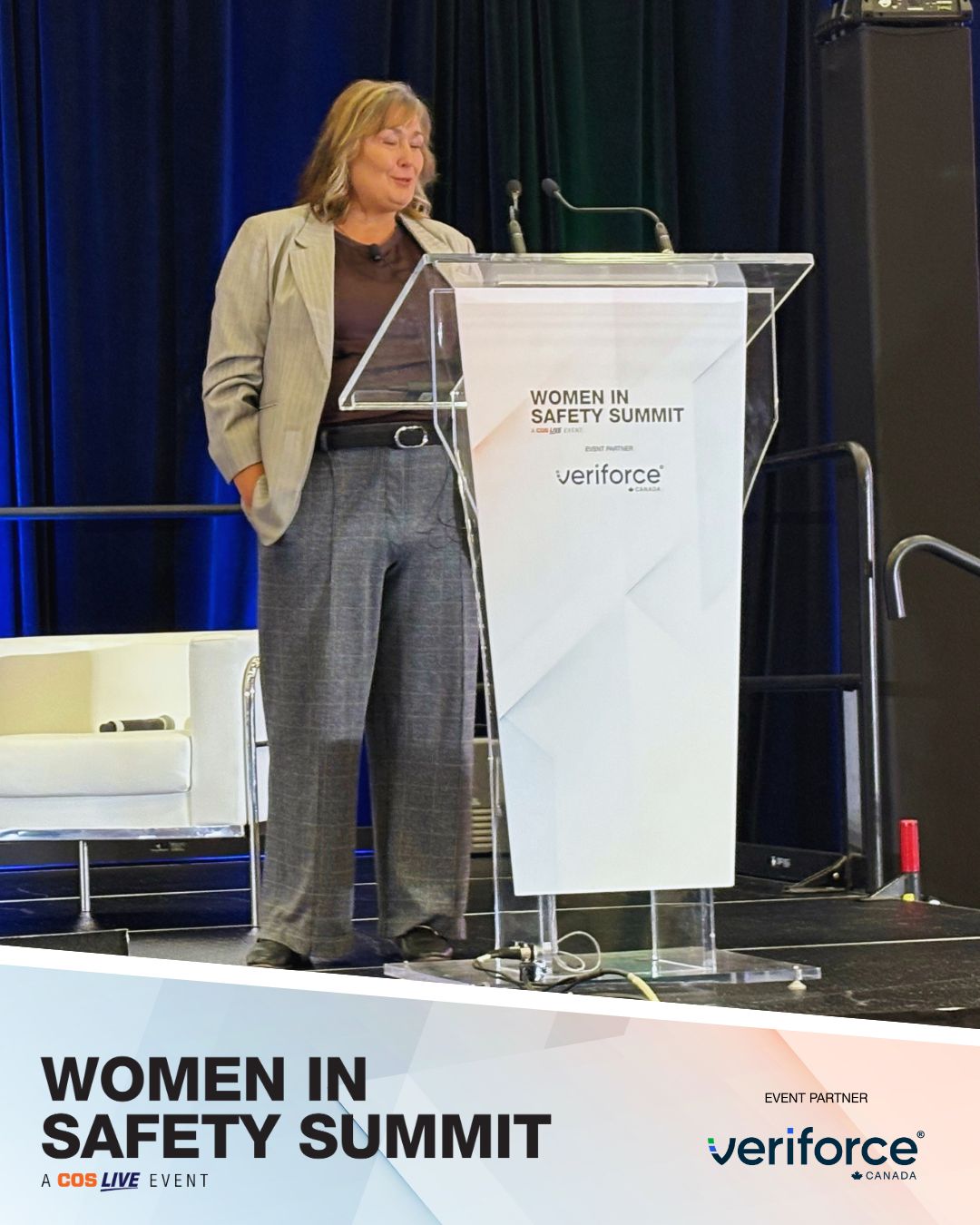
(Stephanie Benay delivers keynote speech at Women in Safety Summit in Toronto on October 21, 2026)
The closing panel, “The Decisions That Changed Everything,” echoed her almost exactly. Jana Kolt-Killenbeck, vice-president of health and safety at Hydro One, described learning she had been “tying my identity way too much to positions at work” after missing out on roles she wanted. Anne Tennier, president of the Canadian Centre for Occupational Health and Safety, offered the plainest version of the summit’s throughline from her own career, which included a deliberate move from a policy role into field operations: “Nothing is forever.” Jasmine Amini, senior investigator at Metrolinx, put the individual case for action over waiting in four words: “Honestly, you’re never ready.”
Taken together, the sessions suggest something less like a theme a summit organizer chose and more like a conclusion the industry has arrived at from several directions at once: in gender-based violence prevention, psychological health, executive influence and career advancement, Canadian safety professionals are describing compliance as the floor, not the ceiling.
For more on the data behind the summit’s harassment panel, see Canadian Occupational Safety’s coverage of gender-based violence and harassment rates in safety trades. The summit’s broader leadership themes echo COS’s recent feature on the women reshaping safety practice across Canada, and its 2026 Top Women in Safety special report.