Canada leads the probe into the Gulfstream G100 crash off Nantucket as the National Transportation Safety Board assists
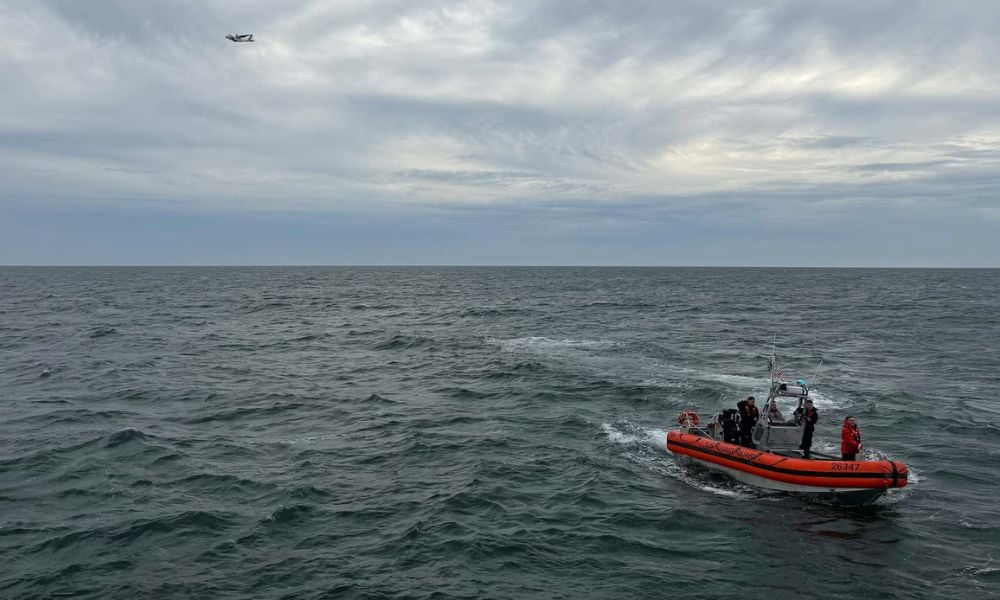
The Transportation Safety Board of Canada (TSB) confirmed Monday, Oct. 5, 2026, that it will lead the investigation into the Latitude Air Ambulance Gulfstream G100 that went down off Nantucket, Massachusetts, on Oct. 3, with the TSB saying it will deploy investigators in the coming days to assist with search and recovery, according to a TSB news release.
Canada leads as state of registry
Because the Gulfstream G100 was Canadian-registered, Canada leads the investigation under international agreements governing aircraft accident investigations, with the United States' National Transportation Safety Board (NTSB) assisting as an accredited representative, the TSB said in its release. The aircraft, which departed Bermuda with six people aboard, was approaching the Boston area when the crew reported electrical difficulties, the TSB said; it then descended rapidly, and contact with air traffic control was lost south of Nantucket.
The TSB described its role as being to advance "the advancement of transportation safety," noting that it does not assign fault or determine civil or criminal liability, and that information gathered is for safety purposes only, not for use in legal or disciplinary proceedings.
The U.S. Coast Guard had earlier suspended its search for the six occupants Sunday evening after 66 hours and roughly 4,400 square miles of searching, shifting the operation to recovery, according to AVweb. Flight-tracking data showed the jet dropped at least 9,000 feet over two minutes before levelling off and then disappearing, NPR reported, citing Nantucket Memorial Airport. Latitude Air Ambulance, based in Hamilton, Ontario, said the four crew members, the patient and the patient's family escort are presumed to have died, according to the Globe and Mail.
Why it matters for Canadian employers
For Canadian safety professionals, the TSB's confirmation that it leads the probe is a reminder of how jurisdiction works in cross-border transportation occurrences, and that investigations into fatal transportation incidents can take months to surface findings on equipment, planning and crew response. Employers in aviation and other federally regulated sectors face dual-track safety and labour investigations whenever a worker is seriously injured or killed on the job, with outcomes that can shape compliance well beyond the immediate occurrence.
The loss is also likely to raise questions about psychological support for surviving Latitude staff and the broader air medical transport workforce; Ontario has previously moved to expand presumptive coverage for post-traumatic stress in frontline workers, a framework that may become relevant as colleagues process this loss.
No cause has been determined, and the TSB has not released an investigation number or timeline for a report.