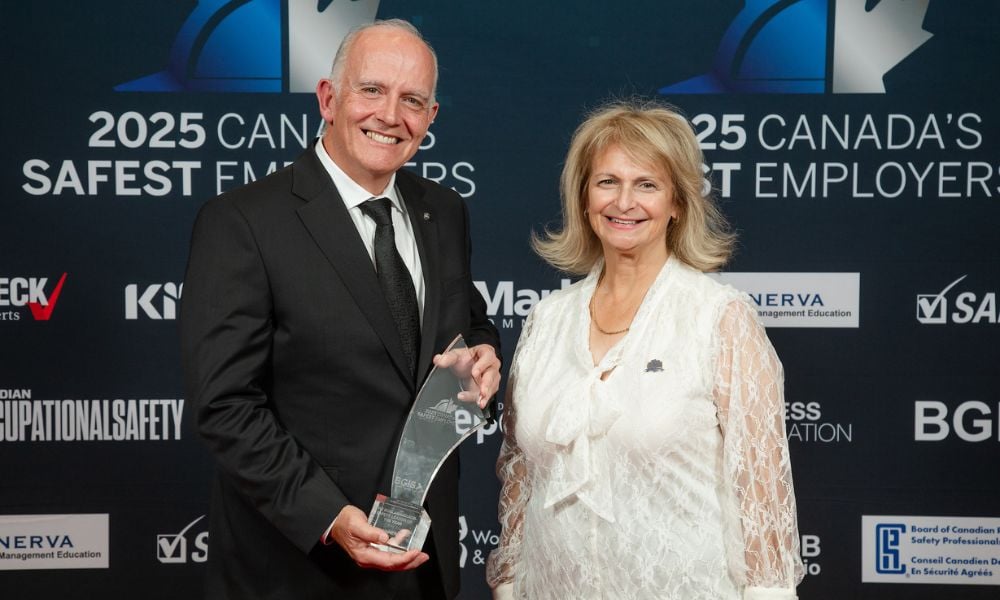

Twiceme Technology CEO Christian Connolly says data security is the next PPE procurement question employers aren't asking
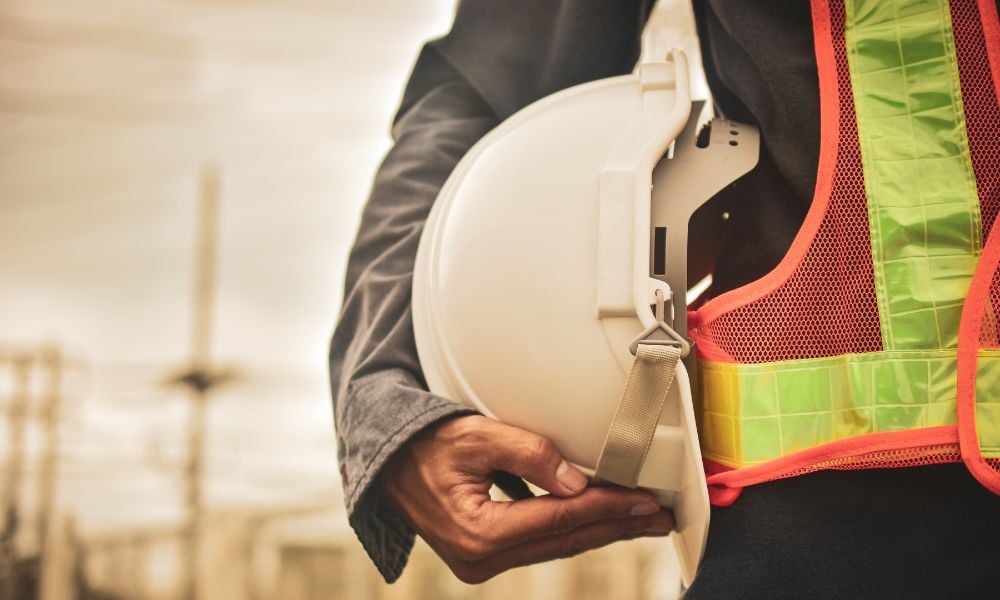
Six months after the Canadian Construction Safety Council (CCSC) required Type 2 safety helmets with integrated four-point chin straps across its member job sites, most of the industry conversation has stayed fixed on impact protection. Christian Connolly, chief executive officer of Swedish safety-technology company Twiceme Technology, says that framing leaves out a question safety directors still have to answer on their own: what happens in the first few minutes after a serious head-impact incident, when a worker cannot speak for themselves.
"A lot of the buyers focus on staying one step ahead, and a lot of them start thinking about what other technology can I add to my helmet or request in my helmet that's going to set me up for the next couple of years with what's happening," Connolly said. "And a large portion of that has to do with digitization."
Why the Type 2 standard stops at impact
The mandate, part of the Type 2 helmet mandate that took effect on Canadian construction sites in July 2026, requires all workers, subcontractors and visitors on CCSC-member sites to wear Type 2 helmets rather than traditional Type 1 hard hats. The council cited Virginia Tech research showing Type 2 helmets reduce concussion probability by 34 per cent and skull fracture risk by 65 per cent.
Connolly, whose company builds near-field communication (NFC)-based technology into personal protective equipment (PPE) such as helmets and harnesses, said the Canadian Standards Association (CSA) Z94.1 standard that governs protective headwear in Canada is necessary but not sufficient. "A lot of the standards, speaking generally, have to do with impact and sort of the protective element of PPE," he said. "But we're not really seeing digitization come into standards yet, which is something we're actually pushing with organizations in the US, and looking broader as well."
What digitized PPE adds before an incident happens
Connolly said most of his company's value is delivered before an incident occurs, not after one. "If we can be heavy on the preparation side of things, which often has to do with compliance to safety regulations, then we can hopefully stop incidents from happening in the first place," he said, describing how digitized equipment verifies that a worker has the required training, permissions and inspected gear before a job starts.
When an incident does happen, he said the same technology surfaces information quickly: personal information, medical history, medications, emergency contacts, the name of the closest contact at the company and the subcontractor's name "can be readily available to quickly take action on that particular incident." The system also includes lone-worker alerting, which Connolly said has helped bystanders get injured workers help faster in documented field cases.
That post-incident function builds on an approach Twiceme first brought to Canadian job sites through Twiceme's earlier NFC chip integration into LIFT Safety's RADIX helmet, extending it from emergency response into a broader safety-and-compliance workflow.
The data security question safety directors aren't asking yet
Connolly said the procurement conversation is shifting, but not fast enough. He argued safety directors evaluating any helmet, harness or self-retracting lifeline should now ask two questions: whether the equipment is digitized at all, and how the resulting worker data is stored.
"A big problem we see today, and a barrier, is cloud-based information versus local storage, where a lot of adoption gets hung up on information sharing or handling or security of information from the worker side," he said. "If the information is stored in the cloud, there's an increasing amount of data breaches and cyberattacks today, where any amount of encryption is still not going to solve the problem fully."
Twiceme's own system, he said, stores all sensitive data offline on a passive chip built into the equipment, using the same access method as a tap-to-pay credit card. "It's completely stored offline," Connolly said. "It doesn't even have a battery. It's completely passive and locked into that individual chip." Information is read locally by a phone and never transmitted to a server, which he said removes it from the pool of data vulnerable to a breach.
Awareness of that distinction is growing among buyers, Connolly said, but it is not yet universal. "I think any management should ask this question, considering their business in the next three to five years," he said. "It should be on the agenda for buyers of digital equipment." Failing to ask it now, he added, risks both long-term liability exposure and resistance from workers reluctant to adopt equipment that shares their personal data with a third party.
For employers already absorbing the cost of upgrading to Type 2 helmets, Connolly's argument reframes digitization less as an added expense and more as a second layer of the same investment, one that shapes both incident response and long-term data liability. As Canadian safety programs look toward the next three to five years, that second layer may end up mattering as much to the bottom line as the helmet itself.