
Flammable vapours exploded inside an unventilated trench
A foundation repair company has been fined $75,000 after a worker was injured when flammable vapours exploded inside an unventilated trench at an Ottawa home, according to the Ontario government.
8169195 Canada Inc., operating as Above Water, pleaded guilty to failing to ensure the project was adequately ventilated. The Gatineau, Que., company does foundation, waterproofing and concrete repair work.
The conviction was announced in a Sept. 29 court bulletin from the Ministry of Labour, Immigration, Training and Skills Development.
Explosion in residential trench
Above Water had been hired to repair a foundation and install a window well system at a private residence on Hadley Circle in Ottawa.
On Aug. 30, 2023, a worker was applying Henry Blueskin Adhesive to the rear foundation wall from the bottom of what the province called an "un-shored trench." The excavation was about 2.4 metres (eight feet) deep and 0.9 metres (three feet) wide.
The ministry said the adhesive is "a flammable liquid that can produce ignitable vapours." An explosion occurred while the worker was applying it, and the worker was injured. The bulletin does not describe the injuries.
No monitoring or ventilation in use
A ministry investigation found the adhesive was producing ignitable vapours in the trench while "no atmospheric monitoring or ventilation was being used," the Ontario government said.
That breached section 46(1)(b) of Ontario Regulation 213/91, the Construction Projects regulation, which applies where a gas, vapour, dust or fume "may be capable of forming an explosive mixture with air." The offence was registered under section 25(1)(c) of the Occupational Health and Safety Act.
Previously, GFL Environmental Services was fined $130,000 after a flash fire caused by flammable vapours injured four workers in Pickering, Ont. In British Columbia, WorkSafeBC fined two employers after an explosion in which workers did not wear personal monitors for flammable gas.
Penalty and surcharge
Justice of the Peace Mahamud H. Elmi imposed the $75,000 fine in the Provincial Offences Court in Ottawa on July 15, 2026. Crown counsel was Tianna Gomes.
The court also imposed a 25% victim fine surcharge, as required by the Provincial Offences Act, bringing the total penalty to $93,750. According to the province, the surcharge is credited to a special government fund that assists victims of crime.
The conviction came nearly three years after the explosion. The bulletin lists no charge related to the trench being un-shored. In 2024, a Leamington, Ont., greenhouse fabricator was fined $65,000 after a worker was critically injured in a trench collapse.
What the regulation and federal guidance say
Ontario's Construction Projects regulation defines a trench as an excavation that is deeper than it is wide, which describes the excavation at the Ottawa home. The section 46(1) ventilation duty applies both where workers could be hurt by inhaling a noxious gas, vapour, dust or fume and where an explosive mixture with air could form. Section 14(5) requires a competent person to perform the tests and observations needed to detect hazardous conditions.
The regulation's excavation rules also bar work in a trench unless another worker is above ground nearby, and generally require trench walls to be supported once an excavation reaches 1.2 metres in depth, subject to listed exceptions. The bulletin does not say whether these provisions were examined in this case.
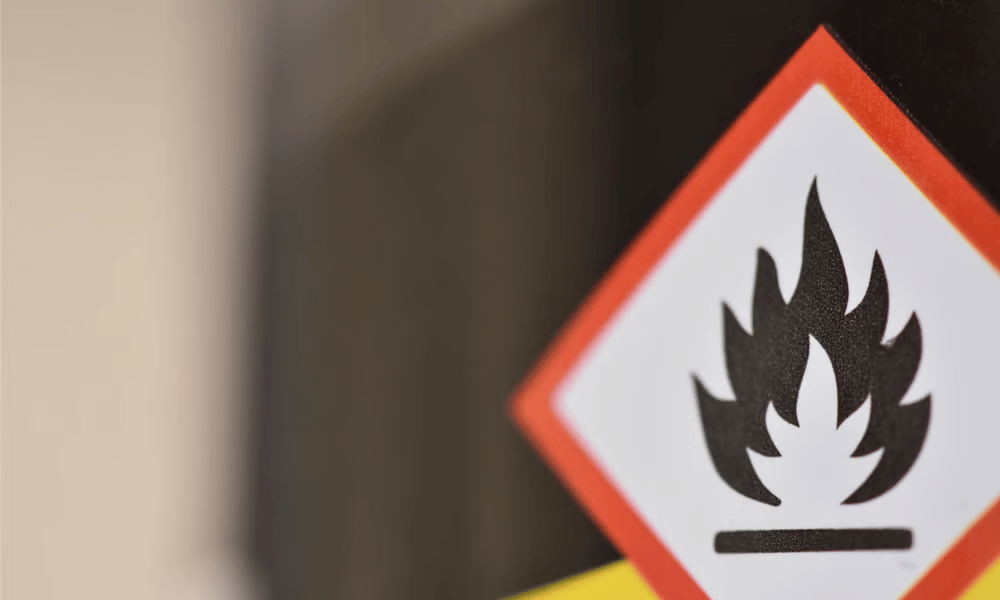
The Canadian Centre for Occupational Health and Safety (CCOHS), a federal agency, says in its fact sheet on products carrying the WHMIS flame pictogram that the vapour of most flammable liquids is heavier than air and can travel along the ground before being ignited by a distant spark or flame. The guidance, last revised Nov. 27, 2024, says such products should be used only in well-ventilated areas and kept away from ignition sources, and that volatile liquids call for non-sparking tools and explosion-proof electrical, ventilation and lighting equipment.