An ATG® Canada leader says task-specific hand protection, not the highest cut rating, helps keep gloves on, and workers safe
Choosing cut-resistant gloves by reaching for the highest rating on the label is one of the most common mistakes Canadian employers make, according to Geoff Gascon, Area Manager for Canada at ATG, the Sri Lanka-based manufacturer that operates globally as ATG® Intelligent Glove Solutions. Gascon cites an estimated 500,000 work-related hand injuries occurring in Canada every year, a figure he attributes to the federal Labour Program, and argues that safety leaders need to treat hand protection as part of their broader occupational health and safety (OHS) strategy, not a line item in the personal protective equipment (PPE) budget.
Gascon points to the gap between how hand protection is bought and how it is actually used on the floor. Workers pull gloves off for the same reasons every shift: hot, sweaty hands, a poor fit, the need to use a touchscreen or handle small parts. “Employers should also address the everyday reasons workers remove their gloves,” he says. “The goal is to make it easy for workers to keep appropriate protection on throughout the tasks that require it. Comfort supports compliance, and consistent use supports safety.”
Matching cut-resistant gloves to the actual hazard
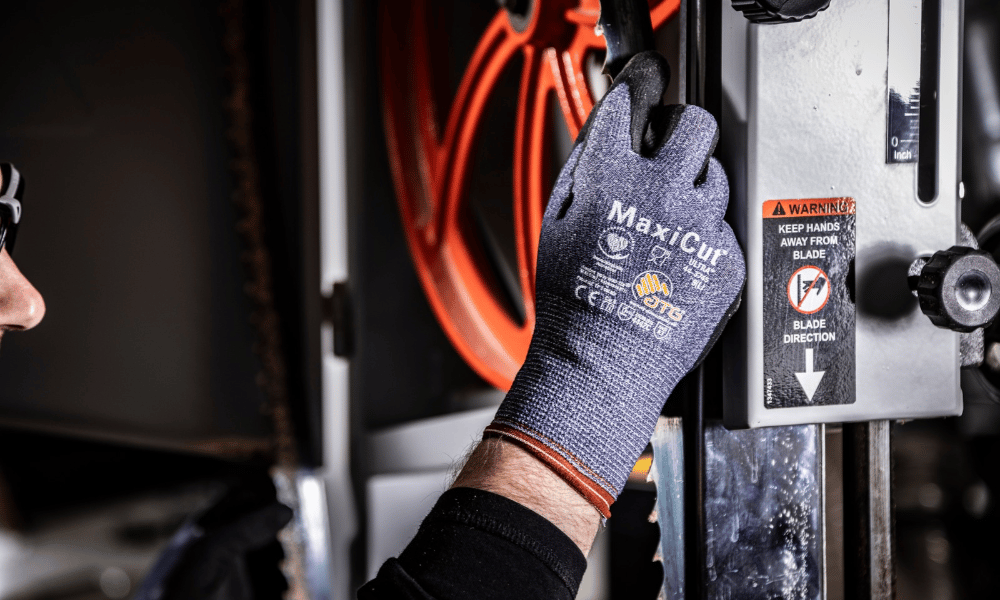
Gascon says the instinct to default to the maximum cut rating “to be safe” often backfires. “The biggest misconception is that the glove with the highest cut-resistance rating is automatically the best choice for every application,” he says. “Defaulting to A9 without considering those factors can leave other risks unaddressed.” A task as ordinary as handling boxes can carry grip, abrasion and dexterity demands alongside the cut hazard, and a rating alone will not tell a buyer whether a glove fits that whole picture, a selection problem showing up across other categories too, as similar certification and procurement concerns in Canada’s recent helmet rush illustrate.
Gascon also cautions against treating a lab rating as a guarantee. “Cut testing takes place under controlled laboratory conditions; it does not replicate every workplace task or predict protection in every situation,” he says. “Every application requires a thorough assessment and evaluation under actual working conditions,” a caution that applies just as much to the Type 2 helmet mandate now in effect on Canadian construction sites as it does to gloves.
Comfort decides whether gloves stay on
Gascon traces ATG’s product design back to comfort first, arguing that protection a worker takes off is protection that does not work. “If workers’ hands become hot and sweaty, or their gloves make a task difficult, they may remove them and continue working with their hands exposed,” he says. ATG builds its gloves around what it calls 360-degree breathability, a coating approach meant to let air move through the glove rather than trap heat against the skin. Gascon adds that skin compatibility matters too: ATG washes its gloves after production, certifies them to the OEKO-TEX Standard 100 textile benchmark, and has them dermatologically accredited by the Skin Health Alliance, steps aimed at preventing the kind of irritation that can push a worker to strip a glove off mid-task.
Cost per wear, not cost per pair
On the purchasing side, Gascon pushes back on evaluating gloves purely by sticker price. “We encourage safety professionals to evaluate cost per wear rather than cost per pair,” he says. “A glove with a higher purchase price can offer better overall value if it lasts longer, performs well and is comfortable enough for workers to wear consistently.” He points to glove consumption rates, how often workers stop to swap gloves, and the downstream cost of claims and lost productivity as the real inputs for a business case, rather than brand name or unit cost alone.
With provincial regulators placing growing weight on documented hazard assessments, Gascon says record-keeping needs to stay a living process rather than a one-time form, revisited directly with the workers using the gloves, an approach that echoes a broader case being made elsewhere in Canada’s safety sector this year for risk management that goes beyond procedures and PPE.
Gascon’s own introduction to hand safety was personal rather than professional. He grew up around the glove trade through his father’s work for a manufacturer and distributor, but a warehouse injury sharpened the point: he needed stitches after removing his gloves for better grip and dexterity. “That experience made the connection between comfort, dexterity and consistent glove use very personal,” he says. “Behind every glove is a person whose life can be changed by an injury.”
This article was produced in collaboration with ATG®